Axios AM

October 21, 2023

1 big thing: Inside Biden's Gaza strategy

Photo illustration: Sarah Grillo/Axios. Photo: Brendan Smialowski/AFP via Getty Images
2. Mapped: Changing borders


The UN considers the Gaza Strip to be occupied by Israel, along with the West Bank and Golan Heights, because Israel controls the movement of people and goods in and out of the territory and has imposed a land, air and sea blockade.
- Israel argues that it no longer occupies Gaza because it withdrew its soldiers and settlers in 2005 and does not govern the Strip.
3. What to know about Gaza


Gaza and its more than 2.1 million people have been under constant Israeli bombardment since the Hamas terrorist attack.
- The Israeli military is now preparing for a ground invasion of the small coastal enclave — an incursion that is expected to be long and difficult, Axios' Laurin-Whitney Gottbrath writes.
🔭 Zoom out: Gaza is a small Palestinian territory — roughly the size of Detroit — located on the Mediterranean coast.
- Most Palestinians who live in Gaza are refugees. Roughly half are under the age of 18.
🔎 Zoom in: The Gaza Strip is currently run by Hamas, which is considered a terrorist organization by Israel, the U.S. and several other governments.
- Israel, with the support of Egypt, imposed a land, sea and air blockade of Gaza in 2007 after Hamas took control.
- Israel says the blockade is necessary for security reasons, keeping Hamas and other militant groups like the Palestinian Islamic Jihad from importing weapons that can be used against Israel.
Palestinians call the blockade "collective punishment" and say it's turned Gaza into an "open-air prison."
- Palestinians must get permission from Israel or Egypt to leave the enclave, which is often difficult to get.
More than 80% of Palestinians in Gaza live in poverty, according to the UN.
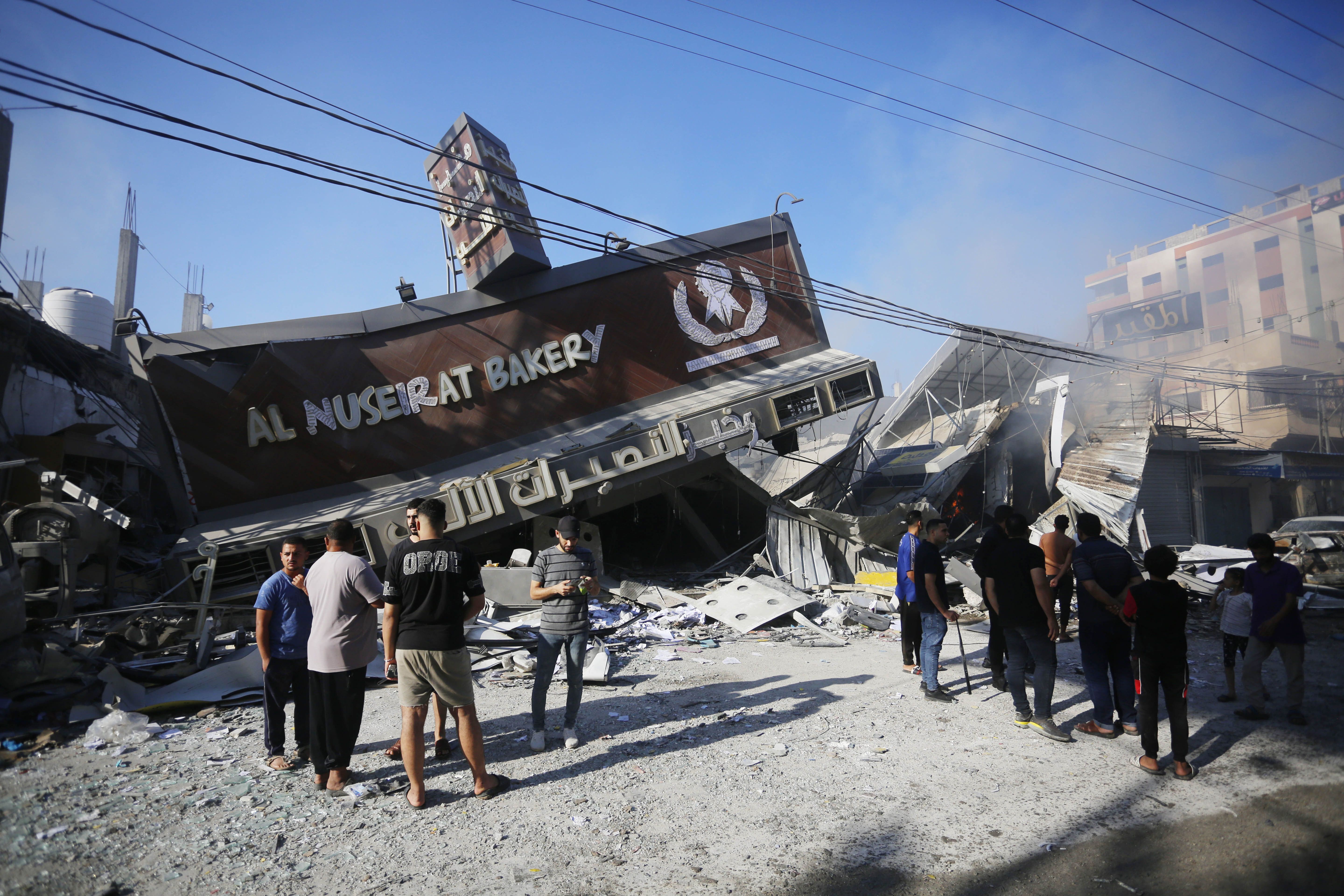
Shouq Al Najjar, a Gazan, told Axios she and her husband had "no choice but to evacuate" their home in Gaza City "because of the Israeli airstrikes that devastated our neighborhood," including reducing their home to rubble.
- "My husband and I started our married life less than a year ago in that house, which now lies in ruins," Al Najjar, 27, said. "Survival feels uncertain."
4. 🔎 Hamas' tunnel network
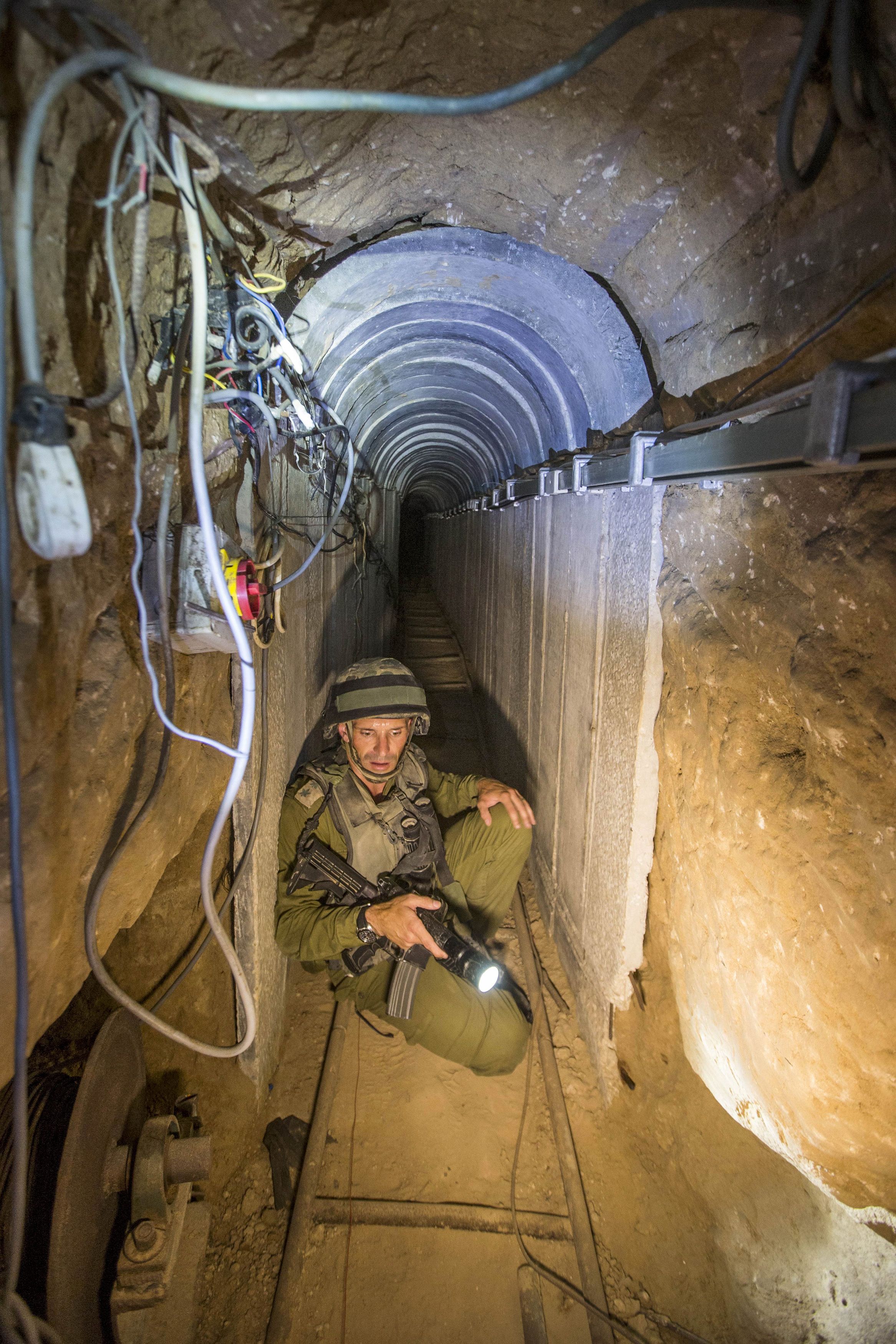
Israeli forces would face Hamas' labyrinthian warren of tunnels under the Gaza Strip in an expected ground assault, Axios' Jacob Knutson writes.
- It's unknown how extensive the tunnels are. But they've grown in scale and sophistication over two decades. Some are even equipped with electricity, lighting and rail tracks.
- They likely span large parts of the Strip, reaching more than 100 feet beneath the surface in some places and ending at dozens of hidden access points. Hamas' leader in Gaza, Yahya Sinwar, claimed in 2021 that the militant group had around 310 miles of tunnels in Gaza.
Why it matters: The tunnels, dubbed by Israel as the "Gaza metro," are vital for Hamas from both an offensive and defensive standpoint.
🖼️ The big picture: Hamas' military arm has relied for more than three decades on guerrilla warfare that uses rockets, snipers, improvised explosive devices and underground tunnels to attack Israel.
The militants use the tunnels to smuggle and store weaponry and evade detection.
- Further complicating an invasion, some of the hostages kidnapped in the attack are held in tunnels, Hamas said.
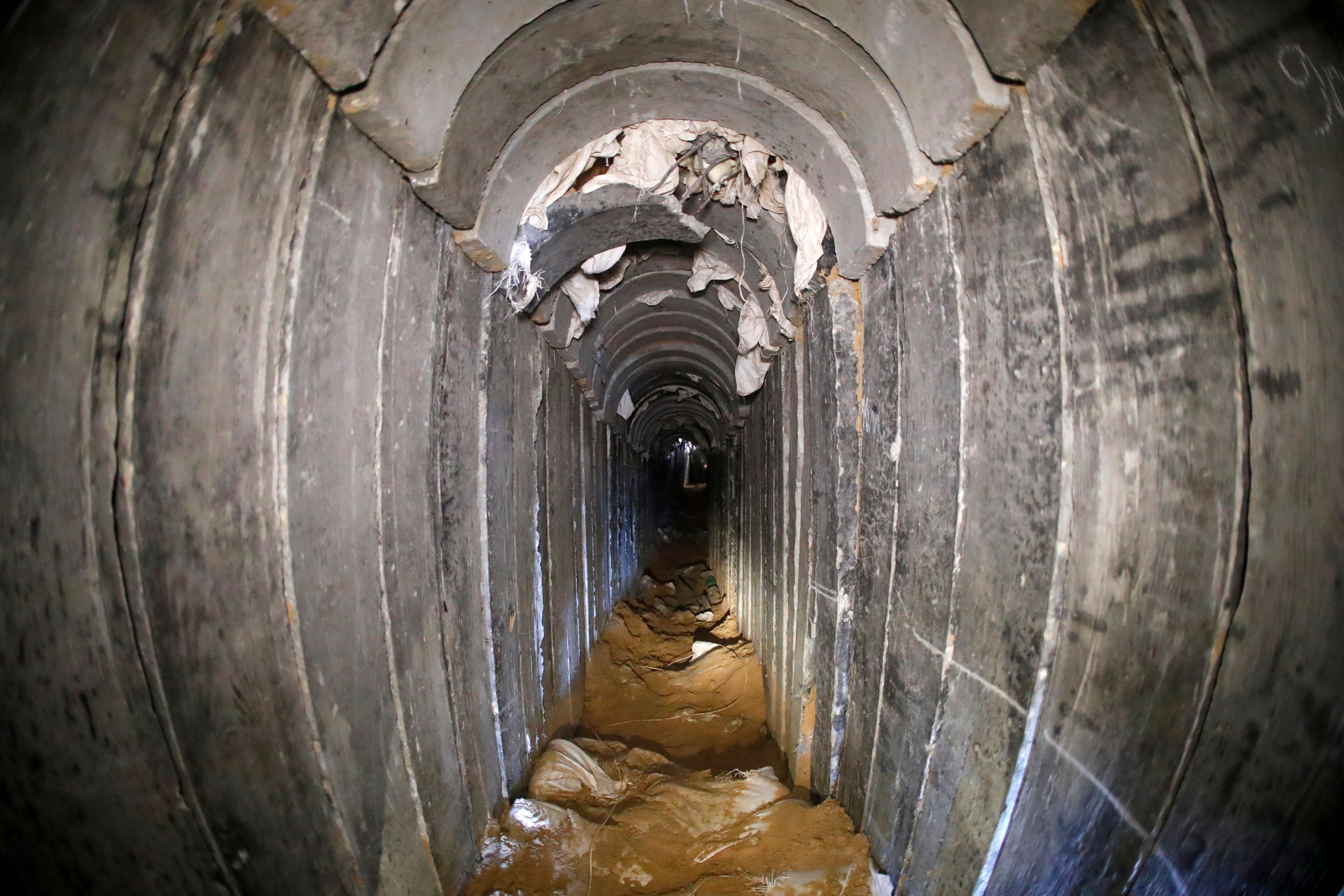
The other side: Israel built a sensor-equipped underground anti-tunnel barrier below a fence spanning its entire border with Gaza.
5. How Israel built its formidable military

For decades, Israel has been one of the most powerful and technologically advanced military powers in the Middle East.
- With an annual military budget exceeding $20 billion and access to some of the most advanced U.S. military hardware, Israel controls the skies and much of the sea around its territory and has superior cyber capabilities.
- Israel is believed to have dozens of nuclear warheads — though it has never acknowledged them — and possesses highly sophisticated drones, fighter aircraft, tanks, submarines and artillery.
The Israel Defense Forces relies on compulsory military service beginning at age 18.
- Since the Oct. 7 Hamas attack, 300,000+ reservists have been called up.


The U.S. is by far the biggest supplier of military aid to Israel, contributing around $130 billion since its founding.
- U.S. military assistance to Israel last fiscal year was worth $3.8 billion, second only to Ukraine. That accounted for 16% of Israel's military budget.
The latest: In his Oval Office address on Thursday, Biden made the case for a sweeping emergency funding request that includes $10 billion for Israel.
- Go deeper: White House fact sheet on the aid package ... Share this explainer.
6. War spills over


The war between Israel and Hamas has already spilled into neighboring countries, with street protests and even cross-border attacks, Axios' Erica Pandey writes.
- Why it matters: Israel's neighbors fear further domestic unrest and mass outflows of refugees as the conflict deepens. Israel fears that a second front could open on the border with Lebanon.
State of play: There have been daily skirmishes along the border, with Iran-backed Hezbollah militants firing dozens of rockets and the Israel Defense Forces conducting strikes of its own.
- Hezbollah has pledged its support to Hamas and has far greater military capability than the Palestinian militant group.
What to watch: The White House has discussed using military force if Hezbollah joins the fighting in Gaza.
7. How Iran fits in
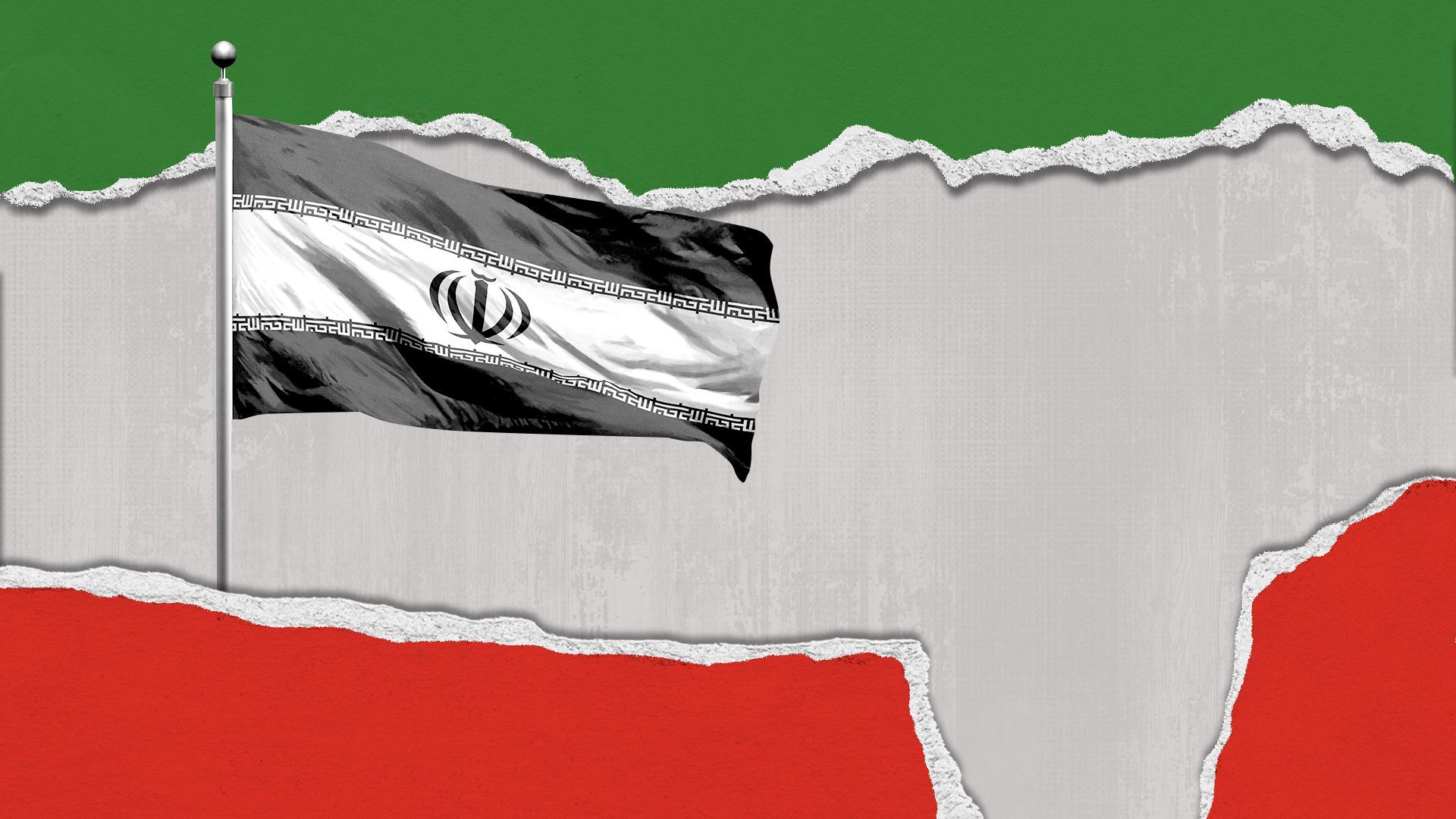
Illustration: Aïda Amer/Axios
8. 👓 What Barak is reading

Illustration: Maura Losch/Axios
Axios AM

Catch up with the most important news of the day