Black historic sites stand forgotten

Add Axios as your preferred source to
see more of our stories on Google.
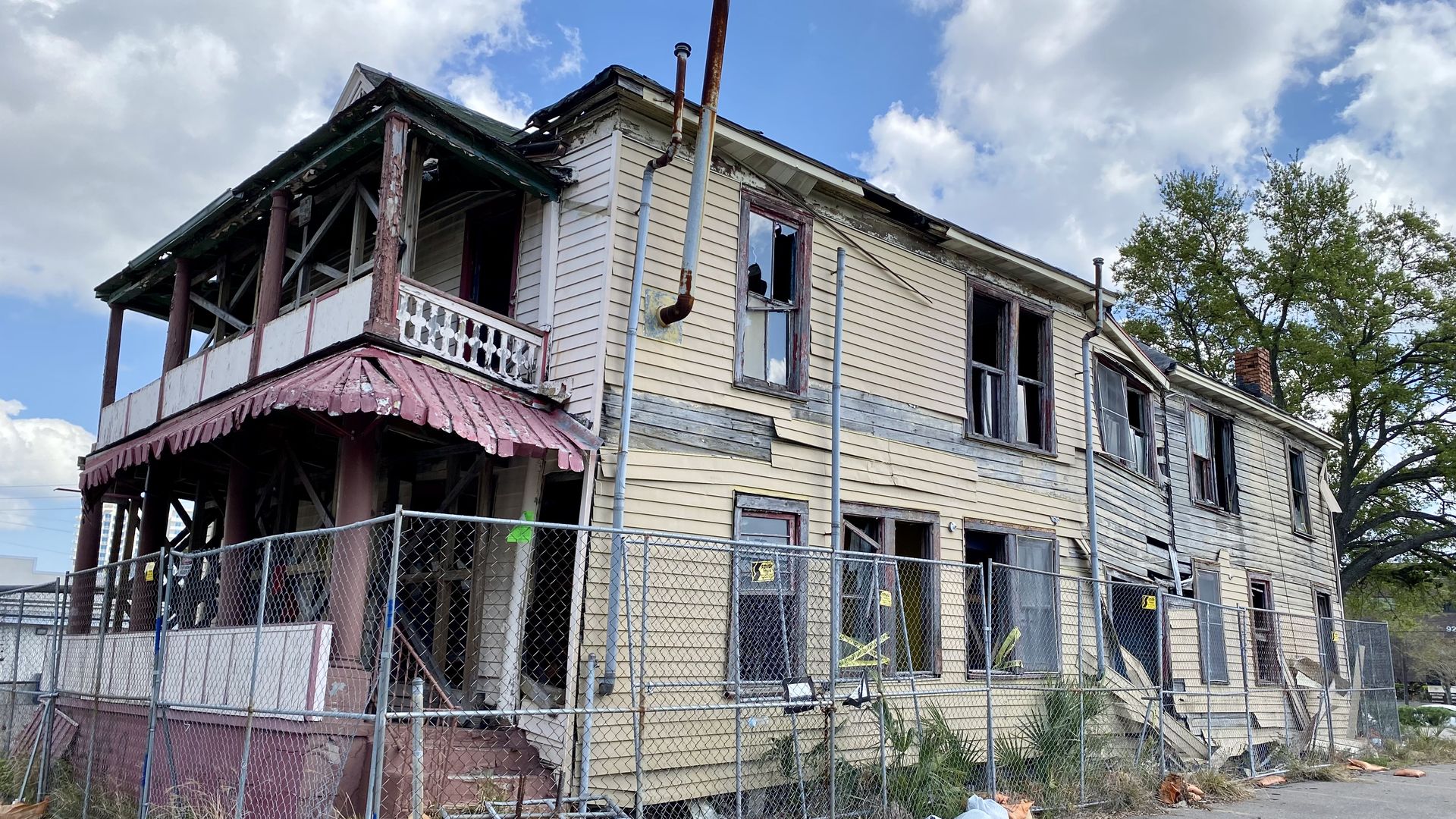
The Jackson House in Tampa. Photo: Ben Montgomery/Axios
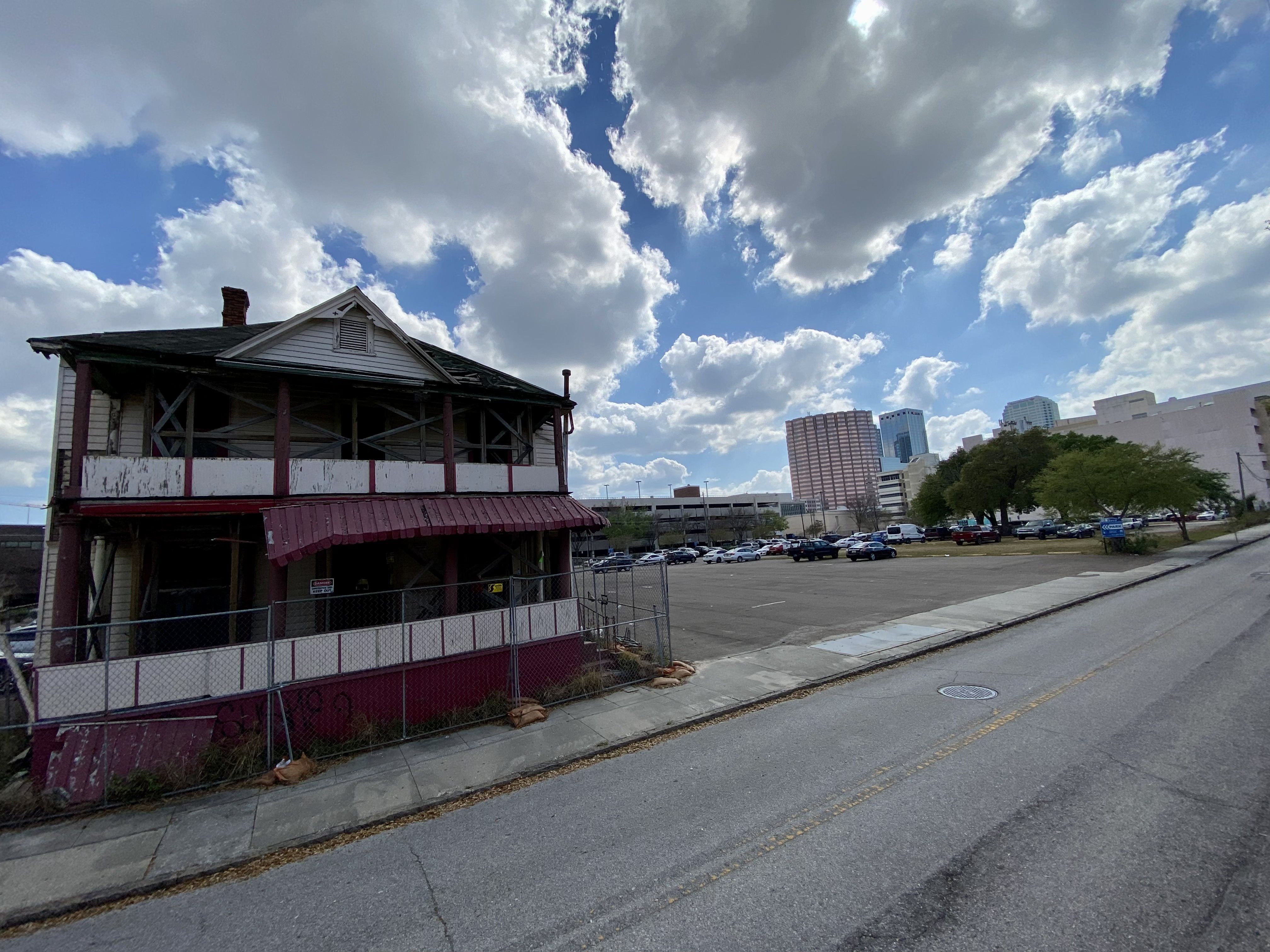
The dilapidated Jackson House sits in the shadows downtown, blocks from the wealth of Water Street, the energy of Channelside and the history of Ybor City. And it's disappearing before our eyes.
What's happening: Its roof is shot, its windows broken. Its walls are falling apart. A peek inside a gaping hole in the wall betrays a jumble of structural supports throughout the house — all that's keeping this cultural touchstone standing.
Flashback: In its heyday, the 24-room Jackson Boarding House at 851 E. Zack Street was a stop-off for Black artists — like Cab Calloway, Chick Webb and Ray Charles — who performed in clubs on Central Avenue.
- Ella Fitzgerald, it is said, penned "A-Tisket, A-Tasket," sitting at the house's kitchen table.
Yes, but: Urban renewal left it stranded. Time, weather and neglect have taken a terrible toll. The group trying to revive the old house has hit a wall — or, rather, the owners of a parking lot who seem unwilling to compromise.
Driving the news: The Jackson House is symbolic of what's happening to important places in Black history across the country.
The big picture: Hundreds of sites are at risk of disappearing as buildings sit abandoned, forgotten, or dismissed amid urban renewal and climate change, Axios' Russell Contreras and Keldy Ortiz report.
Why it matters: The sites tell stories about abolition, civil rights and Black entertainment.
Details: Axios Local reporters from around the country searched their cities for sites linked to the story of Black Americans and assessed the status of those sites.
- Axios San Antonio's Madalyn Mendoza found that East Commerce Street hotels and restaurants, which comprised a chunk of the city's midcentury "Negro Motorist Green-Book" destinations, had been razed.
- Axios Detroit's Joe Guillen reports that Detroit's Paradise Valley nightclubs, known for hosting music legends like Duke Ellington, were destroyed decades ago in the name of urban renewal.
What they're saying: "Not only do we lose memory and legacy, we lose the opportunity to leverage the power of place and historic preservation to revitalize historic Black neighborhoods," Brent Leggs, executive director of the African American Cultural Heritage Action Fund, tells Axios.
- Cadancy Taylor, the author of "Overground Railroad: The Green Book and the Roots of Black Travel in America," said the sites help show the world how Black people survived and thrived despite racism.
Yes, but: National Trust for Historic Preservation's action fund is working to save 200 Black heritage places, from schools to churches. It has awarded millions in grants.
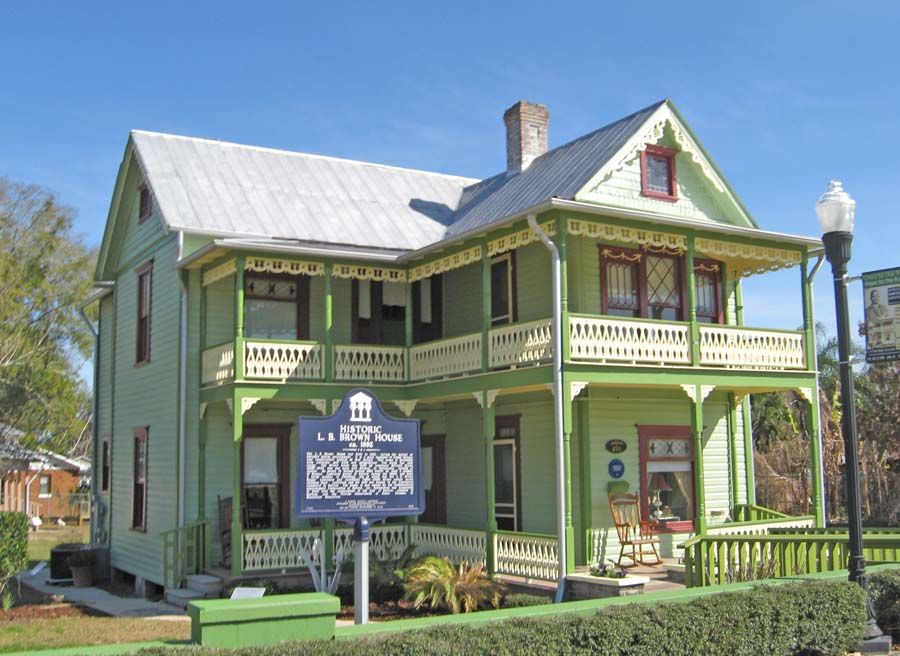
Zoom in: Around here, that money has been awarded to places like the 1944 Old Mount Carmel Baptist Church in Gainesville and the breathtaking 1892 L. B. Brown House in Bartow.
- The Jackson House Foundation has raised some $3 million, including a hefty commitment from Lightning owner Jeff Vinik, toward a goal of about $4 million for rebuild, per the latest estimates.
Between the lines: Civil rights advocates, historians and social justice travelers have been mapping out sites in recent years to remember and confront episodes connected with trauma.
- Some researchers say the preservation of the sites is part of a movement called "memory work," where scholars engage with the past to revise accounts of history.
- The Equal Justice Initiative, a Montgomery-based legal advocacy group, has mapped thousands of sites linked to lynchings of Black people.