Seattle cleared more tents under Wilson than under Harrell

Add Axios as your preferred source to
see more of our stories on Google.
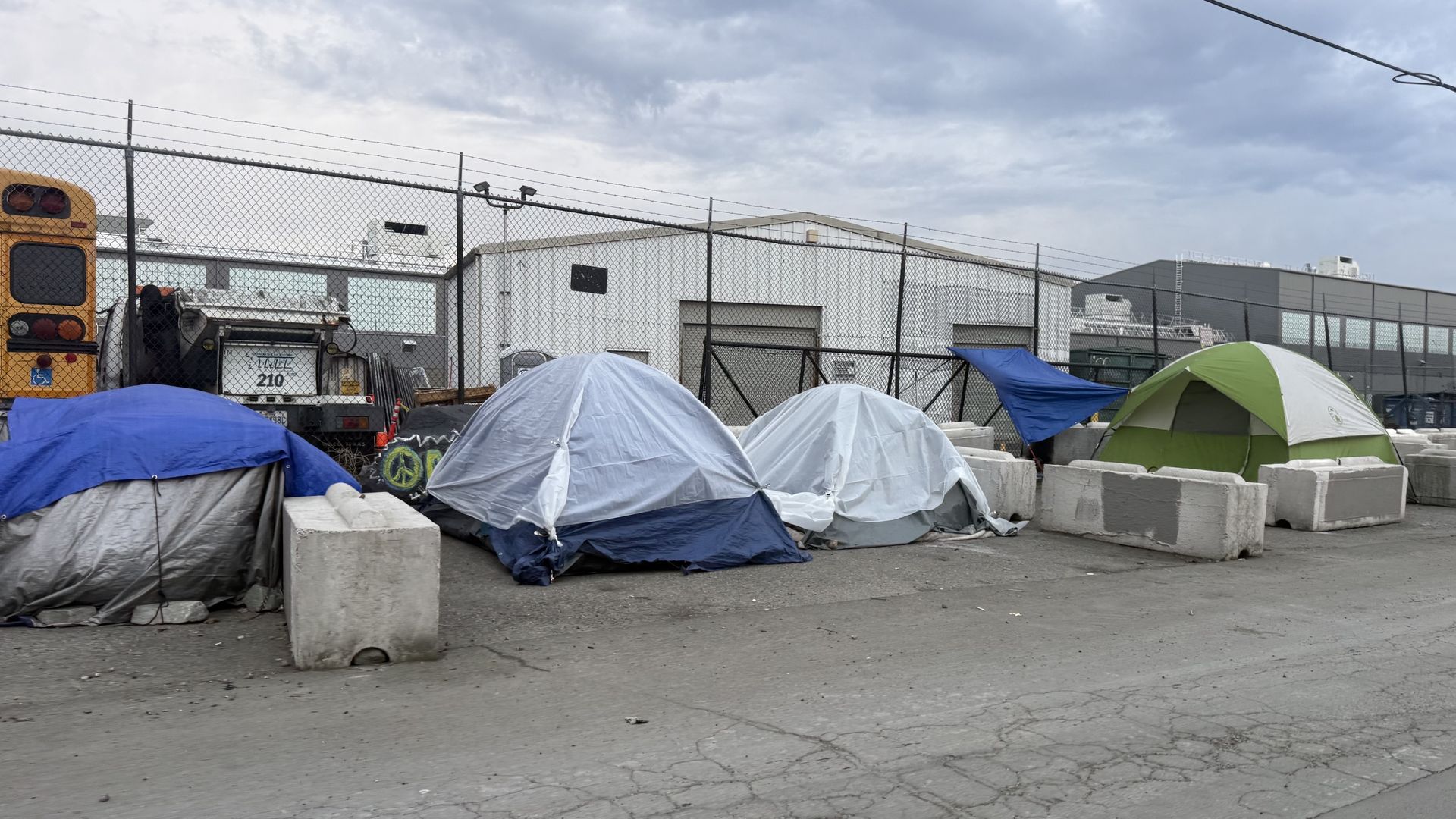
Tents in SoDo earlier this month. Photo: Melissa Santos/Axios
Seattle cleared more tents during Mayor Katie Wilson's first eight months in office than during the same months in any of Bruce Harrell's final three years, an Axios analysis finds.
Why it matters: Wilson built her successful mayoral campaign partly on criticizing Harrell's approach to homelessness, including by accusing her predecessor of "pushing people around the city without actually getting them inside."
By the numbers: Seattle cleared 3,138 tents from January through the end of August, up nearly 8% from 2,911 during the same period in 2025, according to city records analyzed by Axios.
- The number of tents cleared under Wilson was also 16% higher than during the same period in 2023 and 15% higher than in 2024.


- Total encampment removal actions — which can each involve clearing multiple tents — also ticked up slightly under Wilson.
Flashback: In an April 2025 op-ed, Wilson argued that encampment sweeps had tripled under Harrell even as shelter capacity declined.
- She called the reduction in visible homelessness under Harrell "purely cosmetic," arguing that the city was displacing people rather than helping them find housing.
Between the lines: The increase in tent clearings didn't come from scheduled removals, which involve more extensive advance outreach and shelter offers.
- Those operations actually declined from 108 under Harrell in 2025 to 93 under Wilson this year.
- Instead, most tents under both mayors were cleared through obstruction-related removals, which can involve tents blocking sidewalks or occupying public spaces like parks. Those removals don't require offers of shelter under city rules.
- Just 48% of people present at obstruction-related removals received shelter offers this year, virtually unchanged from 49% in 2025, according to the mayor's office.


Yes, but: The city reports that more people entered shelters through outreach efforts during the first six months of Wilson's tenure.
- The Unified Care Team, which handles encampment outreach and removals, reported 635 confirmed shelter enrollments from January through June, up from 437 during the same period in 2025.
- People also accepted more shelter offers, up from 845 to 1,023.
What they're saying: Wilson believes the city needs to connect unhoused people with shelter and housing while "maintaining public space for public use," mayoral spokesperson Tara Lee told Axios this month.
- Lee said Wilson hasn't changed the city's overall approach to encampments, but has directed staff to begin outreach earlier and make more individualized matches to shelter and services.
- The mayor's office also highlighted Wilson's plans to add 960 shelter beds by the end of 2027.
Reality check: Wilson originally aimed to add 500 beds by June and 1,000 by the end of 2026, but has since scaled back that goal.
Zoom in: Seattle conducted more encampment removals in the months leading up to and during this summer's World Cup than during the same period in any of the previous three years.
- The city did not directly address whether World Cup preparations contributed to the higher pace of removals from January to July.
- However, Lee attributed much of the overall increase to the Unified Care Team's shift from operating five days a week to seven days a week in late 2025, a change that began under Harrell.
- "Given that UCT has increased days worked by 40%, the increase in the number of resolutions and cleared tents is relatively small," Lee wrote in an email.
The other side: Elle Cree of Stone Soup Crew, which works with unhoused people around Cal Anderson Park, said she believes the city pushed people out of tourist-heavy areas during the World Cup, bringing more unhoused people into the park.
- Cree said removals at Cal Anderson eased during the tournament but intensified afterward.
- "They were so focused on sweeping those areas, I think their focus is now on us," she said, adding that the changes have hit unhoused LGBTQ+ people hard.
Cree said people have lost clothing, cell phones and identification documents during removals, sometimes making it difficult to keep their jobs.
- "They don't treat it like a home, they treat it like a nuisance," she said of how the city treats people's tents and belongings.
- Lee said city workers can store personal belongings collected during encampment removals for at least 70 days, though items deemed hazardous, soiled or unusable aren't stored.
Bruce Drager, co-chair of the Ballard Community Task Force on Homelessness and Hunger, said he supports Wilson's plans to expand shelter but worries about continued removals while the city works to add beds.
- "They have been continuing this 'sweep with impunity' strategy that Bruce Harrell started five years ago," said Drager, who works with people living in encampments in Ballard.
- Drager said repeated removals harm people by disrupting their efforts to find housing. He wants the city to consider temporary alternatives, such as sanctioned camping areas, while more shelter is added.
The fine print: Axios analyzed Unified Care Team activity logs from January through August of 2023, 2024, 2025 and 2026, excluding removals involving only RVs and cases resolved through outreach alone.
- The analysis excluded 2022, Harrell's first year, because the city reported low confidence in its data while implementing a new tracking system that year.