Washington vows to fight Trump's mail-in voting order


Add Axios as your preferred source to
see more of our stories on Google.
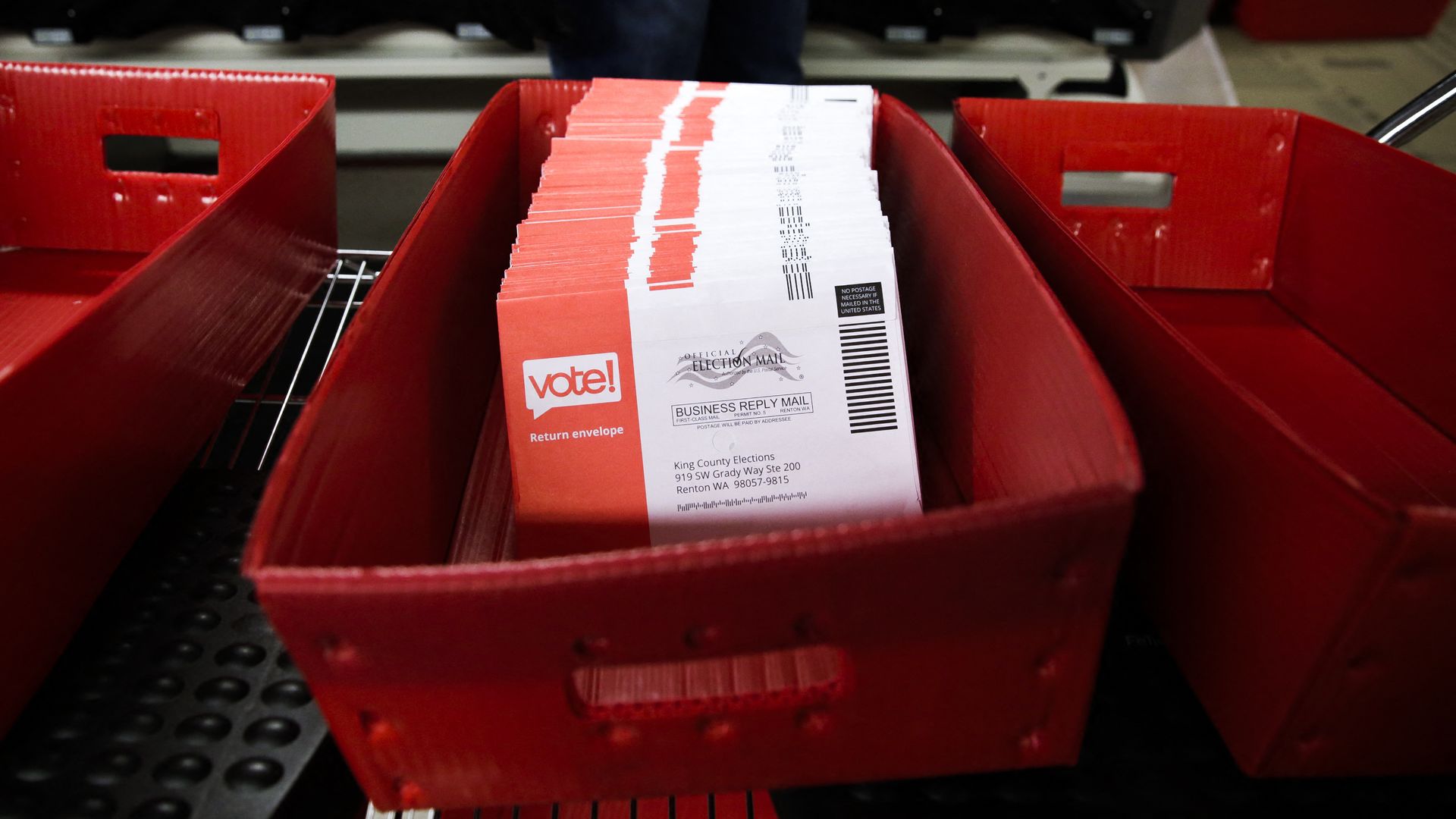
Sorted vote-by-mail ballots are pictured on Election Day at the King County Elections office in 2020. Photo: Jason Redmond/via Getty Images
President Trump can implement an executive order restricting mail-in ballots just months before the midterm elections, the Supreme Court said Monday.
Why it matters: The decision could upend this year's elections, particularly in vote-by-mail states like Washington. But the legal battle is far from over, and the ruling's exact impact remains unclear.
- All Washington counties have voted by mail since 2011.
Driving the news: The Supreme Court said Monday that states lack standing to challenge the executive order because it was an "internal directive" that didn't harm the states that sued.
- Washington was among the states that challenged Trump's order.
What they're saying: "This internal directive does not regulate the States' voter registration processes," the Supreme Court's order reads. "Nor does it impinge on the States' authority 'to create and enforce a legal code' for elections."
The decision overturns a federal appeals court ruling that found Trump's order could impose "unprecedented levels of involvement by federal officials in how states administer elections" and could confuse and disenfranchise voters.
Yes, but: The court could later rule against the Trump administration if federal officials take unlawful steps to implement the president's executive order, the court said Monday.
- "On that score, time will tell," the court noted.
Catch up quick: Trump's executive order, issued in March of this year, directed the Department of Homeland Security to compile a list of citizens eligible to vote and called for the U.S. Postal Service to accept ballots only from voters on those lists.
The other side: Washington Attorney General Nick Brown said on Monday that the president's intent is "to illegally suppress legitimate votes."
- "We stand ready to take action to protect the integrity of our elections and prevent this clearly unconstitutional overreach from taking effect," Brown said in a written statement.
- The Supreme Court's ruling on Monday "does not bless the substance of the president's actions," Brown added.
- "It simply says states must wait slightly longer to challenge them."
Between the lines: Under the Constitution, states — not the president — administer elections.
- Congress does have the authority to pass legislation that alters election rules.
- Government reports and voting rights groups have consistently found voter fraud is rare and, when it occurs, is not widespread enough to affect election outcomes.
What we're watching: Trump has repeatedly pressured Congress to pass the SAVE America Act, which would impose stricter voting rules.
- The bill would not end mail-in voting and faces an uphill climb in Congress.