Here's what it will take to get light rail to Ballard by 2042

Add Axios as your preferred source to
see more of our stories on Google.
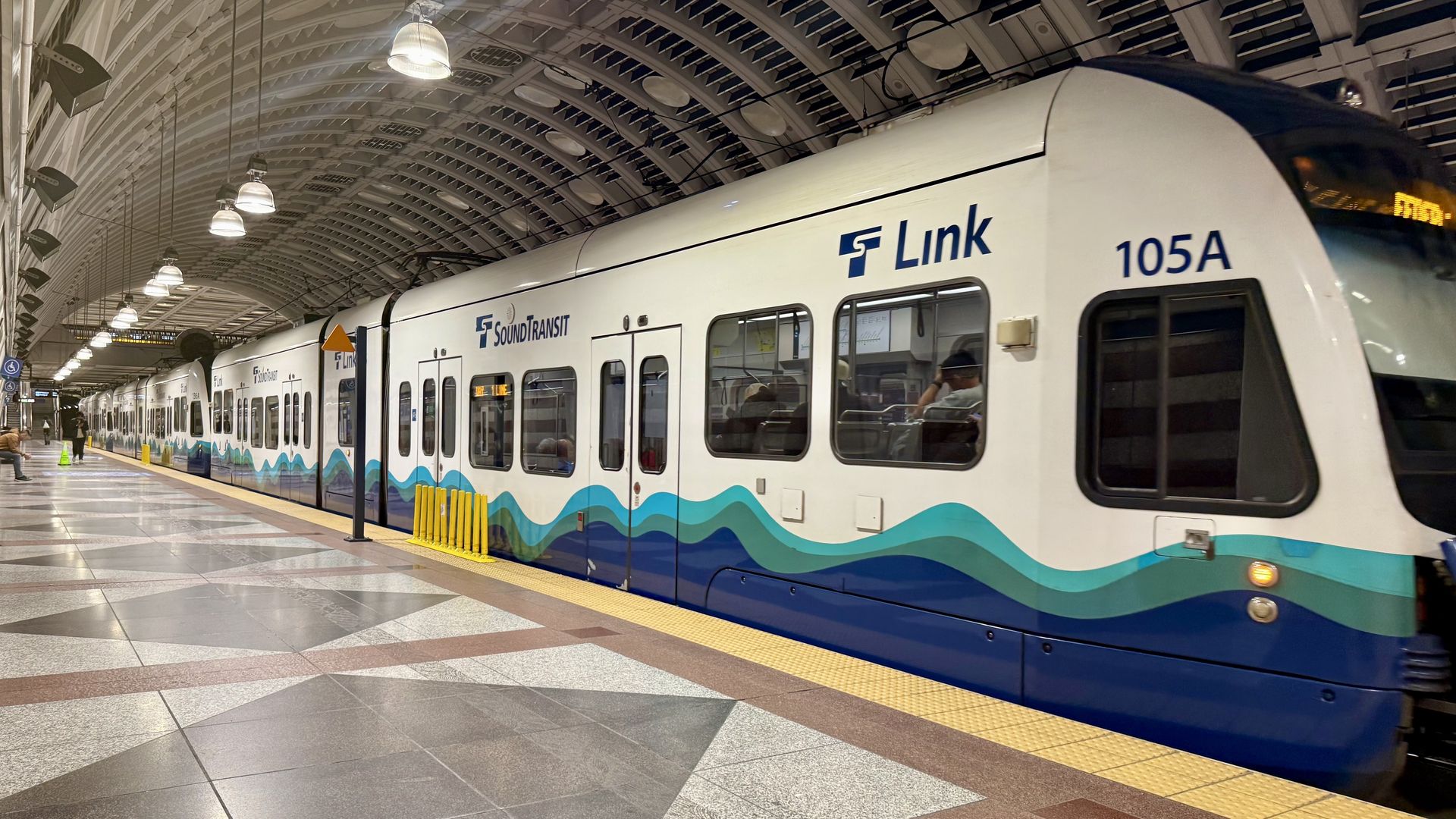
Light rail to Ballard isn't fully funded under Sound Transit's current plan. Photo: Melissa Santos/Axios
Light rail to Seattle's Ballard neighborhood will cost billions more than Sound Transit has on hand — but trains still have a chance of getting there by 2042, the agency says.
Why it matters: Sound Transit approved a cost-saving plan in May that only funds the Ballard light rail line to Seattle Center, several miles south of the busy neighborhood.
- Getting to Ballard's Market Street would require another $7 billion to $9 billion, officials estimated at the time.
The latest: Sound Transit officials now say they could begin service to Ballard and Seattle Center simultaneously in 2042 if they do the following:
- Come up with $1 billion by 2030. This money would go toward buying land needed to build the eventual extension to Market Street.
- Find more cost savings. Agency officials say they'll look for ways to build the line more cheaply. They'll use a review process like the one used for the West Seattle extension, which found more than $2 billion in savings.
- Close the remaining funding gap by 2033. This could involve finding third-party funding, securing longer bond terms, speeding up projects through permitting reform or increasing the agency's debt capacity.
Yes, but: If the region doesn't come up with the money in time, light rail service to Smith Cove, Interbay and Ballard's Market Street could be delayed until around 2060, Sound Transit says.
The big picture: Voters approved light rail to Ballard as part of a transit tax package 10 years ago, but the agency's timelines for building those projects keep slipping.
- Last week, Sound Transit said light rail service to West Seattle won't begin until 2035, a delay of three more years.
What they're saying: Seattle Mayor Katie Wilson said in a news release she is "confident we will find creative ways to lower costs and fund construction" all the way to Ballard.
What's next: Design work on the Ballard extension is expected to be completed by 2032, which could help identify ways to cut costs.