Sound Transit pushes debt fix as $35B shortfall threatens projects

Add Axios as your preferred source to
see more of our stories on Google.
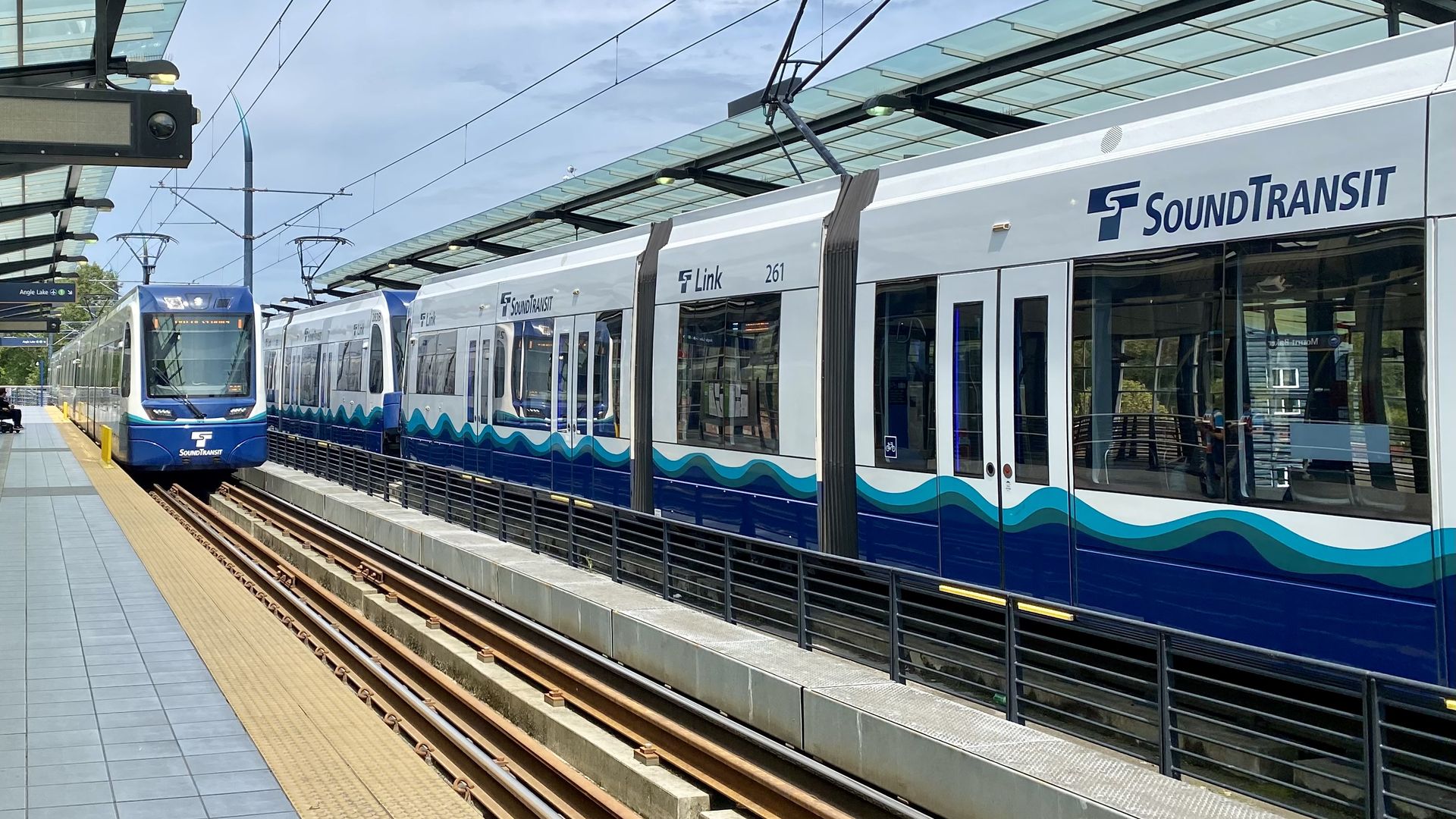
Sound Transit light rail trains at the Mount Baker station in 2022. Photo: Melissa Santos/Axios
Sound Transit leaders are seeking a change in state law they say would help them finish voter-approved light rail extensions to West Seattle, Ballard, Everett and Tacoma.
Why it matters: The agency faces a $35 billion shortfall through 2046 that officials say could delay or scale back some of those projects.
The latest: A bill before the Legislature would allow Sound Transit to issue 75-year bonds instead of 40-year bonds, the maximum term allowed under current law.
- The change would let Sound Transit take advantage of more federal loan options — and save an estimated $492 million in debt payments through 2046, according to agency projections.
- Those savings would "improve cash flow during our peak construction years," helping deliver key project elements "as quickly as possible," Sound Transit spokesperson Amy Enbysk wrote in an email to Axios.
- If interest rates dip, the savings could be even greater — more than $2 billion over the next 20 years, Enbysk said.
What they're saying: Without the bill, Sound Transit would likely look "to cut projects, defer them or delete them all together," Snohomish County Executive Dave Somers, who chairs the Sound Transit Board, testified before a state House panel last week.
- He said inflation and rising construction costs have been major drivers of the agency's budget crunch. Agency documents show expenditures are expected to exhaust cash in the early 2030s as major construction begins.
- "We don't make this request lightly or as a bailout," Somers said, noting the agency is also looking at other ways to reduce project costs.
- A new light rail tunnel connecting downtown Seattle and Ballard would be a likely candidate project for this type of longer-term financing, Sound Transit CEO Dow Constantine told a panel of lawmakers last month.
The other side: Critics are skeptical of the measure, predicting it would raise Sound Transit's overall debt service costs and cost taxpayers more over time.
- The proposal would "push the burden of repayment onto future generations who had no opportunity to vote on the plan," Charles Prestrud of the conservative Washington Policy Center testified during last week's public hearing.
- Sound Transit officials said they would look for opportunities to refinance debt at lower rates and potentially repay debt early to reduce costs.
What's next: Senate Bill 6148 has already passed the state Senate. It would need to pass the House and avoid a veto from the governor to become law.