Seattle's smoky skies are back

Add Axios as your preferred source to
see more of our stories on Google.
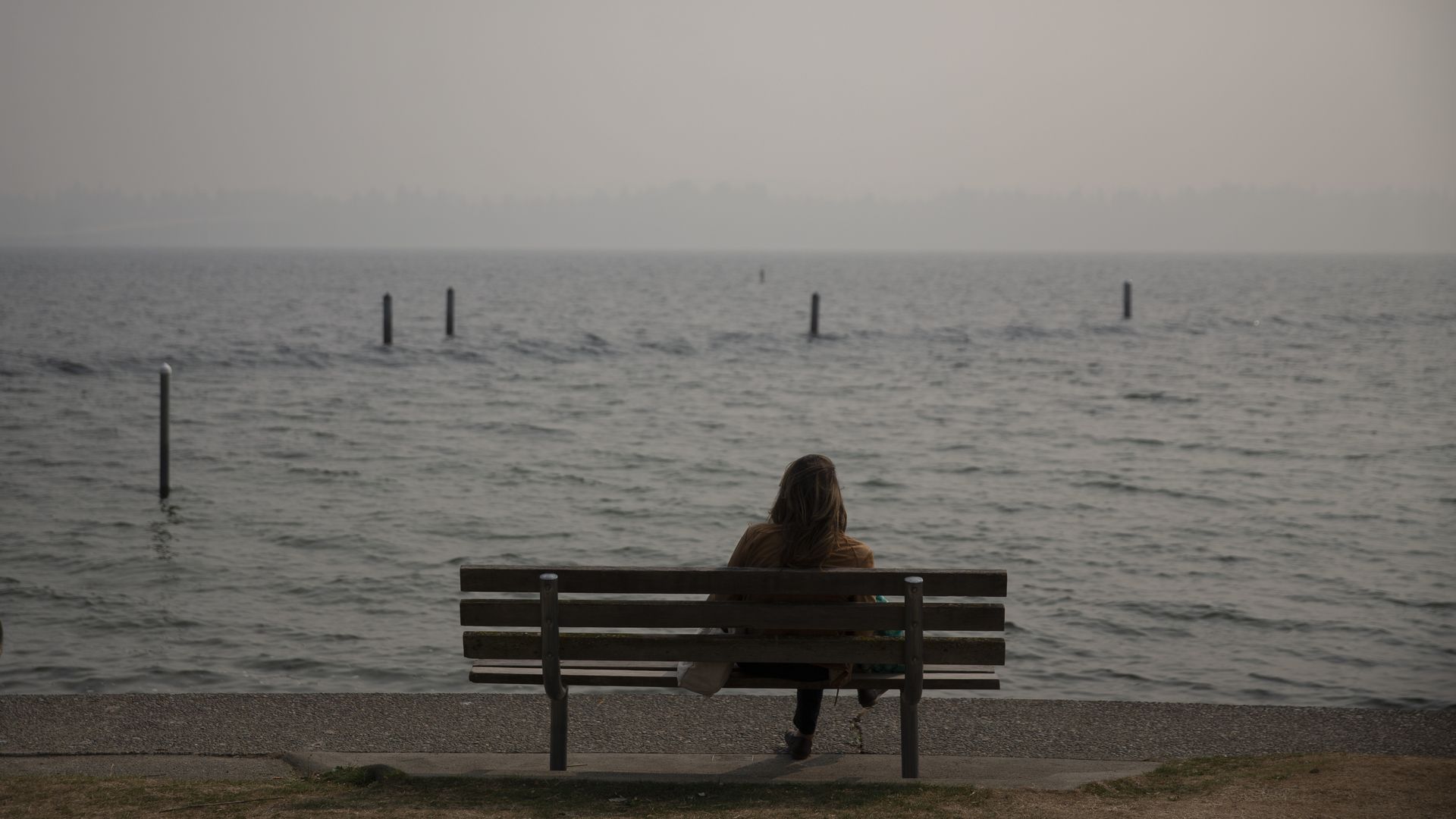
Smoky skies return. Photo: Lindsey Wasson/Getty Images
Smoke is headed to the Seattle area this week as shifting winds carry haze from wildfires burning across the Pacific Northwest into Western Washington.
Why it matters: Forecasters expect air quality to worsen through midweek as smoke filters down to surface level, with potentially unhealthy air quality today, tomorrow and possibly Thursday, Jacob DeFlitch of the National Weather Service in Seattle said.
Driving the news: Much of the smoke is coming from three fast-moving wildfires collectively known as the Spokane Complex fire, DeFlitch told Axios.
- The fires have forced the evacuation of about 65,000 people, destroyed roughly 640 structures, and burned more than 8,000 acres since Saturday, according to the Washington State Emergency Operations Center.
- Spokane Mayor Lisa Brown called it "the worst natural disaster our region has faced."
The latest: Gov. Bob Ferguson said Monday he expects Washington's request for immediate federal assistance to be approved soon, noting that FEMA is already moving resources into the state.
By the numbers: Seattle has enjoyed a mostly smoke-free summer so far this year, but the return of smoky skies is a reminder that wildfire season has been ramping up across the region.
- Washington is battling 13 large active wildfires, most burning east of the Cascades, according to the state Department of Natural Resources.
- Oregon has 32 large active fires — the most of any state — with more than 2 million acres burned in 2026.
- British Columbia has recorded 863 wildfires since April 1, including 128 that remain active.
Context: Strong winds, high temperatures and low humidity prompted a rare National Weather Service extreme fire danger warning Friday.
- Across the West, an unusually warm winter produced a below-average snowpack that melted early, reducing the region's natural water storage and helping fuel Washington's fourth consecutive year of drought.
The big picture: Increasingly smoky summers have become the norm across North America.
- Americans were exposed to four times more wildfire smoke during 2020–24 than during the previous 14 years, according to Climate Central, and plumes from Canada's severe wildfire season have repeatedly drifted into the Lower 48 this summer.
What's next: DeFlitch said cooler, cleaner air is expected this weekend, but noted that Western Washington's smokiest weeks often don't arrive until later in August and September.