Mapped: How Seattle power costs stack up


Add Axios as your preferred source to
see more of our stories on Google.
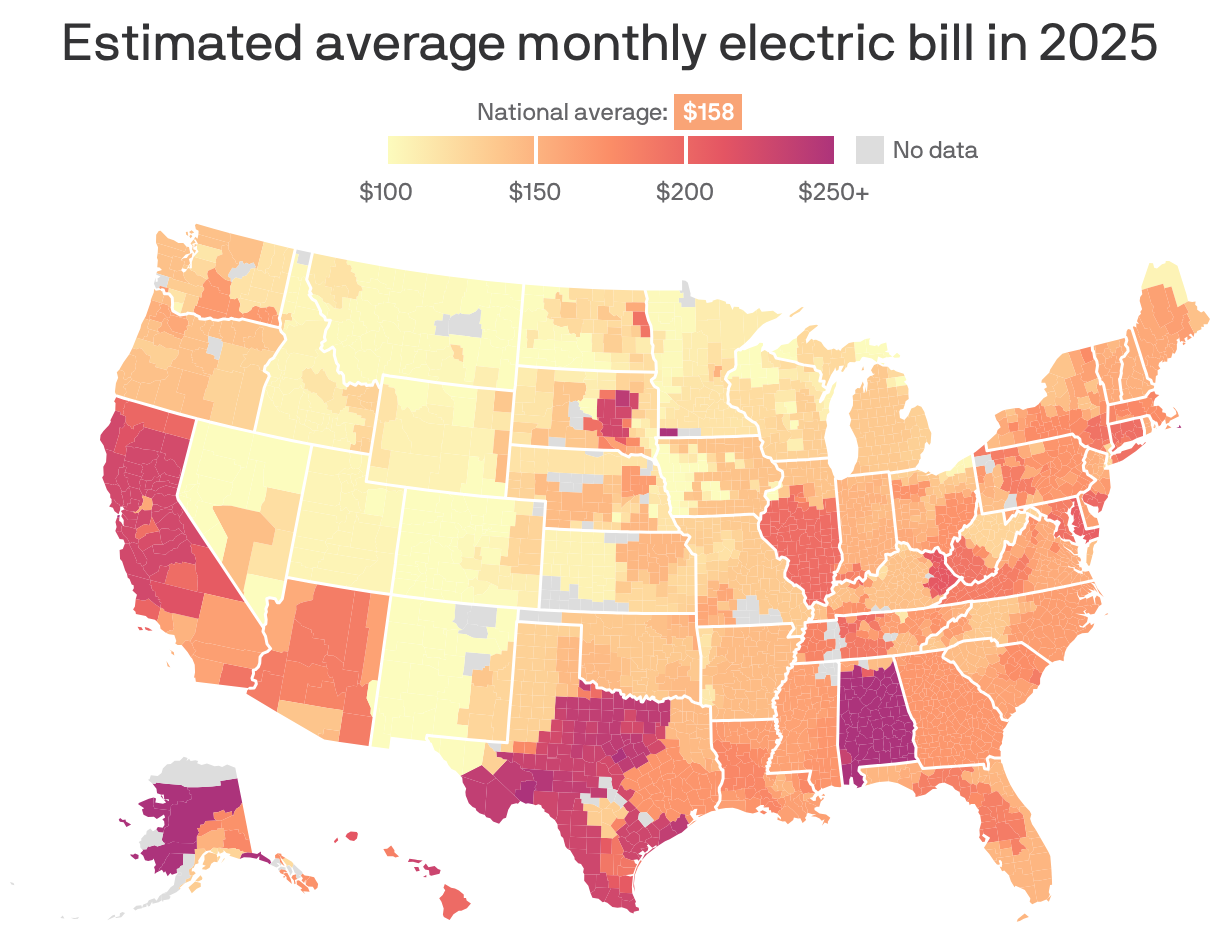
Seattle-area households paid about $125 a month for electricity last year — slightly below the national average of $158 a month — but rising rates are eroding that advantage.
Why it matters: Even slightly lower power bills offer some relief in a high-cost region.
- Washington remains among the most expensive states in the U.S., with housing, utilities and other essentials eating up a growing share of household budgets and reshaping everyday spending decisions.
State of play: Monthly energy averages in Western Washington ranged from $116 in Snohomish County to $125 in King and $141 in Kitsap last year, per a new Axios analysis of data from climate newsroom Heatmap News.
Yes, but: Electricity rates across Washington have been climbing, with major utilities raising prices steadily since 2023 and more increases already locked in through this year.
- Puget Sound Energy is proposing a rate increase of nearly 30% for electricity and nearly 20% for gas over three years starting in 2027.
- That's on top of electricity rate increases of 11.5% last year and 12% this year.
- Seattle City Light is planning annual rate increases through 2030, including a 5.4% hike this year, followed by anticipated annual rate increases of 7% to 10% next year and beyond, the utility says.
Between the lines: Utilities have previously cited several drivers behind rising rates, including severe weather, clean energy investments, and higher wholesale power costs, as well as the state's push to reduce emissions by 45% by 2030.
The big picture: Tensions over rising energy bills and power-hungry AI data centers are emerging as a key political issue and could be a potent force in this year's midterms.
- Americans are also paying more for other forms of energy, like gasoline, since the Iran war started.
Zoom in: Nantucket County, Massachusetts ($296); San Francisco County, California ($282); and Nobles County, Minnesota ($273) had the highest estimated average monthly electric bills in the continental U.S. across 2025.
The bottom line: Washington's historically moderate electricity bills are losing their edge as steady rate hikes — and broader cost pressures — squeeze household budgets.