Why Seattle gas could hit $10 a gallon

Add Axios as your preferred source to
see more of our stories on Google.
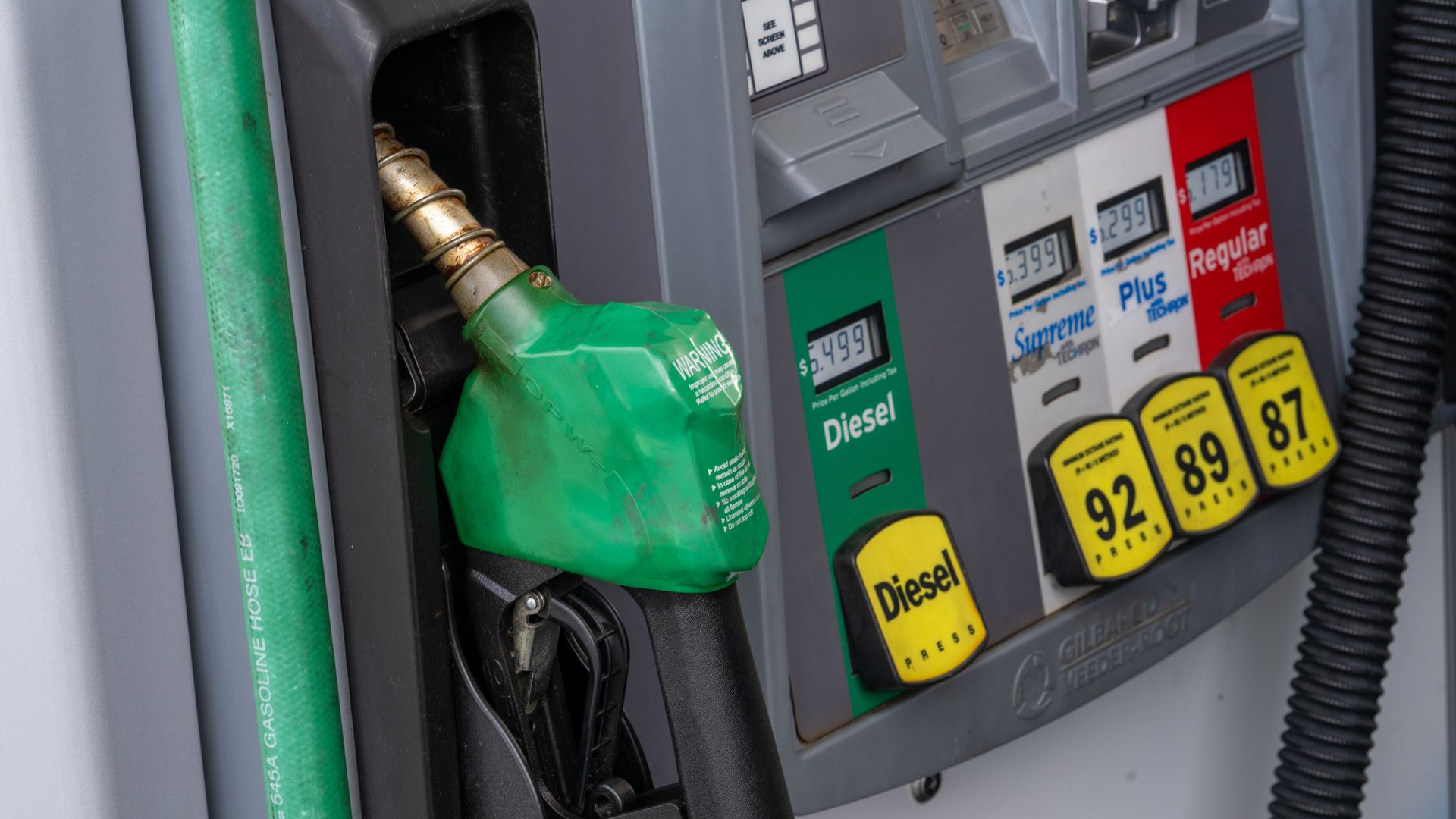
That price hurts. Photo: M. Scott Brauer/Bloomberg via Getty Images
If global disruptions continue, gas prices here could climb as high as $10 a gallon.
Why it matters: Washington drivers already pay among the highest gas prices in the country — so when prices rise, the pain hits harder.
The big picture: Gasoline prices are set globally — meaning Washington retailers are competing for crude oil with buyers around the world, Ryan Cummings, chief of staff at the Stanford Institute of Economic Policy Research, told Axios.
- That's true even though Washington produces more gasoline than it uses because refiners can sell their fuel to the highest bidder globally, he said.
- About 20% of the world's oil flows through the Strait of Hormuz, so any prolonged disruption there can quickly drive up prices worldwide.
Threat level: Some analysts say oil prices — which drive gasoline costs — could surge sharply if the Strait of Hormuz remains closed.
If the Strait opens in the next two weeks, prices may plateau a little higher than they are now, Cummings said.
- But if the Strait takes longer to open, say, it's still closed at the end of May, then "all bets are off," he said.
- We could see gas as high as $10 a gallon at some of the most expensive stations.
The latest: As of this week, gas prices averaged about $5.36 in Washington state and $5.59 in the Seattle area, compared to $4 nationally, according to AAA.
Zoom in: West Coast fuel prices are especially exposed because they are more closely tied to markets in Asia due to geography and limited pipeline connections, per Cummings.
- Asian refineries rely heavily on crude that moves through the Strait of Hormuz.
State of play: Even apart from global events, Washington's gas prices run higher than much of the U.S. due to a mix of state policy and regional market dynamics, according to Todd Myers of the conservative Washington Policy Center.
- He points to Washington's high gas tax and its cap-and-invest carbon program as key factors. Taken together, he estimated those policies add roughly $1 per gallon.
What we're watching: Even if the strait reopens soon, prices tend to fall more slowly than they rise, per Cummings.