Why your daily cup of coffee in Seattle is so expensive now

Add Axios as your preferred source to
see more of our stories on Google.

Illustration: Lindsey Bailey/Axios
If you've felt like your daily coffee fix is costing more lately, you're right — particularly here in Seattle.
Why it matters: Seattle saw the biggest rise in the price of a cup of coffee among 20 major U.S. cities between August 2024 and August 2025, according to data from the payment platform Toast.
- That's based on orders at restaurants using Toast's point-of-sale technology.
By the numbers: The median price of a regular hot coffee in Seattle was $4.50 in August, Toast reported — up 12.4% from a year earlier.
- The nationwide median was $3.52, up 2.9% year-over-year.
- Statewide, the median coffee price was $4 — a 5.4% increase from the previous year.
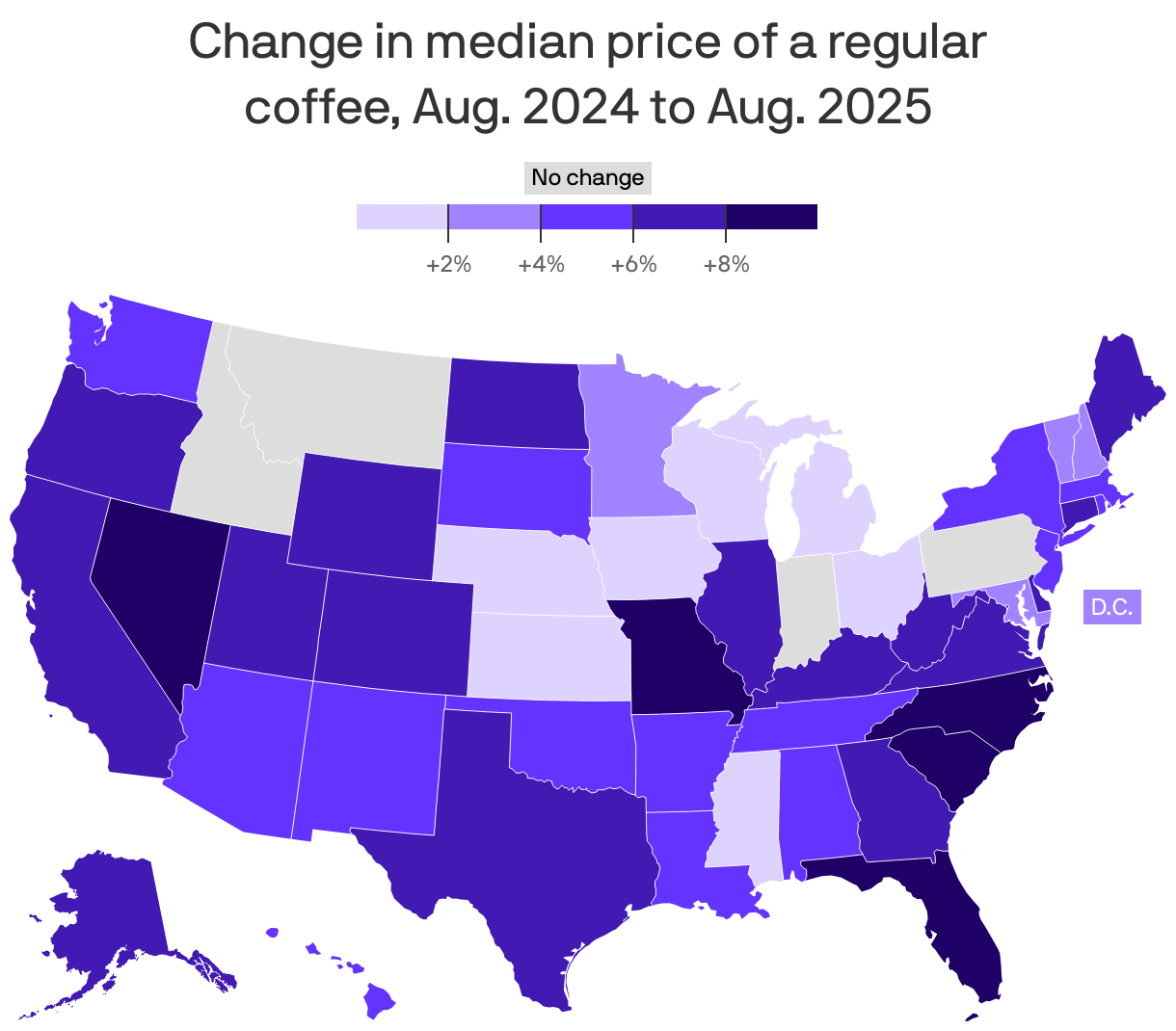
State of play: Coffee is among many commodities affected both by general inflation and the Trump administration's import tariffs, Axios' Alex Fitzpatrick writes.
- Coffee plants are also vulnerable to extreme weather tied to climate change, including droughts and heat waves.
What they're saying: Jill Killen, the owner of Cloud City Coffee in Seattle's Maple Leaf neighborhood, said she's had to stop buying coffee from Brazil due to the dual punch of tariffs and drought, both of which have driven up the price of Brazilian coffee beans.
- "The price is already so high — to add a 50% tariff to it is kind of beyond the pale," Killen told Axios, referencing tariffs the Trump administration recently imposed on many Brazilian imports.
- Tariffs are also driving up the cost of beans Killen buys from other countries, such as Ethiopia, she said, hurting her bottom line.
- Cloud City hasn't yet raised its drink prices, but Killen has started charging $1 to $2 more per bag of retail coffee beans to try to offset her increased costs.
Dan Ollis of Victrola Coffee Roasters, which has several Seattle locations, told Axios that coffee prices reaching "historic highs" is one challenge — and the cost of operating in Seattle is another.
- Local labor costs, insurance, rent, utilities, taxes and regulatory fees "have all seen substantial increases" in recent years, Ollis wrote in an email.
What's next: Killen said she typically raises her menu prices each January to reflect increases in the minimum wage — and next year, those increases will also reflect the higher cost of coffee beans.
- "We'll try to minimize it, but we have to be realistic," she said.