Tariffs are coming for your breakfast — but not your OJ

Add Axios as your preferred source to
see more of our stories on Google.
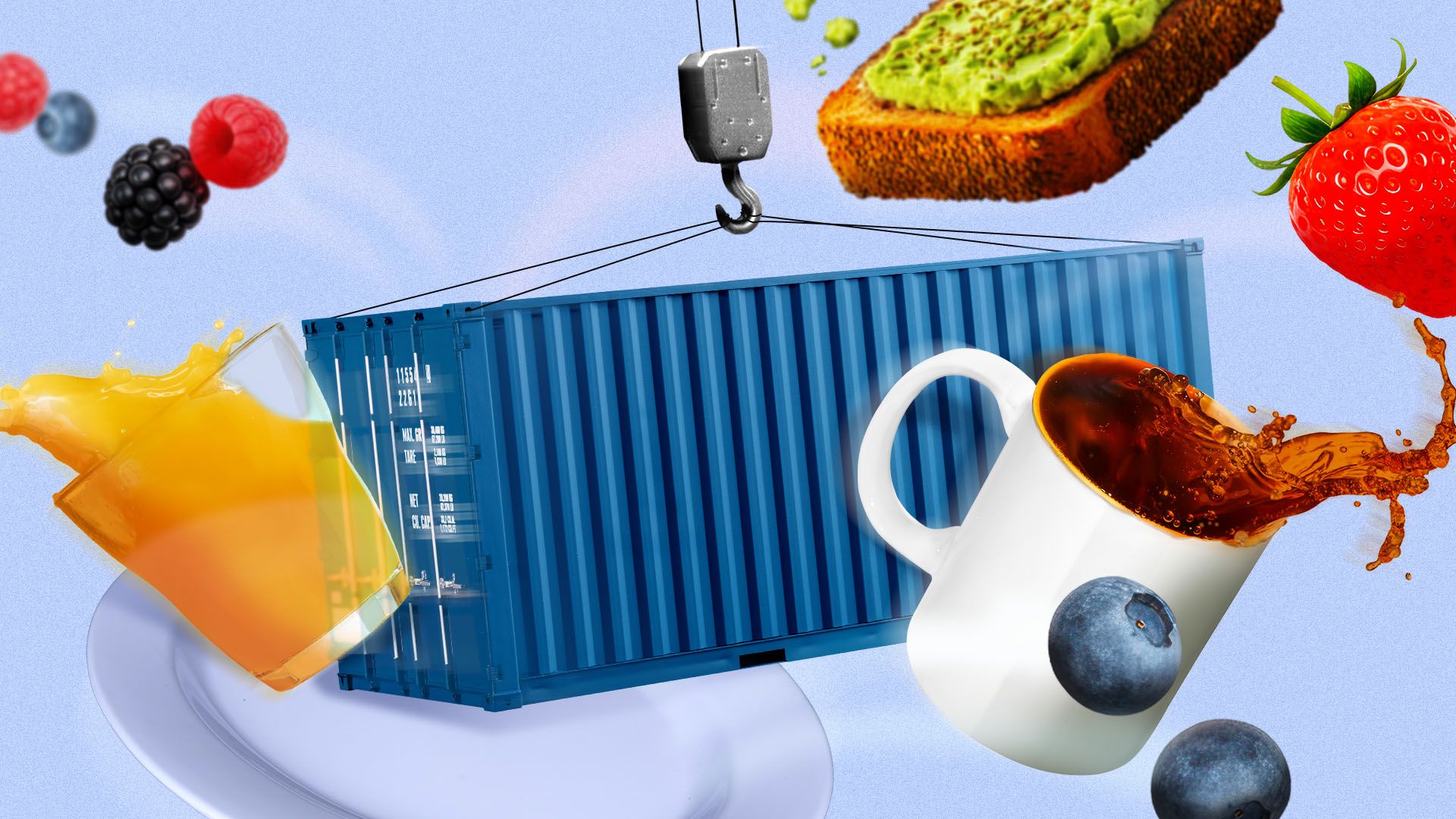
Illustration: Sarah Grillo/Axios
New tariffs are poised to make your breakfast a bit pricier, especially your morning cup of coffee — but your orange juice caught a break.
Why it matters: Your morning staples are caught in the crossfire of global trade politics.
- The new tariff rates — the highest in nearly a century — will cost the average family about $2,400 this year, according to the Yale Budget Lab's latest analysis.
The big picture: American consumers have been navigating sticky inflation for food prices, and breakfast costs have been a sore point.
- Coffee prices have been volatile due to crop issues in Brazil, while chocolate has soared on cocoa shortages.
- A new wave of tariff hikes targeting certain European and Latin American imports is expected to push prices higher.
Coffee and chocolate prices
By the numbers: Brazilian coffee will face a 50% tariff, up from 10%.
- Even a modest 10% tariff on Brazilian coffee could raise U.S. retail prices 6–8% within 90 days, Francisco Martin-Rayo, CEO and co-founder of Helios AI, tells Axios.
- Swiss chocolate and coffee are being hit with a 39% tariff, up from the 31% tariff on Switzerland exports announced in April.
- This could affect Nespresso, as parent company Nestlé says every capsule sold in the world is produced in one of three factories in Switzerland.
Rising tariffs to hit fruit and vegetable prices
Zoom in: Martin-Rayo said his firm is tracking price shocks across the produce aisle — from tomatoes and mangoes to avocados — where tariffs compound climate disruptions.
- The biggest consumer price impacts are expected to hit fresh fruits, including bananas and vegetables, as well as processed imports like canned tomatoes, he said.
- "In some cases, we're projecting 10–15% retail price hikes within a single quarter," he said.
Why orange juice got an exemption
The intrigue: Orange juice from Brazil was exempted from tariffs, even though oranges are grown in Florida and California.
- Chris Brigati, chief investment officer at San Antonio-based investment firm SWBC, told Axios the reason for the exemption "remains unclear," especially given Brazil's coffee was hit with a 50% tariff.
- "Perhaps Trump wanted to limit the potential pain to higher prices from tariffs, as supply shock impacts are likely to occur," Brigati said.
Zoom out: U.S. production has plunged to the lowest level in 88 years due to "unfavorable weather and continuing disease problems," USDA data shows, noting citrus greening has been battering Florida crops.
- Imports now account for 90% of the U.S. orange juice supply — with half coming from Brazil, which dominates global production under brands like Tropicana, Minute Maid and Simply Orange.
The bottom line: Expect your chocolate croissant, avocado toast and cold brew to cost more — but your OJ might be safe, for now.
