Seattle expands real-time surveillance tools

Add Axios as your preferred source to
see more of our stories on Google.
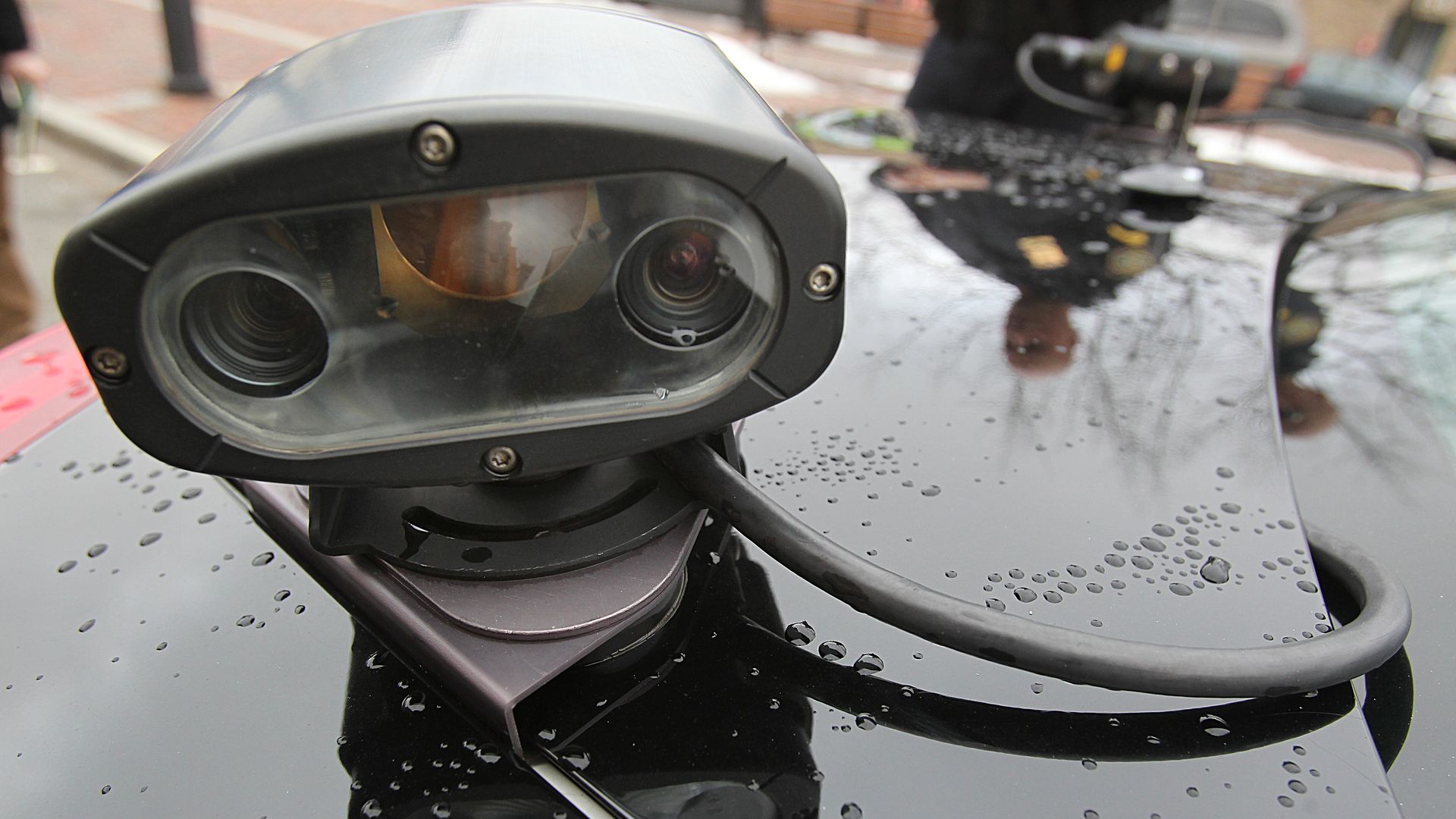
Automatic license plate readers allow officers to check the driving history and criminal record of passing motorists. Photo: Suzanne Kreiter/The Boston Globe via Getty Images
Seattle has become a city under watch, leaning on a variety of surveillance systems to fight crime — and alarming privacy advocates in the process.
Why it matters: Seattle's surveillance moves — mirrored in other American cities — come as advances in technology, such as AI-powered cameras and national license plate databases, make it possible to track people on an unprecedented scale.
State of play: Critics warn that without strict guardrails, tools deployed in the name of public safety can become cudgels for monitoring political dissent, targeting marginalized groups or accessing sensitive data.
- The ACLU also warns that cities like Seattle risk "surveillance creep," where gradual expansion turns narrow safety programs into broad monitoring networks.
Driving the news: The City Council last month voted 7-2 to expand Closed-Circuit Television (CCTV) coverage into the Stadium District, Capitol Hill nightlife area and around Garfield High School, giving the Seattle Police Department access to live feeds from hundreds of Department of Transportation cameras.
- The recent CCTV expansion follows a pilot program that started last year.
What they're saying: Proponents say the system has built-in safeguards that prevent misuse.
- It bans facial recognition, limits data retention and is overseen by three accountability bodies, creating some of the strongest safeguards in the U.S., Seattle Council member Bob Kettle, Public Safety and Technology Committee chair, told Axios.
- "Most people I talk to want these tools to keep their neighborhoods safe," Kettle said.
The other side: More than 100 people and organizations opposed the expansion at the Sept. 9 council meeting, and 16 state legislators signed a letter against it.
- The Seattle Office of Civil Rights warned that the tools are unproven and risky, recommending shorter CCTV footage retention (7–14 days instead of up to 30) and stricter use limits.
- The ACLU of Washington, immigrant advocacy group OneAmerica, Asian Counseling and Referral Service, and the Seattle Community Police Commission also condemned the expansion.
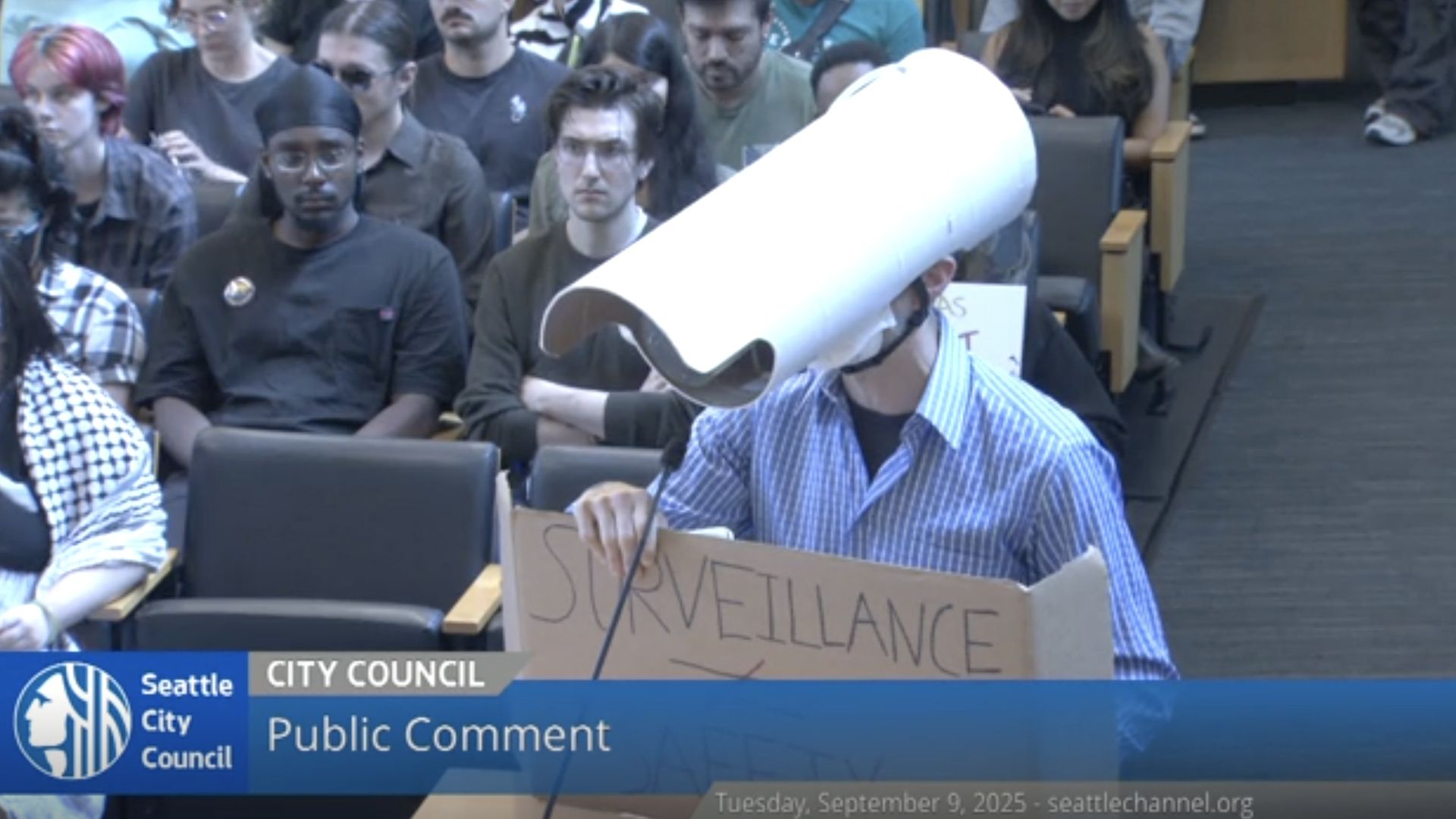
"Surveillance isn't safety," said one resident who spoke at the council meeting wearing a camera headpiece. "If it was, it would be going in Ballard, Wallingford, Queen Anne, not the (Chinatown International District)."
How it works: Several different intersecting technologies are allowing authorities to keep their eyes on Seattle citizens.
- CCTV: Fixed cameras in what city leaders have called "hot spots," with individuals able to register their residential cameras to feed video to SPD.
- Automated License Plate Readers (ALPR), recently added to all of Seattle's patrol cars, can scan thousands of plates an hour and log a car's license, location and time stamp.
It all flows into the Real-Time Crime Center (RTCC), which integrates 911 calls, officer locations, ALPR, CCTV and traffic cameras into a single live map for police analysis.
- Seattle Police told Axios that ALPR data is securely stored and deleted after 90 days, with access limited to RTCC analysts and SPD Intelligence Unit members.
- CCTV footage is saved locally. It can be kept for up to 30 days but is typically deleted in five days unless flagged for evidence. Only RTCC staff can access it, per SPD.
The big picture: This isn't only happening in Seattle. It's part of a national trend of new surveillance tech emerging in cities — from Denver to Los Angeles — that have grappled with public safety and officer shortages in recent years.
- But critics say it begs a broader question: What keeps us safer, and what just makes us easier to watch?