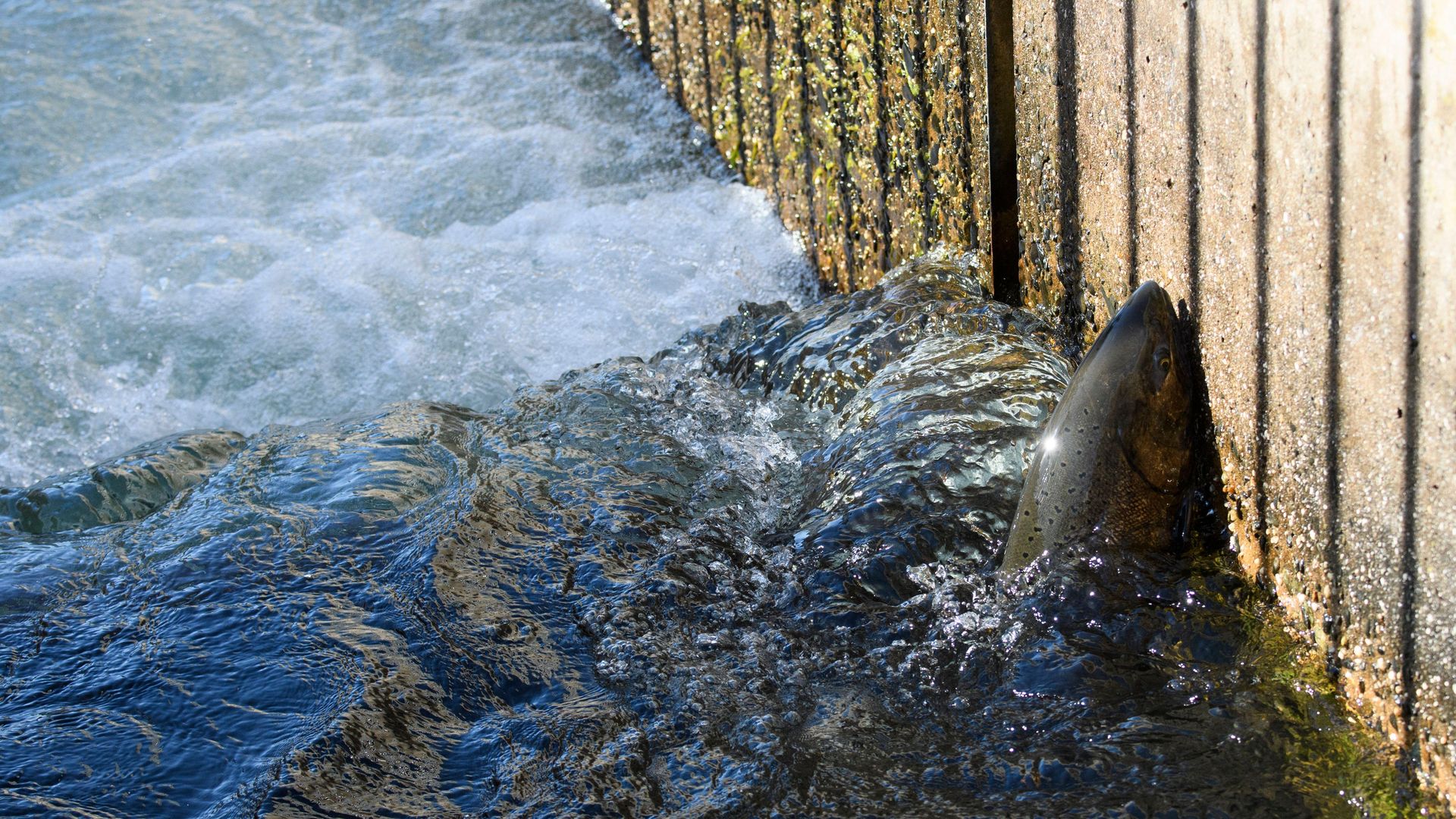
The future of salmon recovery in Oregon is uncertain. Photo: Patrick T. Fallon/AFP via Getty Images
The Trump administration's recent withdrawal from a landmark agreement likely sends the fate of salmon recovery in the Columbia Basin back to court.
Why it matters: The pact — known as the Resilient Columbia Basin Agreement — put a five-year stay on litigation brought by several Northwest tribes and environmental advocates over the federal government's operation of dams in the region.
Catch up quick: In 2023, the Biden administration announced it would dedicate $1 billion over the next decade to salmon restoration and tribal-led clean energy projects throughout the basin.
The agreement stopped short, however, of calling for the breaching of four dams on the Lower Snake River, which has long been a goal of groups looking to help salmon.
On June 12, Trump issued a memorandum canceling the agreement and calling it "radical environmentalism."
What they're saying: "The Administration's decision to terminate these commitments echoes the federal government's historic pattern of broken promises to tribes," Yakama Tribal Council Chairman Gerald Lewis said in a written statement.
In a written statement, U.S. Sen. Patty Murray (D-Washington) called the withdrawal "grievously wrong" and "shortsighted."
The other side: Some saw the agreement as the first step toward breaching the dams, though, a move that some have said would imperil hydropower, irrigation for agriculture, and shipping on the Columbia.
The Northwest Public Power Association, a hydropower advocacy group, in a written statement called the withdrawal "a necessary course correction."