Washington faces early, high-risk wildfire season

Add Axios as your preferred source to
see more of our stories on Google.
Data: NOAA; Map: Axios Visuals
Experts worry that an early wildfire season — fueled by record-breaking early heat, rapidly melting snow, and expanding drought — is in store for Washington this summer.
Why it matters: With drier landscapes, the state is entering fire season more vulnerable than usual, setting the stage for what could be an extended and potentially explosive season, according to longtime Pacific Northwest meteorologist Ted Buehner.
What they're saying: So far this year, Seattle is about 5 inches below average rainfall, Buehner told Axios.
- "Unless we get substantial rainfall soon — which isn't in the cards — it's going to be a long season," Buehner told Axios.
Driving the news: The state Department of Ecology (DOE) expanded its drought emergency declaration last week to include watersheds in all of Whatcom and Skagit counties, and portions of Snohomish, King and Pierce counties.
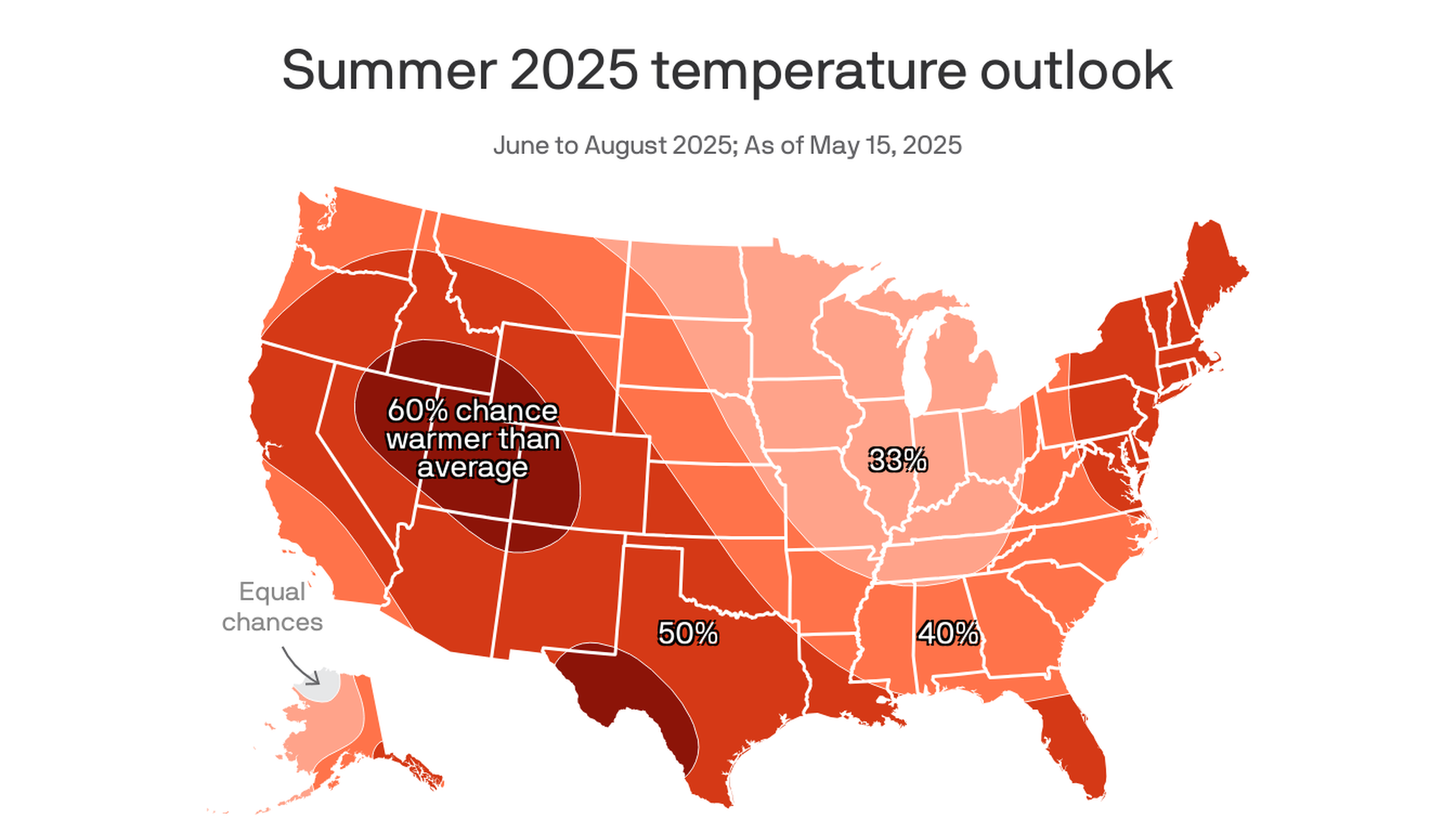
- The Climate Prediction Center forecasts a higher-than-normal probability of elevated temperatures and reduced rainfall across Washington from July through September.
State of play: Matthew Dehr, a wildland fire meteorologist with the state Department of Natural Resources (DNR), told NBC the state's wildfire season could begin as early as this month.
- Without more rain, "fire season could start really, really hot, and by early June," he said.
- DNR is already contending with reduced resources and funding, alongside increasing exhaustion among crews, Dehr said in a separate interview with KING 5.
- The state's wildfire prevention funding was cut in half this year, per Commissioner of Public Lands Dave Upthegrove.
The big picture: DOE's drought lead, Caroline Mellor, told Axios via email that this year's unusually dry and warm spring pushed the state's snowpack to melt as much as 33 days earlier than normal.
- "This really is the new normal for our state, and we need to be prepared to deal with that reality," she said.
Between the lines: Climate change is increasing the likelihood and severity of record wildfires, such as those that devastated California, Oregon and Canada and parts of the Amazon last year.
What's next: About 73% of wildfires in Washington state from 1992 to 2020 were caused by human activity, as opposed to natural phenomena like lightning strikes, a U.S. Forest Service analysis of wildfire data found.
- Before lighting a fire, check for burn bans in your county, and be cautious with engines, which can spark fires in dry grasses.
- Create a defensible space around homes by clearing dry brush and flammable vegetation, and signing up for local emergency alerts.
You can track active wildfires monitored by the state at Washington DNR's wildfire dashboard.