Seattle's sneezy spring starts early

Add Axios as your preferred source to
see more of our stories on Google.
Illustration: Shoshana Gordon/Axios
It's not just sunshine that signals spring in Seattle; it's the collective chorus of sniffles and the bloom of bloodshot eyes.
Why it matters: Spring allergies affect millions of Americans and in the Pacific Northwest, they may linger longer.
- The region's mild climate and abundant trees already mean tree pollen season can be intense, and now climate change is making that period start earlier and stretch even further.
Driving the news: Tree pollen levels are listed as high in the Seattle area and are likely to be elevated all week, according to the Allermi allergy clinic.
- Alder trees are the primary culprits right now, with counts that reached 499 grains per cubic meter at the end of March, per the Northwest Asthma & Allergy Center.
- Pollen dustings from cedar and juniper, oak and ash will be overlapped by grass pollen season in May, per the allergy center.
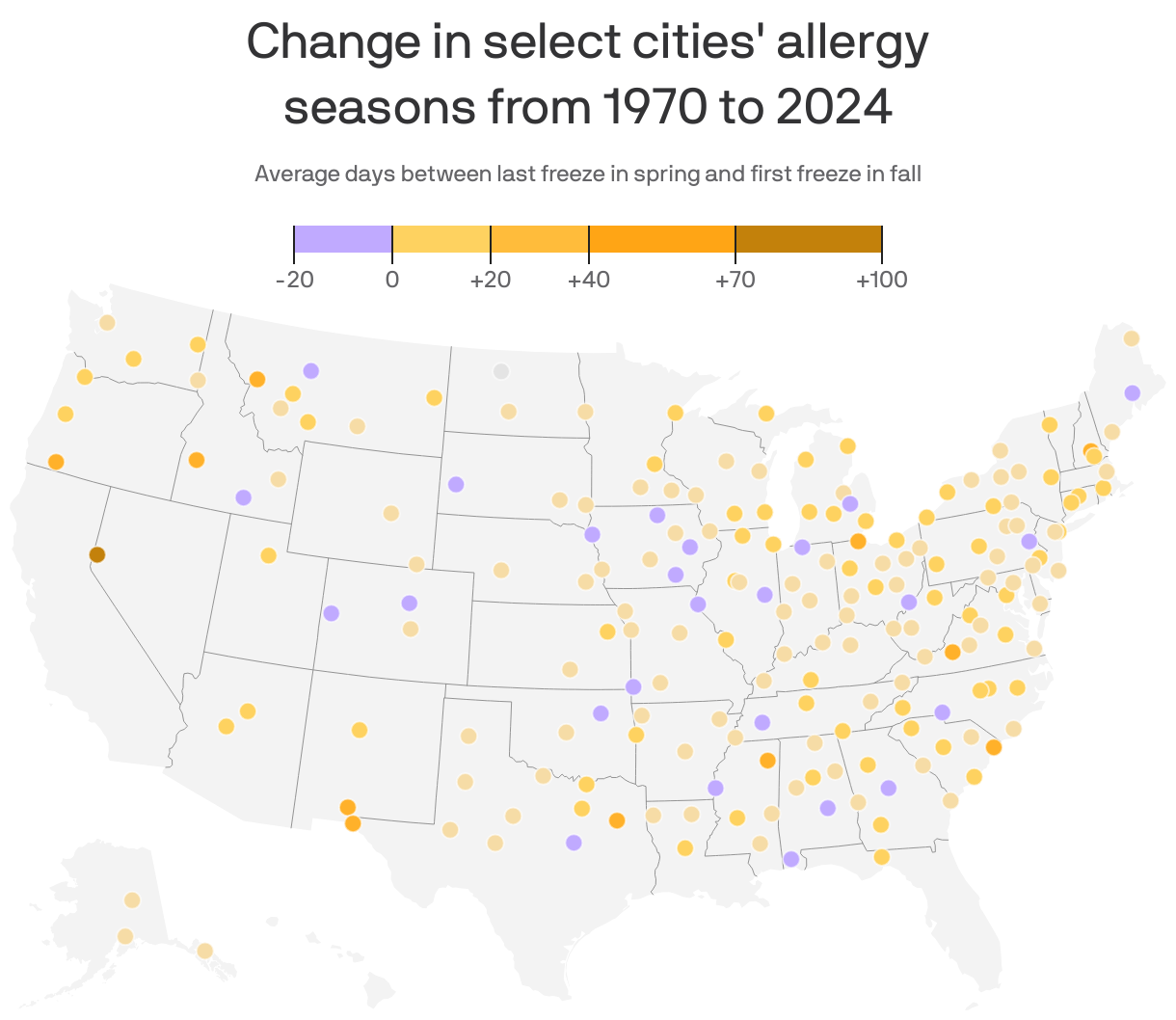
By the numbers: The freeze-free growing season lengthened between 1970 and 2024 in nearly 90% of the 198 cities analyzed by Climate Central, writes Axios' Alex Fitzpatrick.
- Warming trends lead to more freeze-free days each year, giving plants more time to grow and release allergy-inducing pollen, according to the climate research and communications group.
- Seattle's allergy season grew by 8 days between 1970 and 2024.
The bottom line: Experts recommend going to the doc and starting allergy meds, like intranasal antihistamines, corticosteroids, or oral antihistamines, as soon as possible.
- Use the PollenWise app, which uses data from the state Department of Health's network of pollen monitors or Pollen.com to plan ahead.
- Limit outdoor activity when counts are high. Shower and change after being outside.
- Keep windows closed, clean surfaces often, and use HEPA filters or a portable air cleaner.