Immigrants pay billions in taxes in Washington state


Add Axios as your preferred source to
see more of our stories on Google.
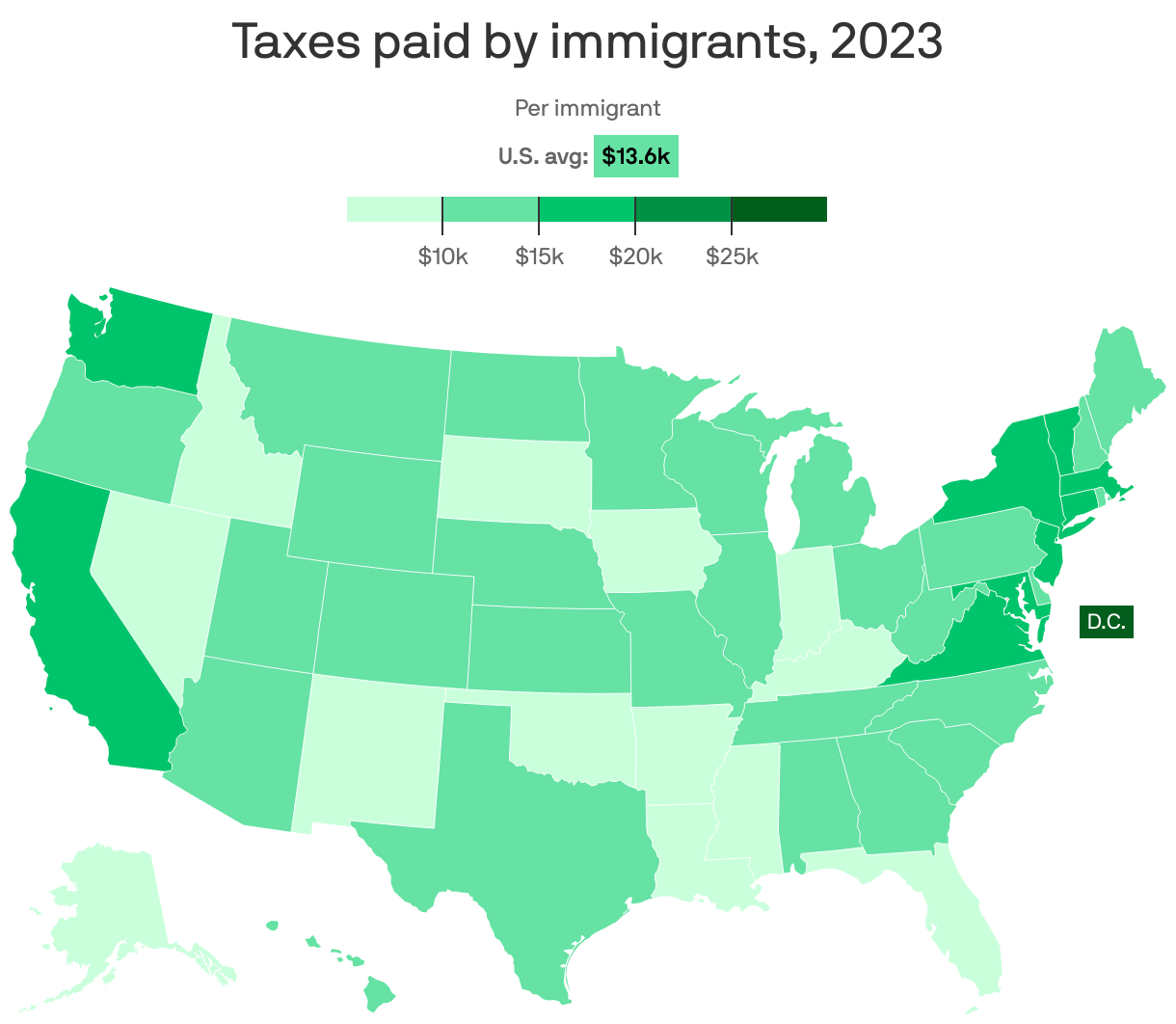
Washington's more than 1.2 million immigrants paid nearly $23 billion in taxes in 2023, per a recent analysis, with undocumented immigrants contributing about $3 billion to that total.
Why it matters: The numbers underscore how immigrants, both documented and otherwise, contribute to Washington's economy and government services, even as the Trump administration looks to increase mass detention and deportation.
How it works: These figures come from a recent report by the American Immigration Council, a nonprofit advocacy group, and are based on 2023 census data.
- The report has a range of other data about immigrants' economic contributions, including their spending power.
By the numbers: Washington's immigrant households earned more than $81 billion in 2023, per the analysis, and paid about $18,700 per person in annual taxes.
- That was the highest rate of taxes paid by immigrants among U.S. states, trailing only Washington, D.C., where immigrants paid an average of $26,700 per person in yearly taxes.
Zoom out: Nationwide, the country's 47.8 million immigrants paid nearly $652 billion in taxes in 2023.
Zoom in: In Washington that year, immigrants made up nearly half of Washington's agricultural workforce, almost 30% of the state's information workers, and about 21% of the state's manufacturing workers, the report says.
- The taxes they paid contributed more than $7 billion to Social Security and more than $2 billion to Medicare.
Between the lines: Washington is home to nearly 290,000 undocumented immigrants, making up almost a quarter of the state's total immigrant population.
- Many of them pay federal, state and local taxes, even though they are not eligible for many government benefits.
Case in point: Undocumented immigrants don't qualify for unemployment insurance in Washington state.
- A proposal that would have created a program to extend jobless benefits to undocumented immigrants failed to advance in the Legislature this year.
Go deeper: Seattle metro grows faster than U.S., driven by immigration