Seattle's air quality is getting worse


Add Axios as your preferred source to
see more of our stories on Google.
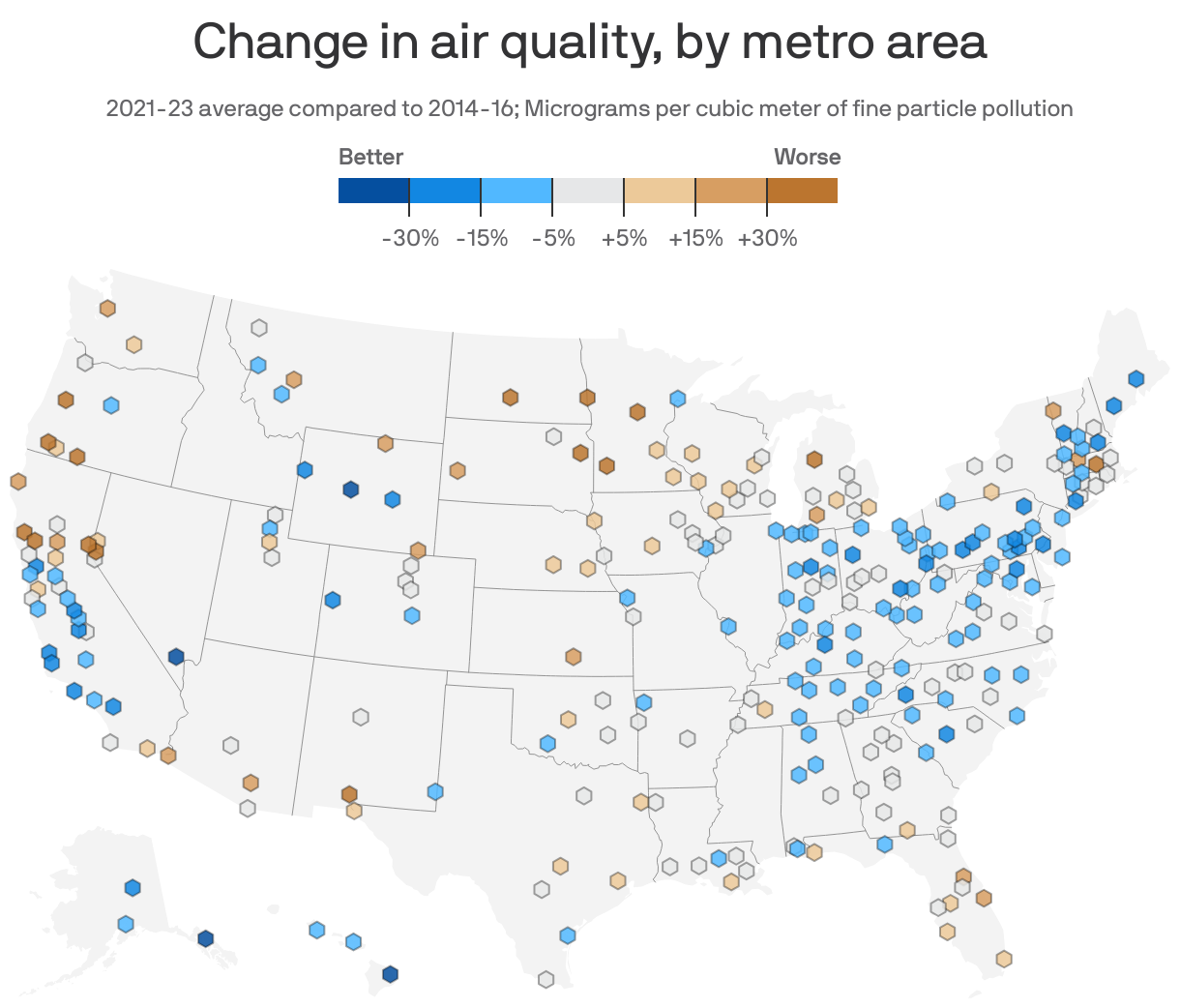
Seattle's air quality is deteriorating, with fine particle pollution rising more than 17% over the last decade, according to year-over-year EPA data.
Why it matters: A growing body of research shows that polluted air is connected to poor reproductive outcomes, increased dementia risk, more asthma attacks and other respiratory health effects.
By the numbers: The average percentage of fine particle pollution in the Seattle metro area, which includes Bellevue and Tacoma, increased from 6.28 micrograms per cubic meter in 2014-16 to 7.4 micrograms in 2021-23, per the EPA.
Zoom in: Seattle's air pollution is 10% higher than in similar-size U.S. cities due to industry and transportation corridors, with fossil fuels being the primary contributor, IQAir's CEO Glory Dolphin Hammes told KIRO Newsradio last year.
- Wildfire smoke is a concern, but fossil fuel emissions from buildings and vehicles are the biggest drivers of air pollution in Seattle, per city data.
- The problem is expected to get worse in coming decades, Hammes said.
The big picture: Tracking fine particulate matter (PM2.5) is a helpful indicator of air pollution and a major factor in air quality index scores, but it doesn't account for all variables. So air pollution can be worse than it appears on your weather app.
Be safe: Air quality experts recommend checking your local AQI and trusting your nose. If you smell smoke — even if the AQI is "green" — limit your time outside.