How use of weight-loss drugs has grown in Washington


Add Axios as your preferred source to
see more of our stories on Google.
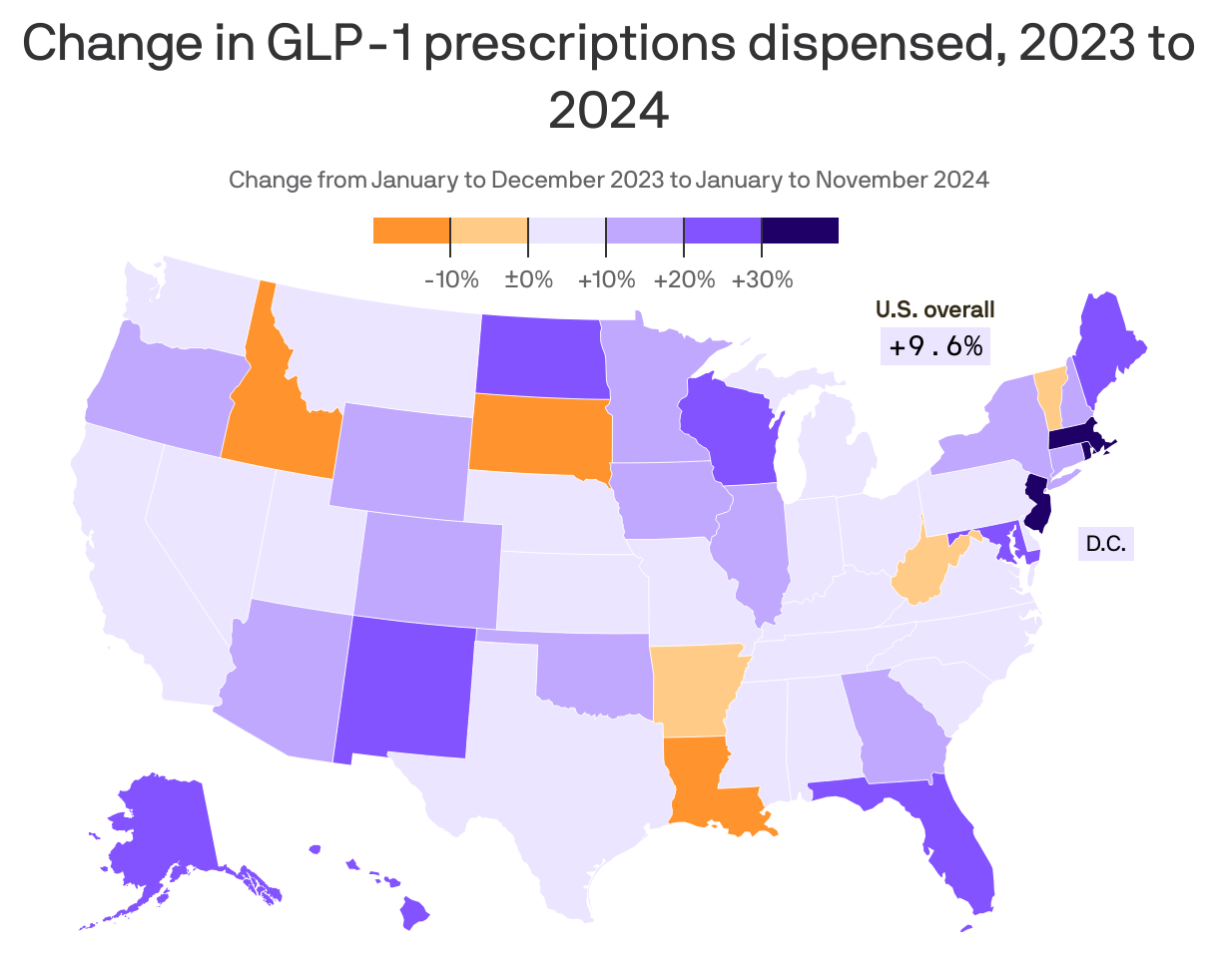
The emergence of groundbreaking weight-loss drugs is transforming how Americans shed pounds, including in Washington state.
The big picture: Nearly 18 million Americans are expected to be taking versions of GLP-1 drugs by 2029, according to investment bank UBS.
Zoom in: In Washington, the number of GLP-1 prescriptions dispensed last year rose 8.4% between 2023 and 2024, according to insurance claims data from the health analytics company PurpleLab.
- More than 717,000 GLP-1 prescriptions were dispensed statewide last year as of November, per data the company shared with Axios.
By the numbers: GLP-1 drugs — which are currently administered in the form of regular injections — may already be reversing America's obesity crisis.
- In a survey conducted from 2021 through 2023, 40.3% of adults 20 and older were classified as having obesity, down from the all-time high of 41.9% from 2017 through 2020.
- The data from the National Health and Nutrition Examination Survey has prompted observers to say that the U.S. may have passed peak obesity.
What they're saying: "I think it's a legitimate breakthrough," Michael Schwartz, a professor of medicine at the University of Washington Medicine Diabetes Institute, told Axios.
- He said the drugs are proving as effective for weight loss as gastric bypass surgery but are less invasive.
State of play: GLP-1 drugs, which include brand-name products such as Ozempic and Wegovy, are leaving a trail of disruption throughout the economy.
- Companies such as WeightWatchers are struggling to adapt as Americans rethink the concept of dieting. The company's CEO, who apologized for its past role in fostering a culture that shamed people for being overweight, left in September.
- Bariatric surgery is declining in popularity, prompting some health systems to shutter or cancel investments in facilities.
- Demand for treatments like hip and knee replacements could decline over time as lighter bodies put less pressure on joints, some experts believe.
Yes, but: Price and access remain significant challenges.
- List prices for a month's supply of GLP-1s range from about $936 to $1,349 before insurance, which often doesn't pay enough for people to afford the drugs, according to Kaiser Family Foundation research.
- Widespread shortages have prevented some patients from getting prescriptions filled, though the FDA has said the shortages are improving.
- Meanwhile, pharmacies are introducing compounded alternatives that critics say allow them to skirt regulatory review.
Between the lines: Not everyone tolerates the drugs well, so they're "not a panacea," Schwartz said.
- He said about 20% of people will stop taking GLP-1 drugs because of side effects, which can include nausea and vomiting.
- Other patients — about 10% to 20% of people — don't respond to the drugs and fail to see the intended weight loss, he said.
What we're watching: The Biden administration in November proposed having Medicare cover weight-loss drugs beginning in 2026, but the Trump administration will have the final say.
- Pharmaceutical companies, meanwhile, are working to develop pill versions of GLP-1 drugs.