Oct 4, 2024 - Politics & Policy
Stunning obesity trend

Add Axios as your preferred source to
see more of our stories on Google.
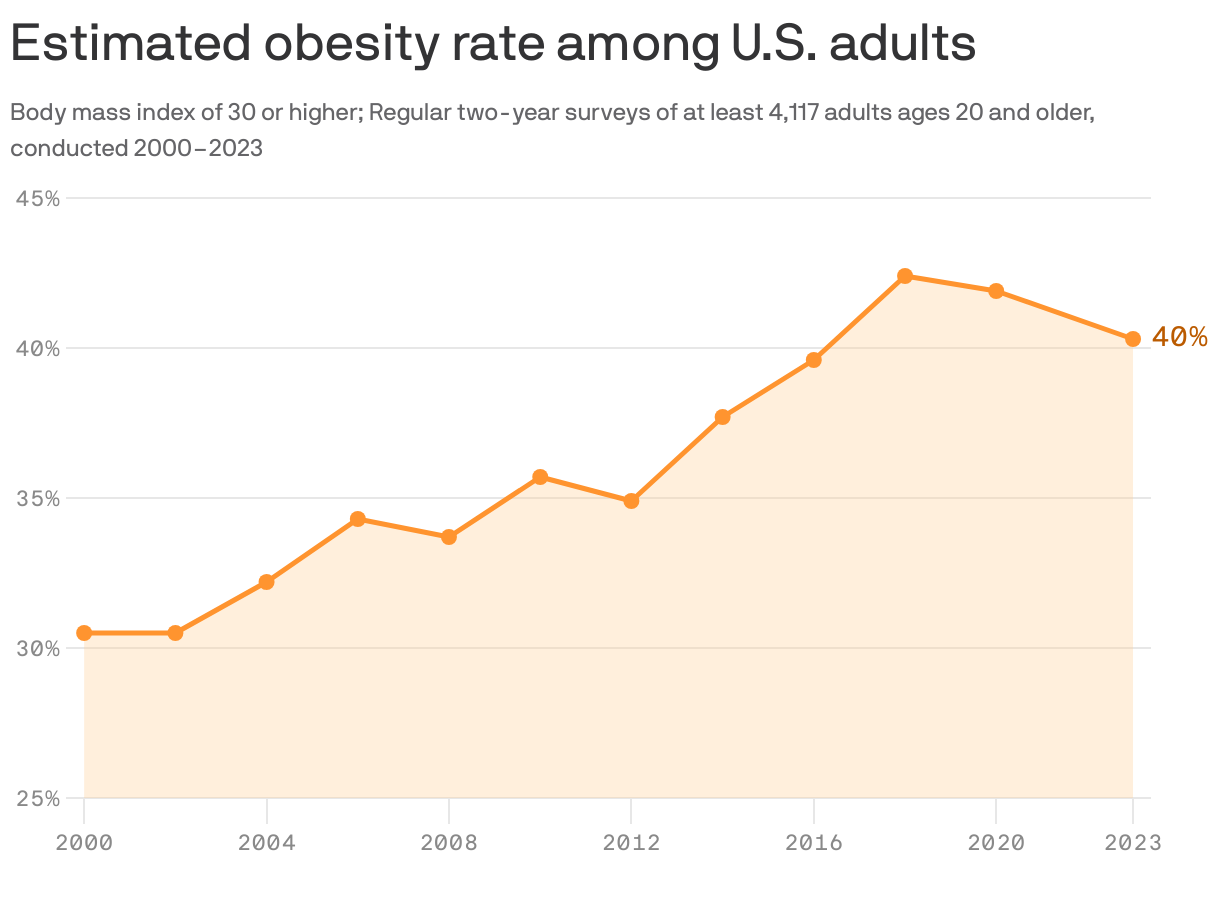
The obesity rate in the U.S. has stopped climbing — a remarkable trend shift after decades of growth, Axios' Caitlin Owens reports.
- It may even be declining, but the change is too small to say for sure. Either way, it's good news.
💡 The big picture: In the last few years a sea change has occurred in how obesity is understood, with the focus shifting away from personal willpower toward seeing obesity as a disease.
- And with the emergence of drugs like Ozempic, the U.S. has tools that could eventually help bring obesity rates down.
🩺 Yes, but: Severe obesity has been rising, reaching a rate of nearly 10% of U.S. adults, according to recent CDC data.
- Just over 40% of adults are considered obese — still an alarmingly high rate, given the condition's health risks.
🔮 What we're watching: New anti-obesity drugs are remarkably effective, but their success in lowering the obesity rate will depend on how many people end up having access to them.
- Current prices are prohibitive for many insurers, businesses and government payers.
