Seattle to expand civilian 911 response teams citywide

Add Axios as your preferred source to
see more of our stories on Google.
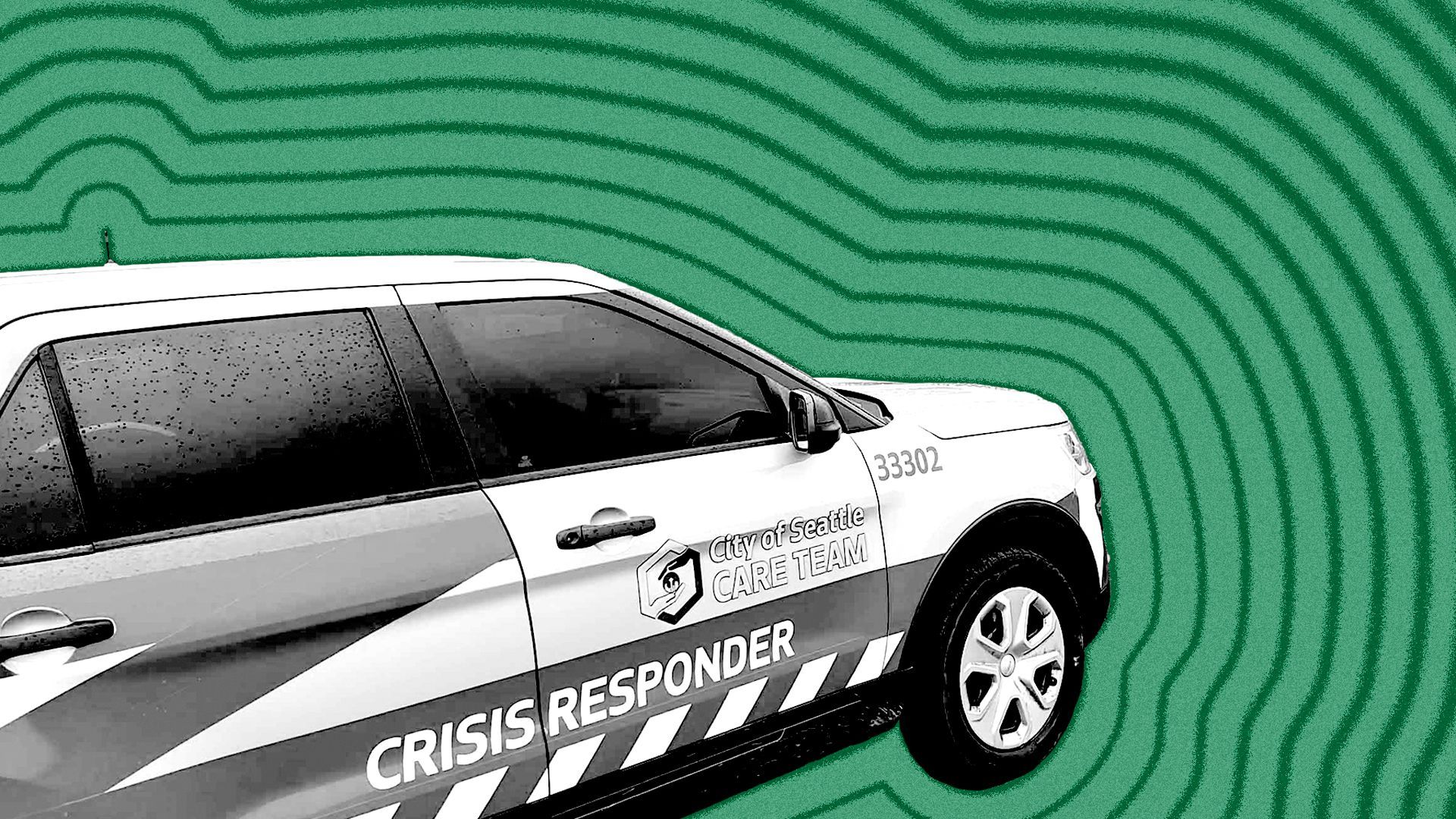
Photo illustration: Axios Visuals. Photo: City of Seattle
Seattle plans to expand its alternative 911 response teams citywide next year, building upon a pilot program that started about a year ago.
Why it matters: The goal of the civilian response teams is to provide trained crisis responders who can handle well-being checks and mental health calls that might not require an armed police response.
- City officials developed the teams as part of their response to the 2020 Black Lives Matter protests.
The latest: The city's 2025-26 budget includes $3.5 million to boost staffing for the civilian response teams, which operate as part of the city's Community Assisted Response and Engagement (CARE) Department.
By the numbers: Right now, the CARE teams operate in only two of the city's five police precincts and only from noon to 10pm, Jacob Adams, the CARE department's chief of staff, told Axios last week.
- By boosting staffing from 10 people to 27, the city's goal is to make the teams available citywide by the second quarter of 2025, Adams wrote in an email.
- Over time, the city also hopes to make the teams available 24 hours per day, Adams added.
What they're saying: Seattle Mayor Bruce Harrell said in September that the responders will help in "reducing strain on limited police resources and helping meet people where they are."
Yes, but: The CARE teams weren't set up to respond to 911 calls without any police involvement.
- Instead, the idea was to dispatch both the civilian CARE teams and police to low-level calls simultaneously, with police officers able to hand off incidents after determining no police response is needed.
Zoom in: That "dual dispatch" approach didn't go exactly according to plan during the pilot program's first year.
- Because Seattle police — who say they are woefully short-staffed — frequently were tied up with higher-priority calls, the CARE teams often spent time waiting for police to arrive, during which time the person they were trying to help often left the scene, per an October memo from city council staff.
By the numbers: CARE teams were dispatched alongside police as originally intended under the pilot program only 15 times between October 2023 and September, per city data.
- Far more often — 682 times in 11 months — police or firefighters called the CARE team to respond to an incident once officers or firefighters were already on scene.
- Those "secondary" responses by the CARE teams still allowed Seattle police officers to hand off low-level calls and move on to other priorities in many cases, Adams told Axios.
State of play: About two months ago, the CARE teams shifted their approach.
- They began proactively driving around downtown, looking for incidents where people appear to be in crisis, but where there hasn't been a 911 call.
- When encountering medical situations that don't require a police response, the teams have assisted until the fire department can arrive.
What we're watching: Going forward, the city would like to start dispatching CARE teams independently to respond to 911 calls, but that requires further negotiation with the Seattle police union, Adams said.