Trio of meteor showers will light up the skies

Add Axios as your preferred source to
see more of our stories on Google.
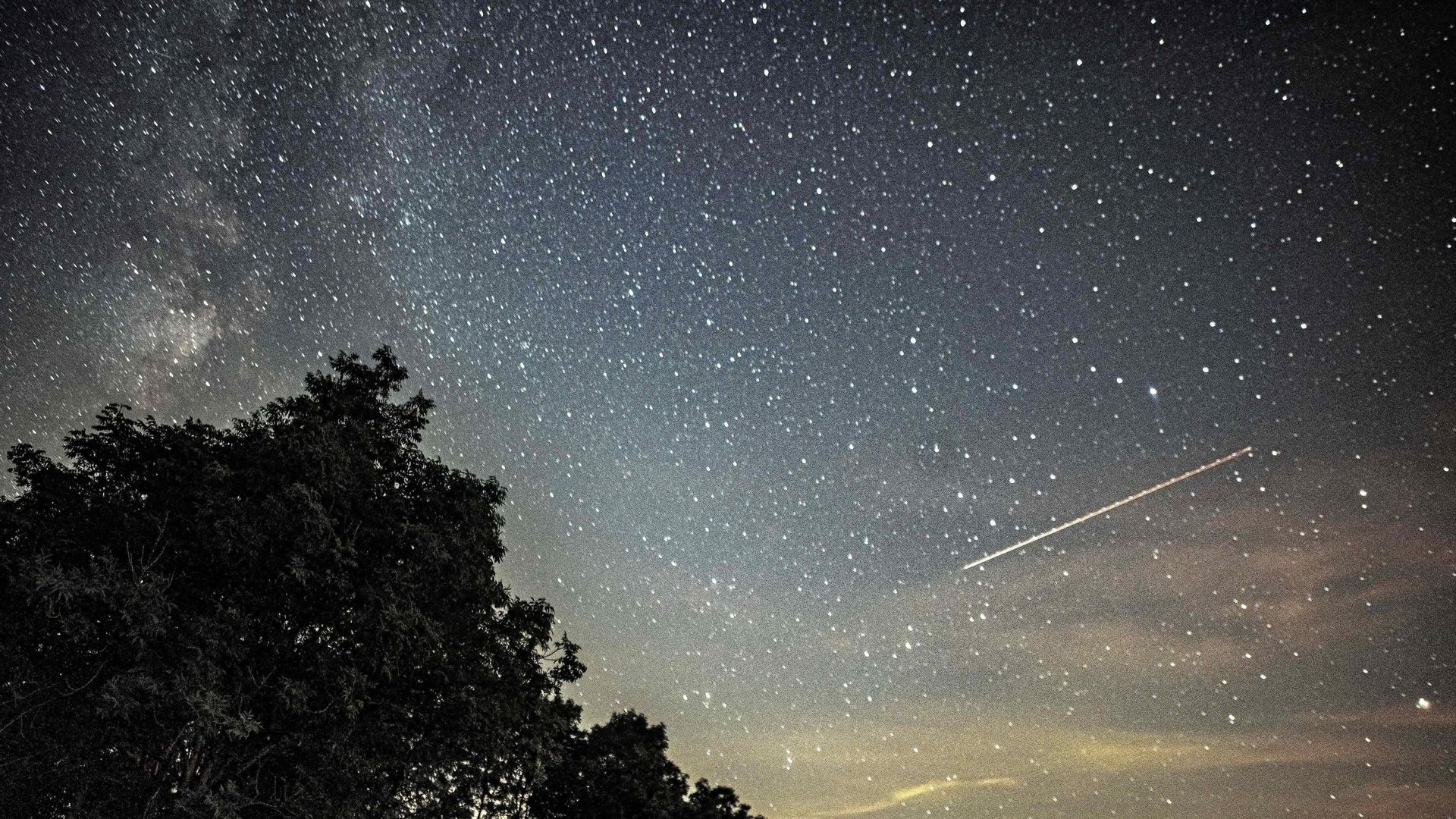
Photo: Miguel Medina/AFP via Getty Images
Right now is a great time for stargazing, with a waxing crescent moon, mostly clear skies in the Pacific Northwest and three meteor showers in play.
Why it matters: Meteor showers are perhaps the most accessible of cosmic events.
- You don't need telescopes or binoculars to see them, just a comfy place to lie down and look up under relatively cloudless, dark skies.
Driving the news: The Perseid meteor shower is expected to peak late Sunday night, Aug. 11, through early Aug. 12.
- The shower, which appears as Earth passes through the dust left by the comet Swift-Tuttle, is best viewed from about 11pm until dawn, per Space.com.
State of play: Through Aug. 21, you can also catch glimpses of the more subtle Delta Aquariid meteor shower, which is most visible starting mid-evening.
- The Alpha Capricornids, which are known for producing bright fireballs, will be active through Aug. 15, according to the American Meteor Society.
How it works: Lie on something comfortable, facing away from the moon.
- Look all around, because meteors can appear anywhere in the sky.
- Be patient and watch for at least an hour.
- Driving away from the city in almost any direction brings better viewing.
In a dark sky, the Perseids can deliver more than 50 meteors per hour during their peak, according to NASA.
Yes, but: Don't look at your phone. Looking at the bright screen can make it harder to see meteors when you look back at the sky.
Clarridge's thought bubble: Just from my suburban deck, I've been able to see a few stunning meteors and some smaller ones most years.
The big picture: Meteor showers happen when Earth passes through trails of debris left behind by comets and asteroids, usually at the same time each year.