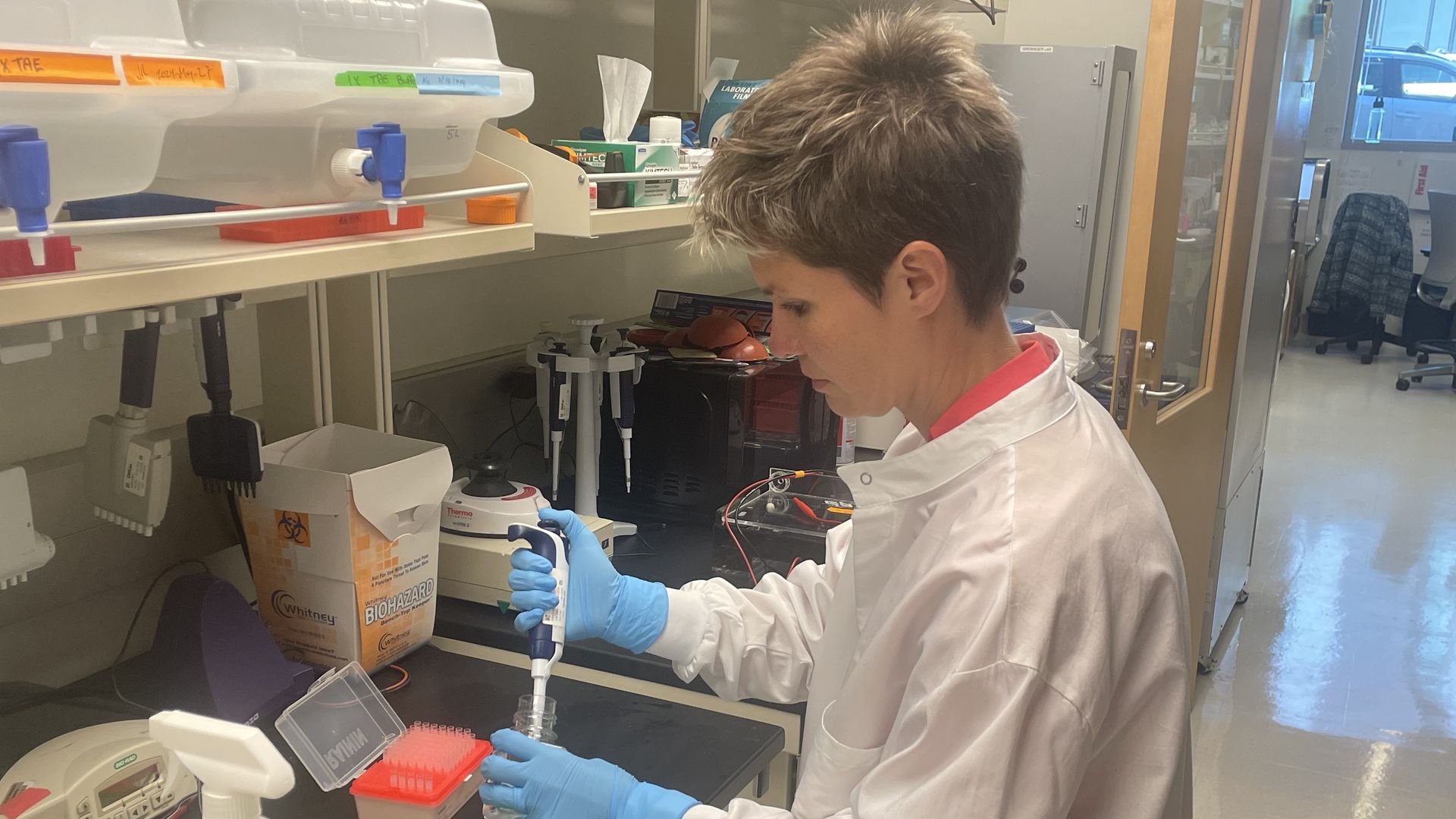
Nicole Lieberman conducts research at the University of Washington School of Medicine. Photo: Susan Gregg/Courtesy of UW Medicine
Nearly all strains of syphilis in the U.S. and Canada are resistant to the commonly prescribed antibiotic azithromycin, a new University of Washington study found.
Why it matters: Syphilis cases in Seattle and the nation have surged in recent years, rising 79% nationally between 2018 and 2022, according to a 2024 estimate by the Centers for Disease Control and Prevention.
A growing number of infants are born with congenital syphilis, which can lead to vision loss, physical deformities and neurological damage, said researchers in a UW School of Medicine study published last week in the New England Journal of Medicine.
Most cases can be treated effectively with a single injection of a long-acting form of penicillin called benzathine penicillin G, but a worldwide shortage led to questions about the efficacy of other antibiotics, especially azithromycin, which is delivered through a single oral dose, said researchers.
The UW researchers decided to retest the resistance of azithromycin, an antibiotic recommended as an alternative until about 15 years ago, when resistance was found in more than half of syphilis samples.
What they found: Resistance to the drug has grown in the bacterium responsible for syphilis, per the study.
About 600 samples were collected from residents of 16 states and provinces, including Washington and British Columbia.
Among them, 99% bore mutations that made them resistant to azithromycin, researchers determined.
The bottom line: Clinicians should choose doxycycline or ceftriaxone, not azithromycin, for non-pregnant patients with syphilis, the researchers concluded.