How the FTC ban on noncompetes could impact Seattle


Add Axios as your preferred source to
see more of our stories on Google.

Illustration: Aïda Amer/Axios
A nationwide ban on noncompete agreements might not have as much of an impact in Seattle as other cities, a University of Washington employment expert says, noting there's a high percentage of tech and other workers who may make too much to be affected.
Why it matters: Critics of the agreements say they stifle innovation and wage growth by restricting workers' ability to take new jobs that pay higher wages or offer some other opportunity.
- The Federal Trade Commission says the nation should see an increase in workers' wages of up to $488 billion over the next decade if the ban goes into effect.
Yes, but: The FTC ruling would allow existing noncompetes with senior executives — people earning more than $151,164 who are in a "policy-making position" — to remain in effect.
- That exception could disproportionately affect Seattle, which has a relatively large number of high income earners, David Tan, an associate professor at the University of Washington Foster School of Business, told Axios.
- Albert Squiers, managing director of the technology practice at Fuel Talent, told GeekWire that the definition of "policy-making position," therefore, could be crucial to Seattle tech workers.
How it works: Noncompetes are clauses in employment contracts that prohibit workers from taking jobs with their employer's competitors.
- They have become more widely used and criticized in recent years for unfairly restraining employees — particularly those at the lower end of the income scale.
Reality check: A lawsuit filed by two powerful business lobby groups one day after the ban was finalized will likely delay it from taking effect — or derail it entirely and test the limits of the FTC's power.
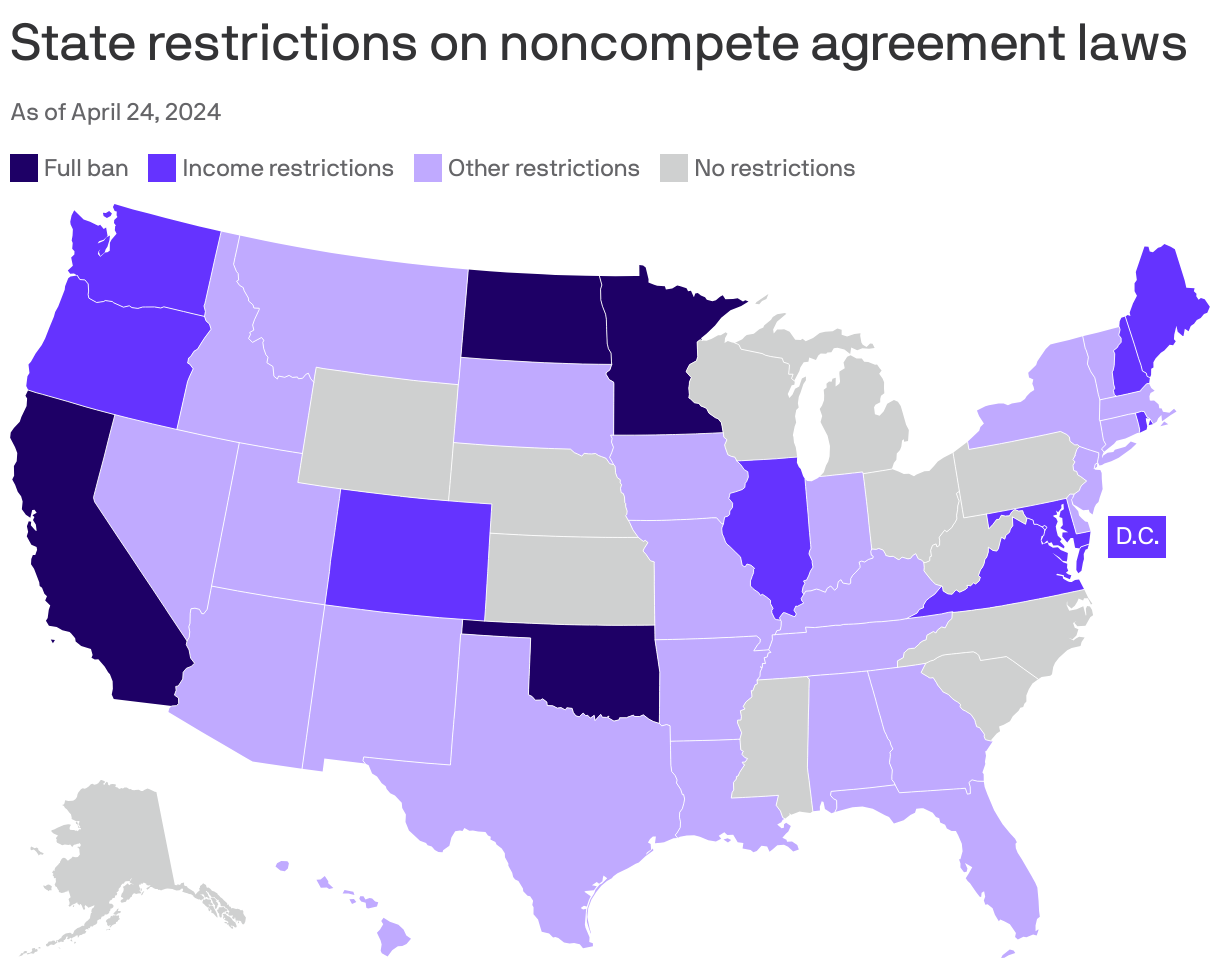
Catch up quick: Washington state approved its own limits on noncompete agreements in 2019 that makes them allowable only for employees earning more than $100,000 a year and independent contractors who make $250,000 annually, per GeekWire.
- But many Washington workers who had been making more than $100,000 found that noncompetes hampered their chances of immediately finding new jobs or starting their own companies following rounds of tech layoffs in 2022 and 2023.
- "Employees who are working deep in the weeds of new technologies don't feel they have the ability to leave or start their own companies because of non-competes that could be enforced," Sean Sternback of Seattle-based Cloud Capital Management told Forbes last year.
What we're watching: How this will play out among local tech companies, including Microsoft, which announced in 2022 it would no longer include noncompete clauses in most U.S. employment agreements, and Amazon, which has sued multiple former workers over the last decade.