How a government shutdown would affect Washington

Add Axios as your preferred source to
see more of our stories on Google.
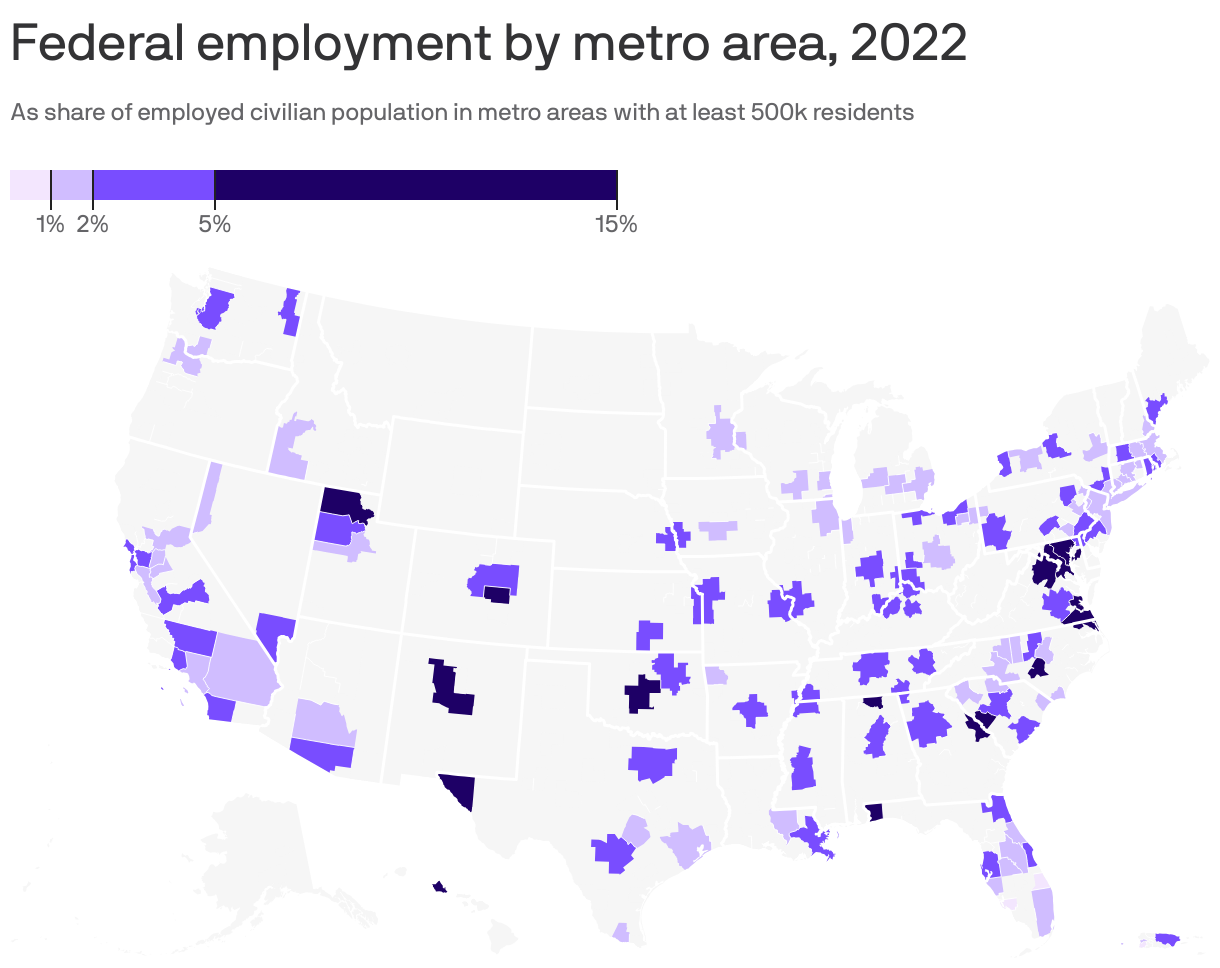
A federal government shutdown is looking more and more likely and the impacts in Washington state could be huge.
Why it matters: There are 62,100 active-duty service members and 54,526 federal civilian employees in the state.
Driving the news: If Congress fails to pass a stopgap measure by midnight Saturday that would fund the government through Nov. 17, a partial shutdown of the federal government will begin Sunday.
Details: For federal employees, the effects would be immediate and obvious, as most would be furloughed without pay.
- But military service members and others who work in fields deemed essential would be required to remain on the job without wages, per the White House.
- Those numbers don't include the thousands of state residents who work as federal contractors.
State of play: Washington is trying to estimate and prepare for potential impacts to state agencies that receive federal funding, including the Department of Health, the Department of Social and Health Services and the Employment Security Department.
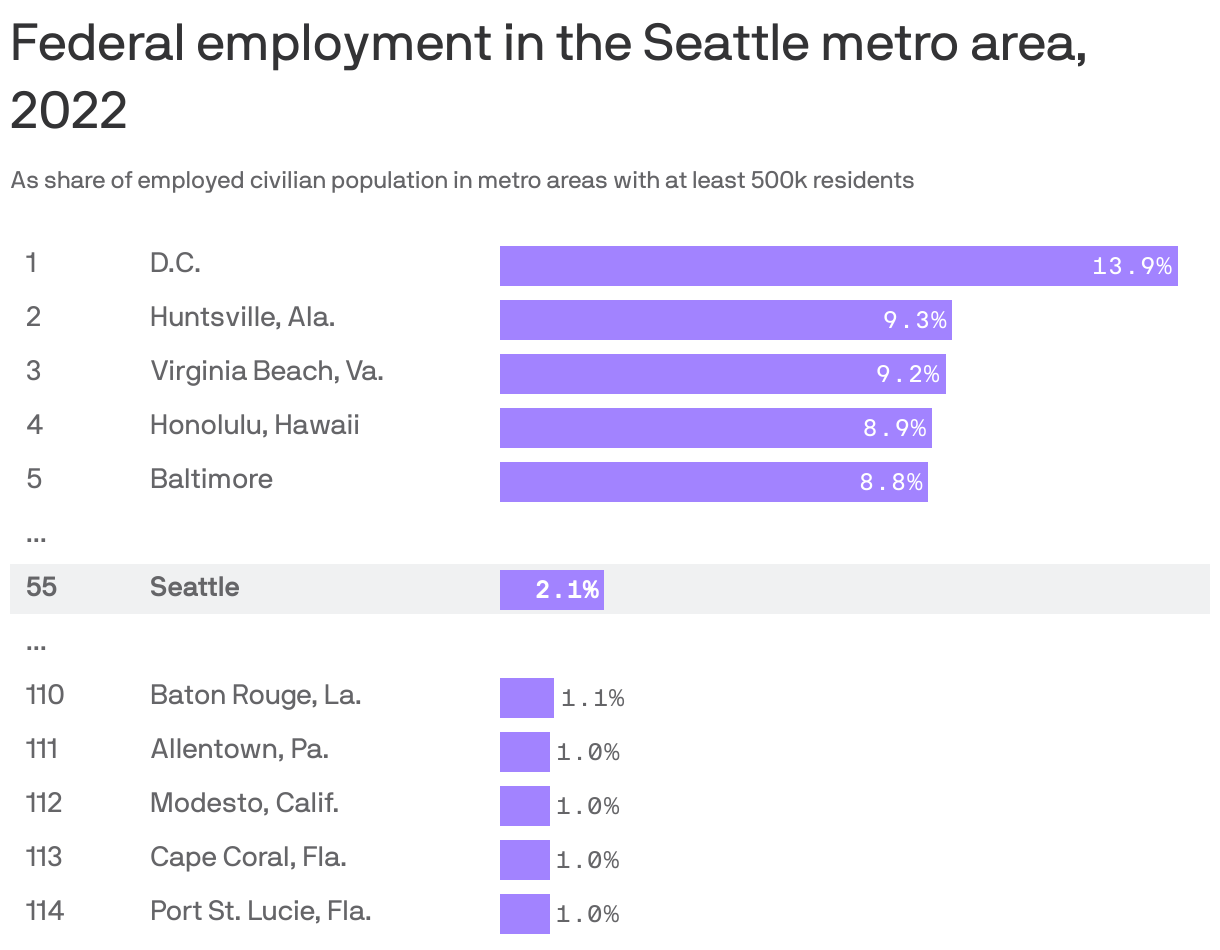
Of note: Federal workers have always received back pay after the government reopens, but making it that long without a paycheck can present a challenge depending on how long a shutdown lasts.
- When the last shutdown in 2019 stretched 35 days, federal employees in the Seattle area were forced to seek help at local food banks and soup kitchens.
Zoom out: A shutdown would have ripple effects across the country, from potential travel delays at airports to delayed food safety inspections by the FDA.
What they're saying: Washington U.S. Sen. Patty Murray cited bipartisan legislation that would buy time and said there is "absolutely no reason for a shutdown."
- "And if any senator — or extremists in the House — wants to force a shutdown, make no mistake: Working Americans will pay the price," she said.
The other side: Conservatives have been pushing for significant spending cuts in appropriations bills and more border security measures, but some frustrated centrist Republicans are more open to cutting a deal with Democrats, Axios' April Rubin reported this week.
Related: Social Security, Medicare, SNAP benefits and more in the balance