New data shows Alzheimer's prevalence in Washington state


Add Axios as your preferred source to
see more of our stories on Google.
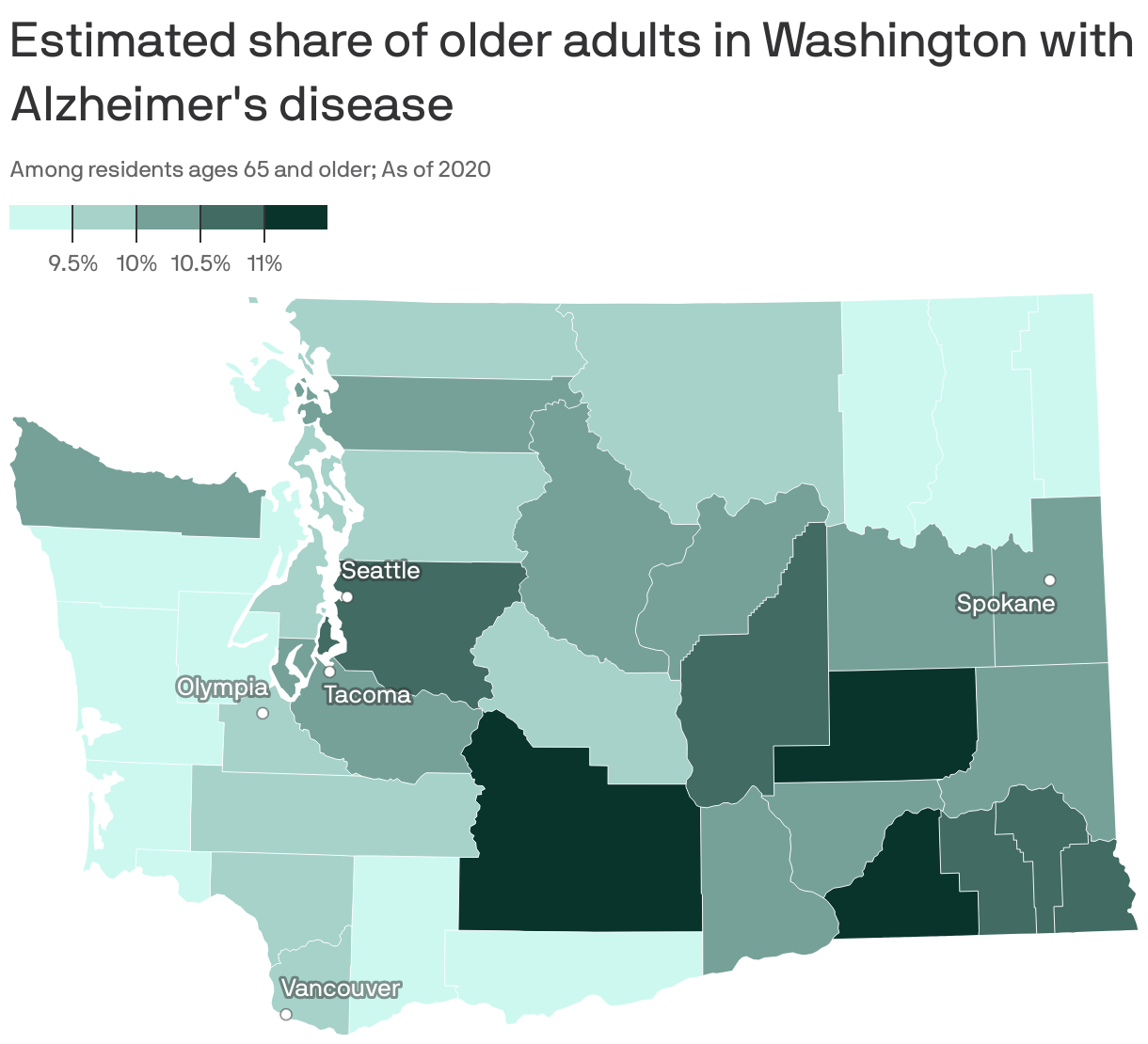
About 10% of the approximately 1.3 million Washington residents aged 65 and older — or about 126,700 people — have Alzheimer's disease, per a new study.
Why it matters: It's critical for public health officials, policymakers and others to have a clear look at the number of Alzheimer's cases in a given area, the authors say — in part because caring for those with the disease cost an estimated $321 billion nationwide last year, much of which came via Medicare and Medicaid.
Driving the news: For the study, published in the journal Alzheimer's & Dementia, researchers estimated the rates of Alzheimer's disease among adults age 65 or older in a given area based on demographic risk factors, including age, sex and race/ethnicity.
- They used data from the Chicago Health and Aging Project (a population-based study examining Alzheimer's risk factors), plus population estimates from the CDC's National Center for Health Statistics.
The big picture: The Eastern and Southeastern U.S. have the country's highest rates of Alzheimer's disease, according to the study.
- Maryland (12.9%), New York (12.7%) and Mississippi (12.5%) topped the list of U.S. states ranked by estimated number of Alzheimer's cases.
- Alaska (8.8%) had the lowest estimated prevalence of Alzheimer's dementia among adults 65 years and older.
Yes, but: An emerging treatment just approved by the Food and Drug Administration has been shown in clinical trials to reduce patients' cognitive and functional decline by 27%, according to Michael Rosenbloom, the director of clinical trials at UW Medicine's Memory & Brain Wellness Center.
- Lecanemab, which is being marketed as Leqembi, showed a clear benefit in people who were in the early stages of Alzheimer’s compared to a placebo, slowing the rate of cognitive decline over 18 months and reducing the levels of brain amyloid, according to NIH's National Institute on Aging.
- Additionally, other drugs, including donanemab, a drug with similar mechanisms to lecanemab, were also found to slow cognitive and functional decline.
- Lecanemab is expected to become available to UW patients in the coming months, according to UW Medicine.
What they're saying: "We have a real disease-modifying agent that is beneficial for patients," Rosenbloom told Axios Seattle. That would have "sounded like science fiction" when he started in the field, he said.
What's next: UW Medicine is one of nearly 75 locations in the U.S. and Canada looking for people aged 55 to 80 of every race and ethnicity to participate in a study to measure and monitor the influence of lecanemab.