Here's how much Texas property taxes have risen


Add Axios as your preferred source to
see more of our stories on Google.
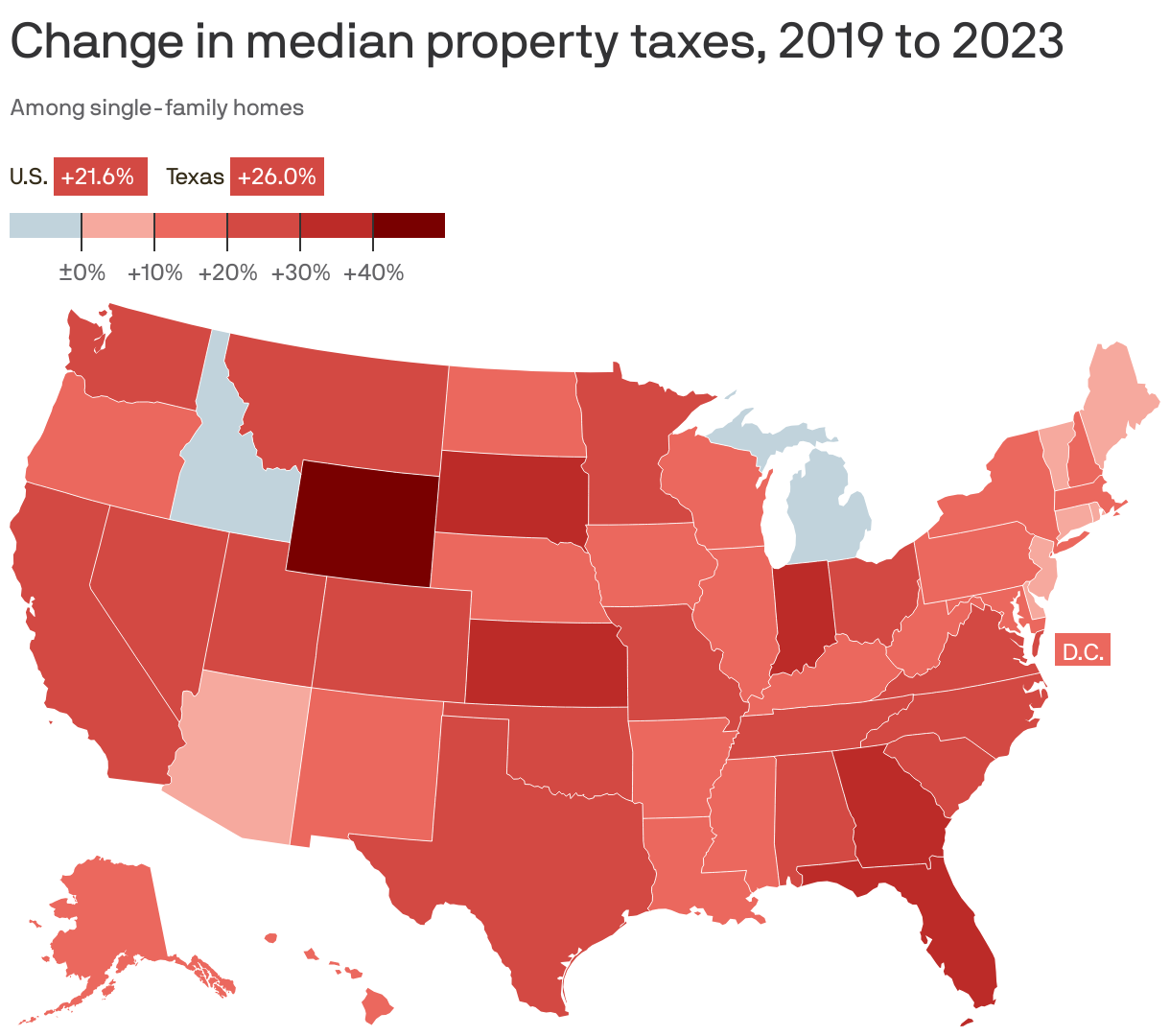
Median property taxes in Texas rose 26% between 2019 and 2023, data shows, even as local governments took steps to reduce the impact.
Why it matters: Homeownership in San Antonio is growing costlier, partly due to pandemic-fueled price growth.
By the numbers: The median property tax bill in Texas in 2019 was $3,900, according to the latest data CoreLogic shared with Axios.
- That rose to $4,916 in 2023.
Zoom out: Median property taxes on U.S. single-family homes rose from $2,367 in 2019 to $2,877 in 2023, per CoreLogic.
Between the lines: With no state income tax, Texans pay some of the highest property taxes in the nation.
The big picture: Nationwide, property tax bills are steeper after U.S. home prices surged nearly 40% during the pandemic, according to a recent CoreLogic report.
What they're saying: "As U.S. home prices have continued to rise and reach record highs, millions of owners are feeling the pinch from soaring property taxes," CoreLogic principal economist Yanling Mayer wrote in the report.
How it works: Property taxes are based on a home's assessed value and the local tax rate.
- In Bexar County, most of a property owner's tax bill goes to the school district. But the city, county, hospital district (University Health), the San Antonio River Authority and others all get a portion.
The latest: The average taxable value of a Bexar County home in 2023 was down from a 2021 high during the pandemic, per data shared with Axios.
- That's partly because of the historic property tax cut that Texas voters approved in November.
- The city of San Antonio and Bexar County have also passed the maximum allowed in homestead exemptions in recent years, to help relieve some of the increase.
What's next: The city's property tax help sessions continue through May to assist homeowners in understanding exemptions and in protesting property taxes.