Utah ranks 4th in U.S. for school book bans


Add Axios as your preferred source to
see more of our stories on Google.
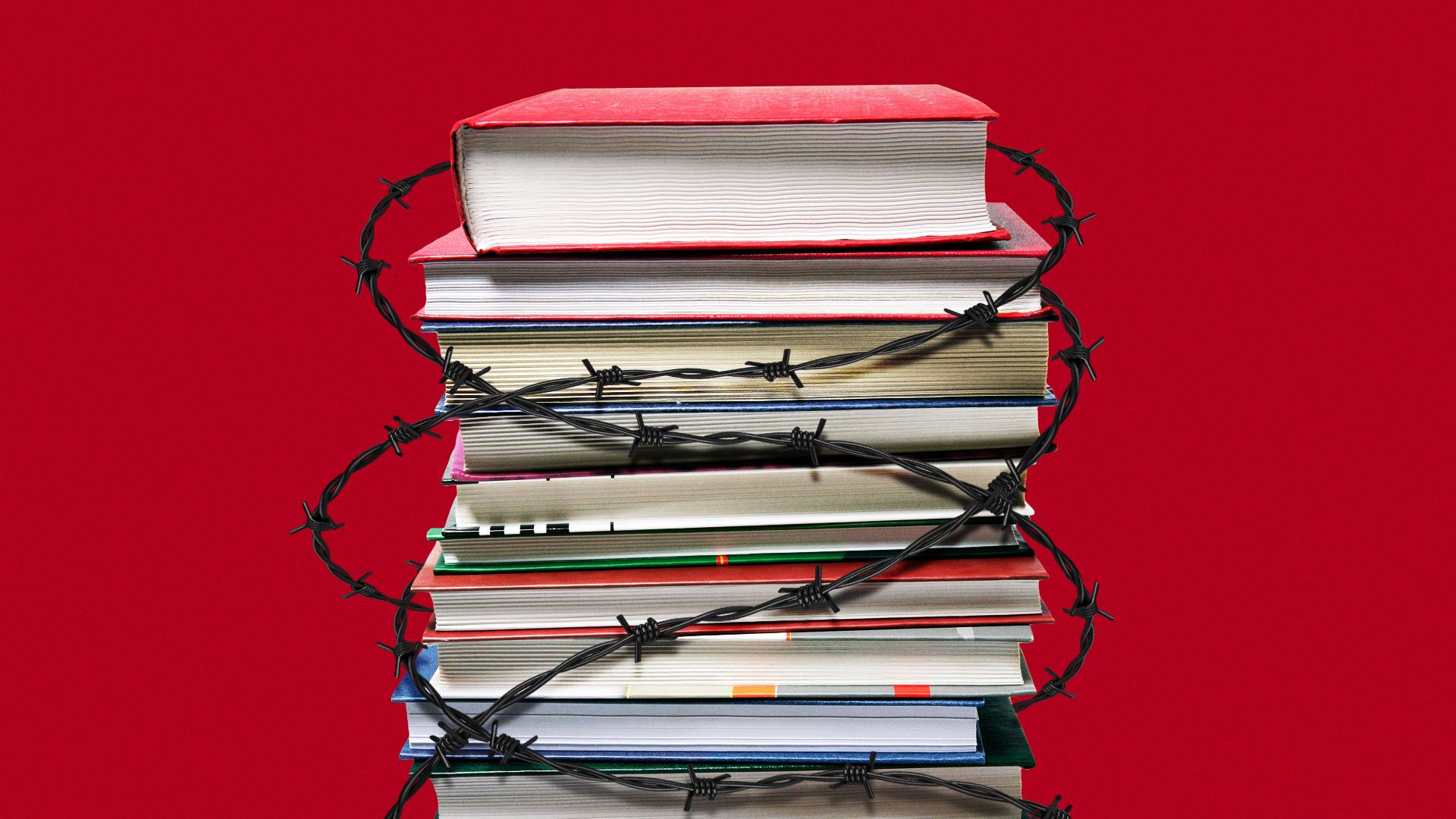
Illustration: Maura Losch/Axios
Utah school districts banned 108 books during the 2025-26 school year, the fourth highest total of any state, according to a PEN America report.
Why it matters: Book bans highlight the expanding influence of state politics on schools and how subjective the guardrails can be.
The big picture: Nearly 12,000 books were banned across the U.S. last year — the highest number of recorded bans in a single year since PEN America began tracking them in 2021. The previous year's report cited 6,870 bans.
- "Schools have overwhelmingly targeted books about race and racism, LGBTQ+ people or characters, people or characters of color, and sex," per the report.
By the numbers: Texas led the nation with almost 8,200 book bans during the 2025-26 school year, followed by Florida (3,212) and Ohio (117).
Catch up quick: Utah Gov. Spencer Cox signed HB 374 into law in 2022, giving parents more power to challenge school materials deemed "pornographic or indecent."
- Lawmakers tightened the law in 2024 through HB 29, following controversy over Davis School District's temporary removal of the Holy Bible from some school libraries after a parent's complaint.
- The amendment created a statewide removal process. If three school districts — or two districts and five charter schools — determine a book contains prohibited content, it must be removed from all Utah public schools.
Zoom in: So far, 44 books have been banned statewide, with Davis and Washington school districts accounting for the most titles reported for removal.
- Books added to the statewide ban list this year include "Different Seasons" by Stephen King, "A Clash of Kings" by George R. R. Martin and "The Bluest Eye" by Toni Morrison.
- Women authored more than two-thirds of the books on Utah's statewide ban list.
Context: The Utah Teachers Association, Utah Library Association and Let Utah Read have strongly opposed the bans, arguing they amount to censorship and restrict children's access to literature.
The other side: Republicans say the laws are intended to protect students and give parents more say over materials available in schools.
Zoom out: Nearly half of Utah's third graders aren't reading at grade level, according to a University of Utah's Kem C. Gardner Policy Institute report.