What Utah taxpayers could pay for Trump's deportation push


Add Axios as your preferred source to
see more of our stories on Google.
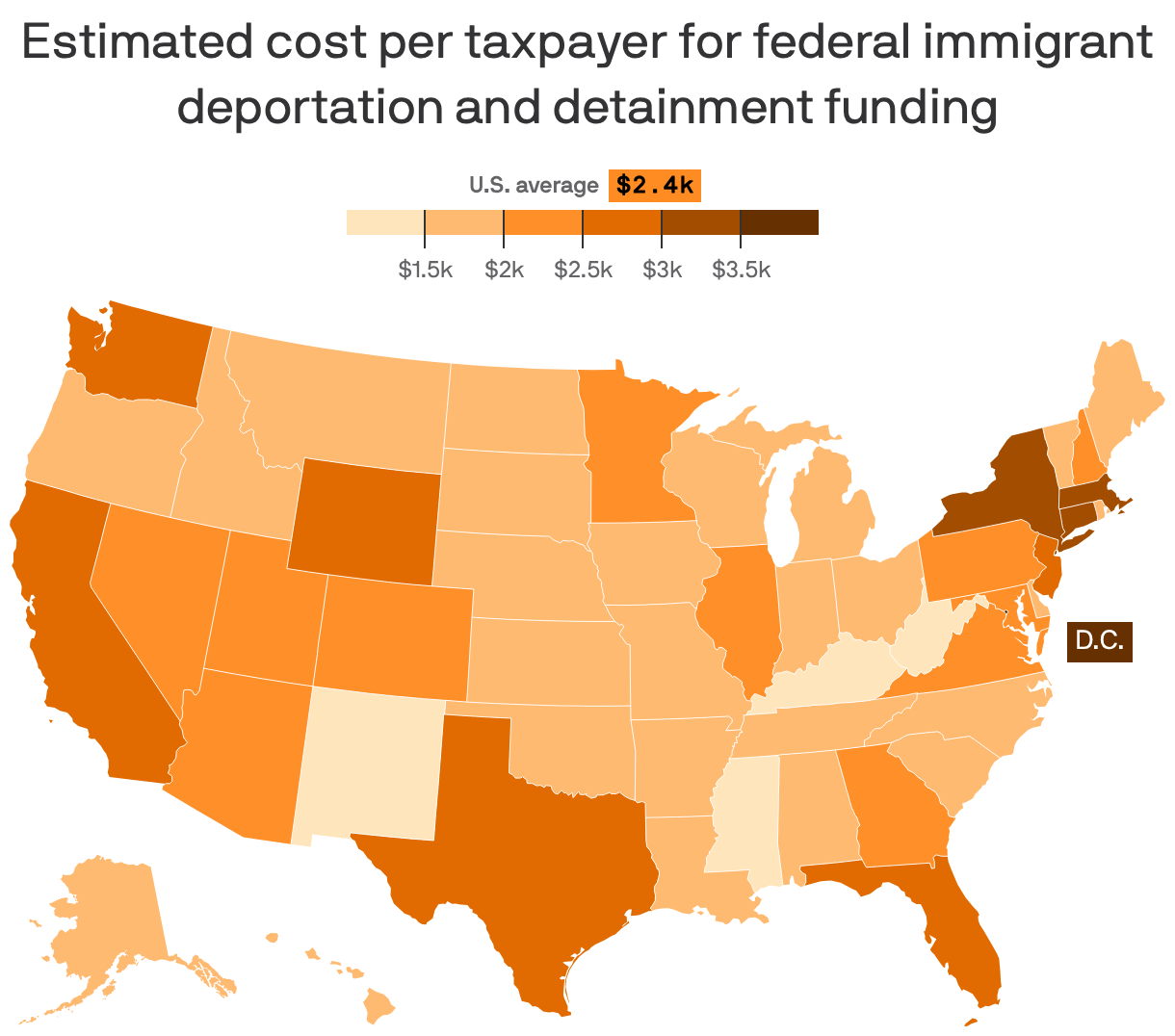
Utah taxpayers would each pay nearly $2,100 for President Trump's mass deportation push, according to a recently-released calculator tool from the Economic Policy Institute.
Why it matters: The estimate fuels debate over whether billions of federal dollars devoted to deportations could instead fund other public priorities such as food assistance, health care or housing.
By the numbers: EPI estimates Utah taxpayers altogether could end up paying nearly $2.3 billion for deportations.
- The progressive think tank suggests the funding could instead support about 106,000 people through Medicaid, nearly 45,000 Head Start slots, or medical care for roughly 41,000 veterans.
- It could also fund almost 8,000 school teachers or about 11,000 firefighters.
Zoom out: Overall, EPI estimates the $268.9 billion projected for deportations could alternatively fund more than 118 million additional SNAP recipients over the remaining 2.5 years of the Trump administration, based on National Priorities Project data.
What they're saying: "I don't think people realize how much money is being spent on these mass deportations," Gordon Lafer, a professor at the University of Oregon's Labor Education and Research Center and research associate at EPI, tells Axios.
The other side: A Department of Homeland Security spokesperson blamed the Biden administration in a statement to Axios for ignoring the costs of illegal immigration and said the administration's self-deportation program saves taxpayers money.
- The spokesperson encouraged undocumented immigrants to use the CBP Home app, saying the U.S. offers a free flight and a $2,600 stipend to self-deport. The statement said that brings the cost of a self-deportation to about $5,100, saving taxpayers more than $13,000 per person compared with traditional deportation.
Zoom in: EPI estimated each area's share of federal income taxes to calculate how much taxpayers in each state, county and city would contribute toward deportation spending.
- Areas that contribute a larger share of federal income taxes would shoulder a larger share of the projected cost.
Yes, but: Taxpayers in states that contribute less in federal income taxes would pay less.
What's next: If Congress approves additional funding through the appropriations process or other avenues, total deportation spending would increase.