Airbnb's broader fight over regulations reaches Salt Lake City

Add Axios as your preferred source to
see more of our stories on Google.
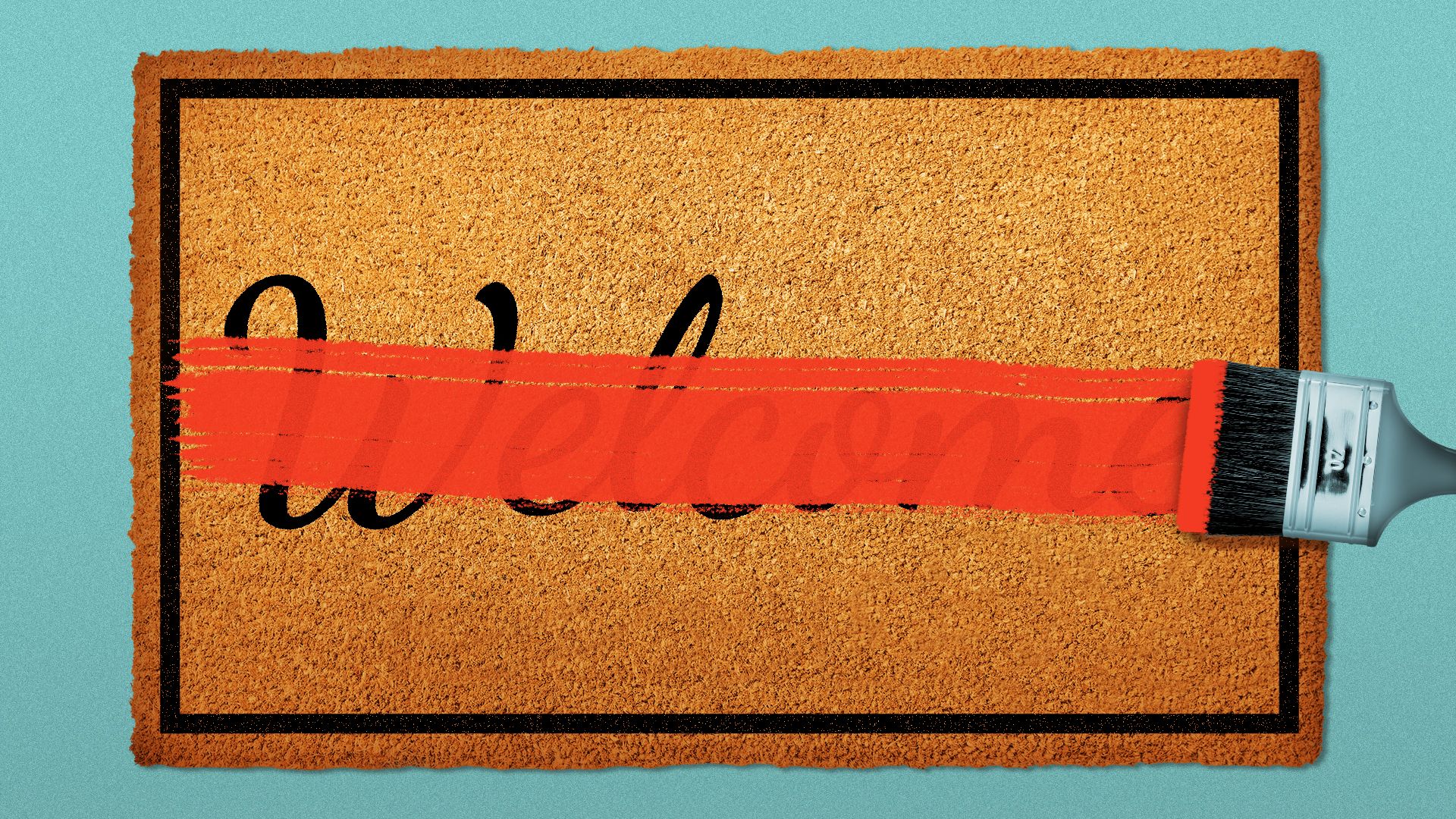
Illustration: Shoshana Gordon/Axios
Airbnb's opposition over how Salt Lake City is enforcing its short-term rental rules is the latest in a string of objections the company has made in communities around the U.S.
Why it matters: Salt Lake City's new regulations comes as local leaders aim to increase the city's housing supply amid soaring costs and to improve neighborhood safety.
Driving the news: Airbnb sent a cease-and-desist letter to the city earlier this month, alleging the city created fake accounts to contact hosts and used those responses as evidence for enforcement violations, the Salt Lake Tribune first reported.
Zoom in: Under Salt Lake City's new rules, which took effect July 1, short-term rentals must be booked for a minimum of two nights, cannot be occupied for more than 200 nights a year and must obtain a business license to operate.
The intrigue: The friction in Salt Lake City centers on the city's enforcement methods rather than on the new rules.
- In the letter, Airbnb said the city's method of creating fake accounts to catch homeowners "raises concerns" under a state law passed last year, which allows a city or county to use a short-term rental website as evidence as long as it has "additional information" showing that the host violated a local ordinance.
The big picture: The platform has sued major cities including New York, San Francisco and New Orleans over local short-term rental regulations, with varying outcomes.
- In 2017, Airbnb agreed to settle a lawsuit it brought against San Francisco, where the company's headquarters are based, after the platform sued the city.
- A judge dismissed Airbnb's case against New York in 2023, saying the city acted within its authority to enforce restrictions.
- In a more recent case, a judge dismissed nearly all of Airbnb's case against New Orleans. This month, a federal appeals court upheld the city's short-term rental rules.
Yes, but: Despite the lawsuits, "I have seen a gradual increase over the years in the willingness that cities have to partner with the platform and come up with a better regulatory solution," Arun Sundararajan, an entrepreneurship professor at New York University who studies the sharing economy, tells Axios.
The other side: "Every day, we work with governments to make sure hosting on Airbnb strengthens communities," an Airbnb spokesperson said in a statement to Axios.
- "That means channeling the economic benefits hosting creates back into those communities, while protecting the rights of hosts who share their homes to earn extra income."
By the numbers: Salt Lake County averaged 4,900 short-term rental listings, including rentals beyond Airbnb, per month in 2023, according to a University of Utah Kem C. Gardner Policy Institute study.
- That represents about 1% of the county's total housing units.
- Sofia Jeremias, a spokesperson for the city's department of community and neighborhoods, says there are about 400 illegal rentals operating in residential zones.
- So far, the city's finance department has approved 28 applications out of 61 submitted.
What we're watching: The city is currently reviewing the letter, according to Jeremias.
- She noted the city has cited only owners with short-term rentals in illegal zones.
- "We have not enforced on owners who could be eligible for a license but have not applied for one yet," she says in a statement.