Yes, there still are rules on the lands removed from Utah's national monuments

Add Axios as your preferred source to
see more of our stories on Google.
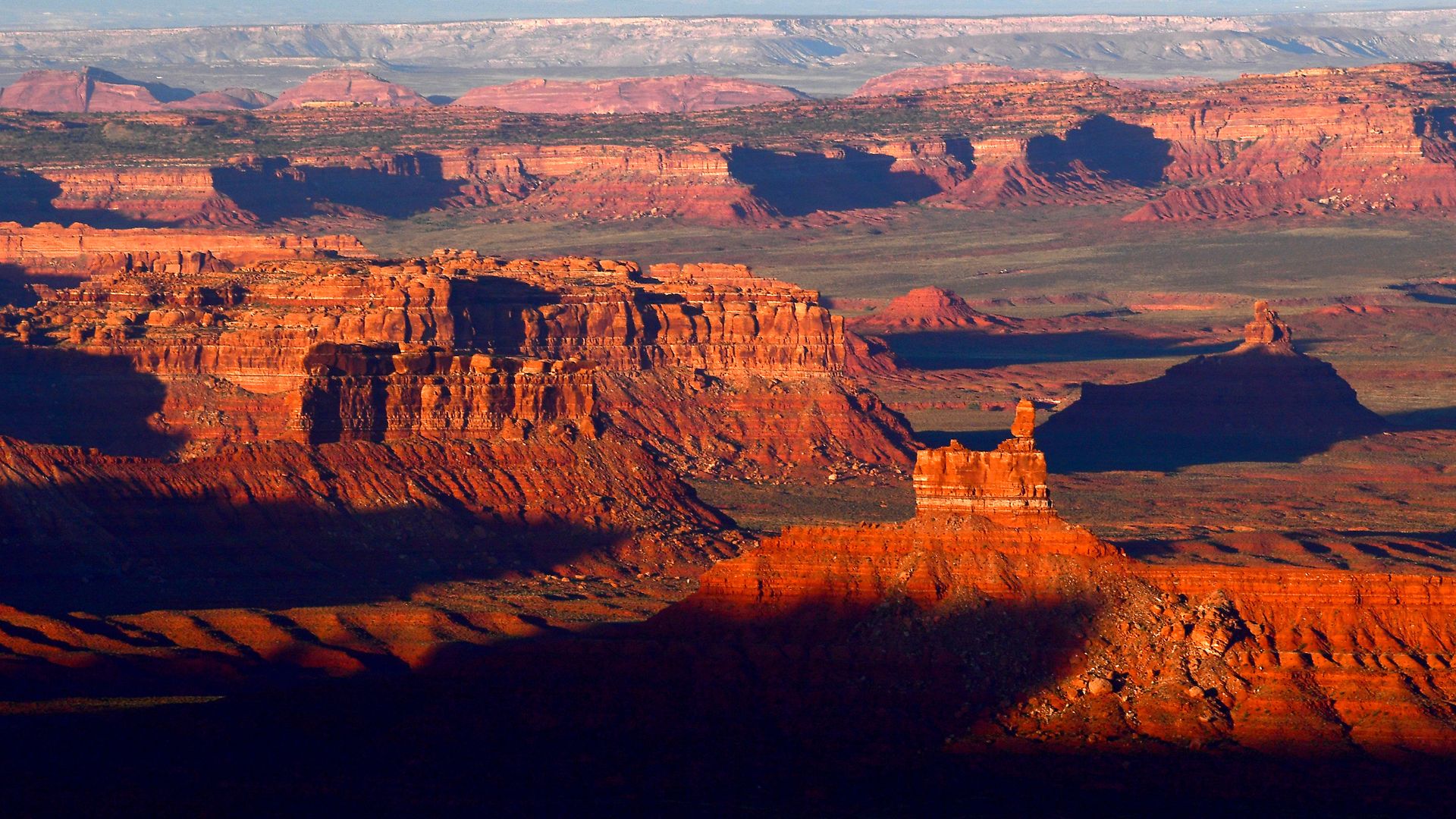
Valley of the Gods. Photo: Katherine Frey/The Washington Post via Getty Images.jpg
When President Trump decimated Bears Ears and Grand Staircase-Escalante national monuments, he left behind a patchwork of protected designations whose rules for recreation vary — and aren't always well-known.
Why it matters: Some critics and supporters of Trump's cuts have inaccurately characterized the removed lands as a free-for-all, where four-wheelers may roam at will and mine shafts will soon pock the landscape.
- That discourse could lead visitors to unwittingly violate rules that still apply at many of the most popular sites that once were within the monuments' boundaries.
How it works: Monument boundaries have long overlapped with places known as Wilderness Areas, Wilderness Study Areas and Areas of Critical Environmental Concern.
- Those designations come with their own rules — some more restrictive than monuments' rules.
Wilderness and Wilderness Study Areas (WSAs) account for most of the remaining protections on the former monument lands.
- WSAs are wild places where federal wilderness rules apply until Congress decides whether to make them permanent.
- Motorized and mechanized devices, including cars, ATVs, bikes and drones, are forbidden. So are roads, structures and commercial activity like mining and drilling.
Areas of Critical Environmental Concern protect specific resources including endangered species habitat or archeological sites.
- The rules vary depending on the location. At Valley of the Gods, for example, a road allows for cars and ATVs, and camping without fires is OK.
- At Lavender Mesa, by contrast, land managers are authorized to close the area to all recreation that threatens the native plant ecosystem set aside there for scientific research.
Zoom in: To learn the status of a given site in the monument areas, check our interactive map.
The intrigue: In his declarations shrinking the monuments, Trump argued the other federal designations made monument protections redundant.
- Yes, but: His administration had already launched a review of WSAs in June, potentially changing protections on about half of the former Grand Staircase-Escalante footprint and more than a quarter of the former Bears Ears.
Between the lines: Now opponents of the monuments are also asking Trump to open WSAs to be "managed for multiple use."
The latest: Public comment ended Friday.