Colorado River cuts loom after states miss deal


Add Axios as your preferred source to
see more of our stories on Google.
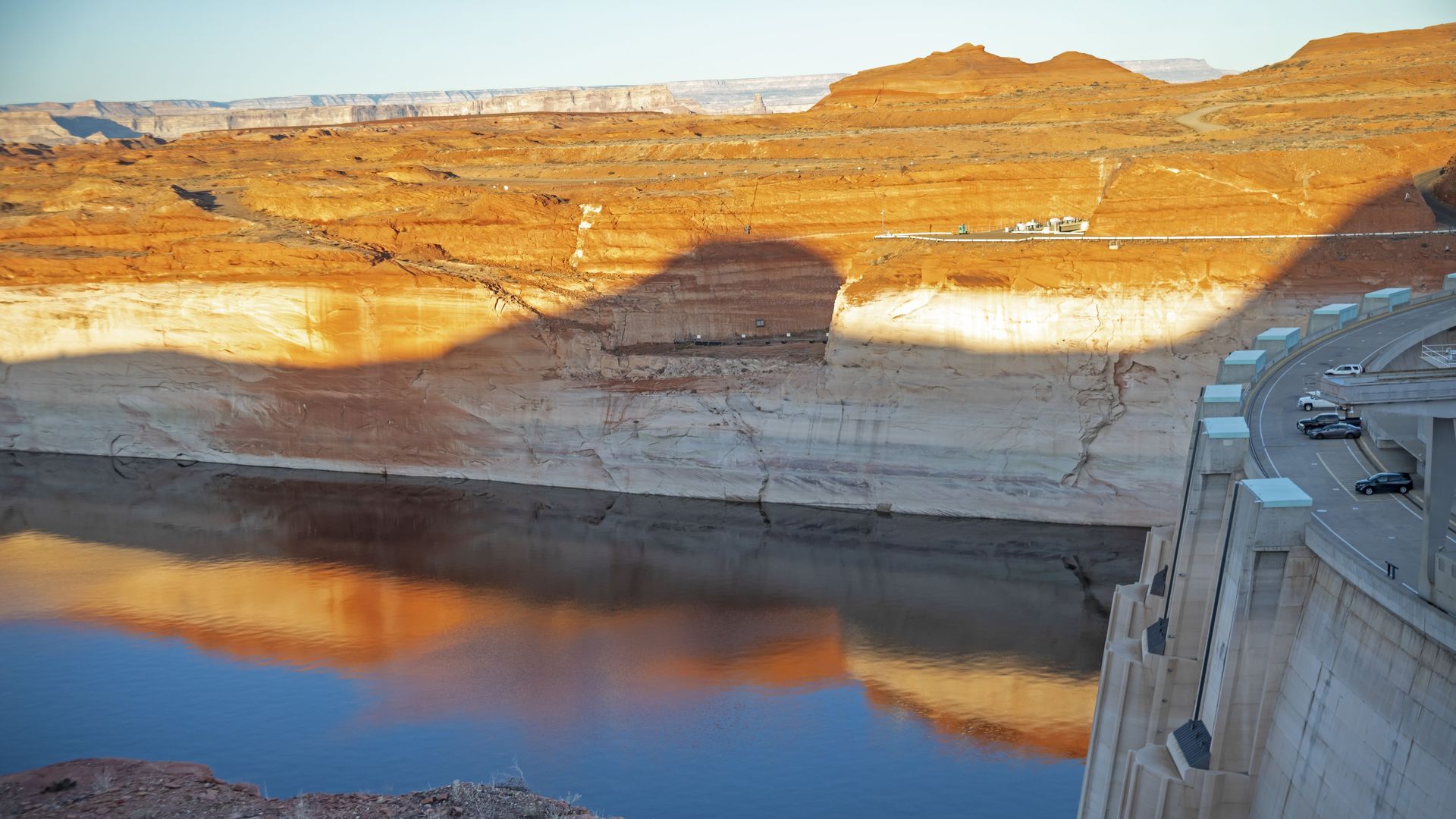
The Glen Canyon Dam. Photo: Jim West/UCG/Universal Images Group via Getty Images
The seven Colorado River Basin states missed a key federal deadline to reach a new water usage agreement, and the U.S. Bureau of Reclamation is now likely to impose a solution of its own.
Why it matters: The Colorado River is a vital source of municipal water for residents living along the Wasatch Front, and beyond and federal intervention could mean forcing mandatory cuts.
Driving the news: As expected, Arizona, California, Colorado, Nevada, New Mexico, Utah and Wyoming failed to reach a Colorado River usage agreement by the Feb. 14 deadline.
Threat level: Key reservoirs — Nevada's Lake Mead and Lake Powell, along the Arizona-Utah border — are at critically low levels and continue to decline.
- Lake Powell is forecast to reach its lowest elevation on record by March 2027, which would further constrain water releases downstream from the Glen Canyon Dam, according to a Bureau of Reclamation report.
- The Glen Canyon Dam releases water from Lake Powell, providing water storage for municipal, agricultural and other uses, while also generating hydroelectric power for communities in the West.
What they're saying: "I'm very disappointed we don't have a deal, but it certainly wasn't because we didn't work our tails off to try to get there," Colorado River Authority of Utah commissioner Gene Shawcroft told Axios.
- He noted that the differences between the upper and lower basin states were significant enough to prevent them from moving forward.
- One of the sticking points, he said, was that they could not agree on how much water is released from Lake Powell to Lake Mead.
Utah Gov. Spencer Cox, in a statement last Friday, said "a solution is still within reach."
- "Utah is ready to make a deal. We will engage in good faith with partners who are committed to durable solutions, not soundbites," he said.
- He noted the state is prepared to "defend our interests if necessary," but prioritized collaboration.
Zoom out: U.S. Interior Secretary Doug Burgum issued a statement saying the department would continue to "identify shared solutions and reduce litigation risk."
- Yes, but: Final operating guidelines must be in place for the start of the new water year on Oct. 1, and "the Department cannot delay action," the statement from Interior said.
What's next: The department didn't set new deadlines. The next significant date for the Colorado River guidelines is March 2, when the public comment period closes for five options the Bureau of Reclamation has put forward.
- "At this point, our focus will be what happens now this year with one of the worst hydrologies on record?" Shawcroft said. "How do we move forward over the next several months?"