Hobbs hopeful on Colorado River deal

Add Axios as your preferred source to
see more of our stories on Google.
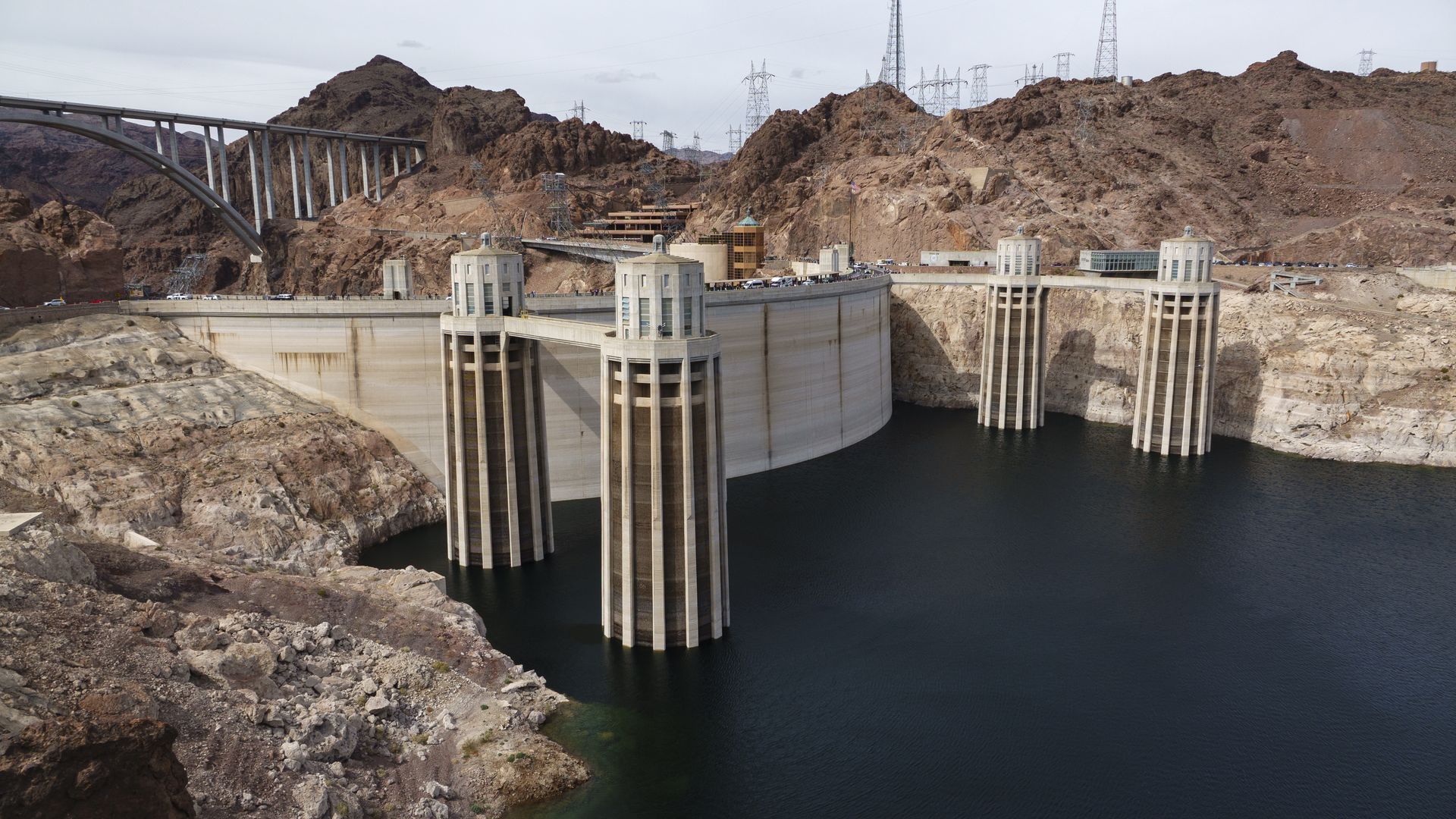
The Hoover Dam in March 2025. Photo: Kevin Carter/Getty Images
Gov. Katie Hobbs doesn't expect Colorado River basin states to make a deal by the federal government's Feb. 14 deadline, but she said she heard increased willingness from upper basin states to agree to cuts at an unprecedented meeting of governors in Washington, D.C.
Why it matters: Arizona has low-priority water rights from the Colorado River, meaning it's at the top of the list for cuts amid shortages, which have been prevalent as a regional drought persists.
- Threat level: The Colorado River basin has been in a megadrought for more than two decades, and this winter has been the driest in years.
State of play: The seven states of the Colorado River basin — Arizona, California, Colorado, Nevada, New Mexico, Utah and Wyoming — are seeking a new long-term deal to apportion cuts from the critical waterway.
Arizona and its fellow lower basin states, California and Nevada, have largely united in arguing that the upper basin states must make greater concessions.
- Lower basin states have agreed to take the first 1.5 million acre-feet worth of cuts annually.
- That's 27% of Arizona's supply, Hobbs told a meeting of the Arizona Reconsultation Committee on Monday.
- The lower basin states are willing to go further if their counterparts will commit to mandatory cuts, the governor said, but "Arizona and the Lower Basin cannot and will not be balancing the Colorado River on our own."
What they're saying: Though the seven states' meeting with U.S. Interior Secretary Doug Burgum didn't break the ongoing impasse, Hobbs told reporters Monday she feels "we're at a place where we can start to move past that."
- And she's bullish on the upper basin states' negotiating position, saying they know everyone needs to make firm commitments on cuts. "So that is the most movement we've heard on that for some time," she said.
- Arizona Department of Water Resources director Tom Buschatzke told reporters the meeting was a "breath of fresh air" and the upper basin states left the door open to reductions in water use or conservation.
- There's been increased discussion of a possible short-term deal instead of a 20-year agreement.
Yes, but: In exchange, Buschatzke said, upper basin states want Arizona to at least temporarily waive some rights under the 1922 Colorado River Compact, which governs water allocation.
- He'd need authorization from the governor and Legislature, and Buschatzke told Axios he's not ready.
- But for the right deal, he said, it's not out of the realm of possibility.
What's next: Hobbs believes the states could be on pact to "be on a path to get to a deal" by Feb. 14.
- The federal government hasn't said what'll happen if there's no deal by then, Buschatzke said.
- The U.S. Bureau of Reclamation put forward five possible plans, all of which Arizona officials consider unacceptable.
- A new deal needs to be in place at least several months before the new water year begins Oct. 1.