Housing is Utah voters' top issue. The numbers show why


Add Axios as your preferred source to
see more of our stories on Google.
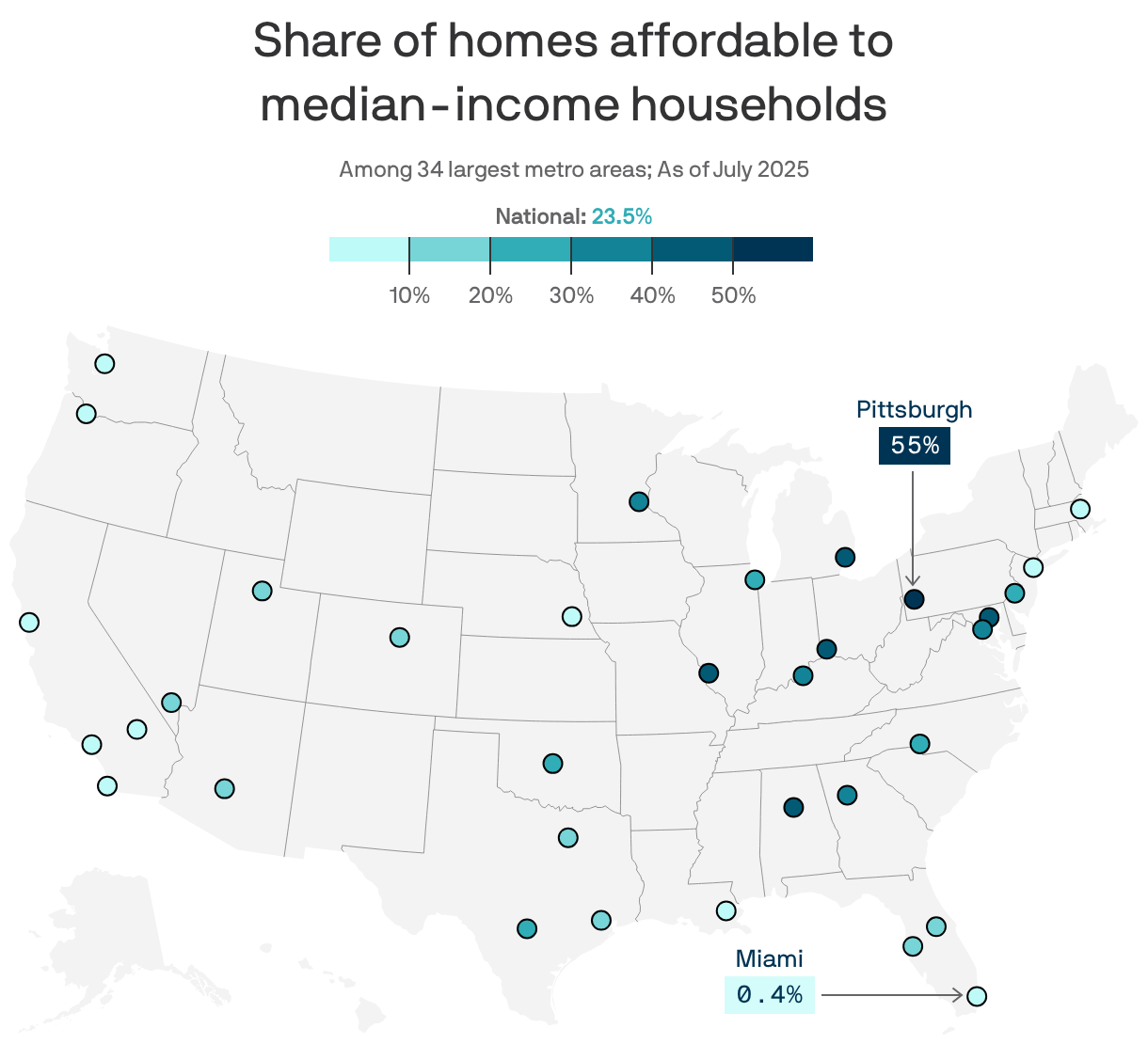
More than 80% of Salt Lake City metro homes on the market are unaffordable to the typical household, according to a Bankrate analysis.
Why it matters: That's higher than the national rate of 75%, reflecting the reality of a state where housing affordability is Utah voters' No. 1 priority for state lawmakers to tackle.
- That's according to a recent Deseret News/Hinckley Institute poll conducted ahead of the legislative session. Affordable housing outpaced health care and the Great Salt Lake on voters' list of priorities.
The big picture: Persistently high home prices and mortgage rates are only part of the squeeze. In many places, including Utah, there simply aren't enough homes available.
State of play: Utah Gov. Spencer Cox said this week that his ambitious goal of building 35,000 starter homes by the end of 2028 is behind schedule, KSL.com reported.
Zoom in: A number of state lawmakers are pushing measures to boost construction and affordability, including proposals that would relax local zoning rules and let cities apply for public funds or tax incentives to build moderate-income housing.
By the numbers: In Salt Lake City, just 16% of homes are affordable to households earning the median income of $99,000, per the analysis.
- In only 11 of the 34 largest U.S. metros do at least 30% of listings fall within reach of middle-income households.
Between the lines: The median U.S. household earns roughly $80,000 a year, per the analysis, which looked at census data.
- That's less than the $113,000 needed to afford the median price of $435,000.
- Researchers considered homes affordable if annual housing costs (including insurance and property taxes) were below 30% of a household's gross income.
What they're saying: Regional affordability gaps largely come down to new construction.
- Parts of the South and West, where homebuilding has boosted supply, "have brighter outlooks than the Northeast and Midwest, where building has lagged and inventory levels remain 40% to 60% below pre-pandemic norms," Realtor.com's Hannah Jones said in the report.
What we're watching: Builders are leaning into townhomes as a more attainable option for first-time buyers.
- Townhomes lately made up 18% of single-family homebuilding — nearly double their share from a decade ago, said Robert Dietz, chief economist at the National Association of Home Builders, at a December event.
The bottom line: "Without a meaningful increase in housing supply, particularly in places where people want to live and work, affordability is unlikely to improve even if mortgage rates ease," Bankrate data analyst Alex Gailey tells Axios.