Even Utah — mostly-self-sufficient — relies on federal funds


Add Axios as your preferred source to
see more of our stories on Google.
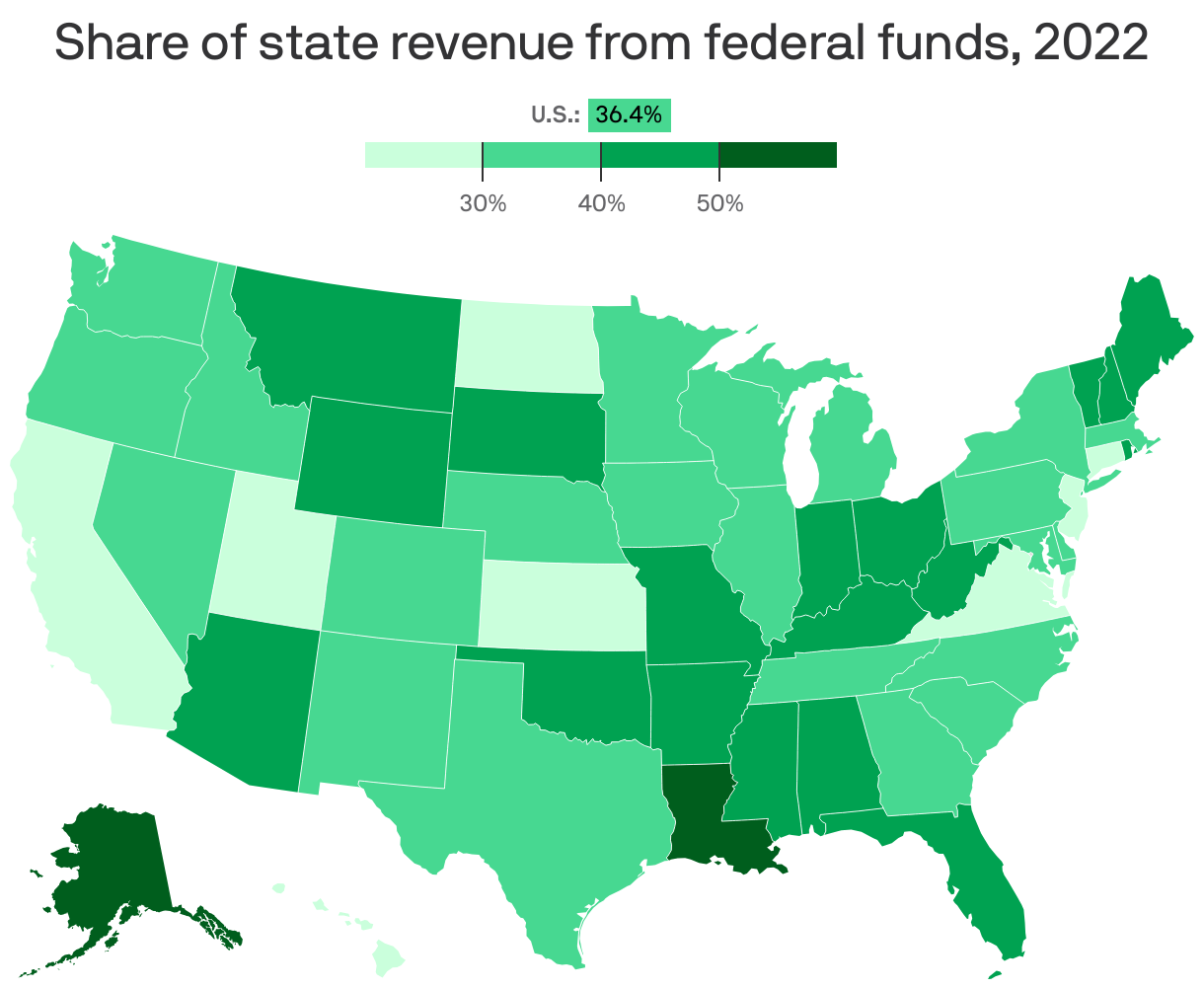
Utah is one of the least federally-reliant states in the nation — yet more than a quarter of its revenue comes from D.C., per a recent analysis.
Why it matters: The Trump administration and congressional Republicans are looking for ways to cut federal spending, and some states may be more vulnerable than others to major decreases.
By the numbers: As of 2022, federal funding accounted for more than 29% of Utah's revenue, according to a Pew Charitable Trusts analysis of the latest available census data.
Zoom out: Most states get an even bigger share of tax funding from federal sources.
- It accounts for more than half of revenue in Louisiana and Alaska and nearly 50% in Arizona.
The intrigue: Utah is one of the few red states that isn't heavily reliant on federal funds.
- Of the four states that get a smaller share of their revenue from D.C., only oil-rich North Dakota went for Trump in November.
Catch up quick: Utah, Wyoming and Nevada are the only three states that send more money to federal government coffers than they receive and also supported Trump.
- 13 states total give more to the feds than they get.
Context: The federal share of a state's overall revenue can fluctuate from year-to-year depending on overall federal spending levels, state tax collections and more.
- States have been getting more federal funding than usual in the past few years due to COVID-19 and infrastructure spending.
Stunning stat: Total federal grants exceeded $1 trillion in 2022 for the first time, per Pew.
The big picture: Big losses in federal dollars can leave states scrambling for alternate funding for federally-supported programs and projects, or can cause states to cancel them entirely.
Case in point: FEMA is cutting $325 million in grants largely meant for flood mitigation in New York.
- "No state in the nation can backfill the massive cuts being proposed in Washington," New York Gov. Kathy Hochul said in response earlier this month.
What we're watching: Whether the second Trump era results in a notable, broad decrease in federal funding to states — and how they react.