Utah risks big losses if U.S. allies drop F-35 purchases over Trump hostility


Add Axios as your preferred source to
see more of our stories on Google.
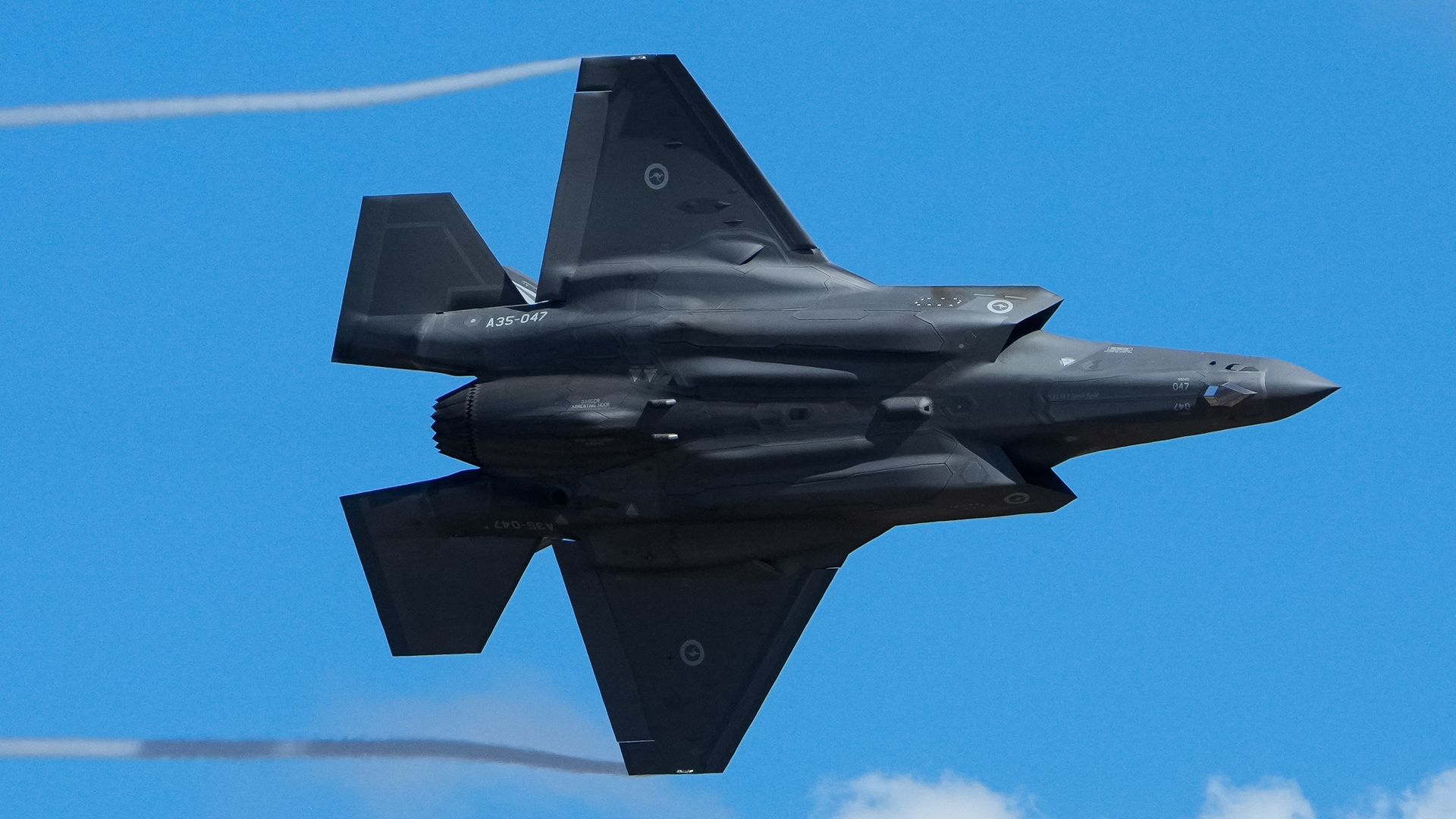
An F-35A Lightning II performs Tuesday at an airshow in Avalon, Australia. Photo: Asanka Ratnayake/Getty Images
Utah stands to take one of the nation's biggest losses if the United States' global allies stop buying F-35 aircraft.
Friction point: The F-35 fifth-generation fighter jet has become a geopolitical football, with some longtime U.S. allies reconsidering it amid the Trump administration's hostility toward Canada and NATO and embrace of Russia.
- A Danish politician last week said he regretted the country's purchase and called for a boycott of "American weapons if at all possible." Canadian and Portuguese authorities made similar complaints a few days earlier.
Why it matters: Utah officials have focused heavily on the state's aerospace industry in recent years.
- Meanwhile, other sectors like mining and manufacturing have taken steps to align with U.S. defense needs.
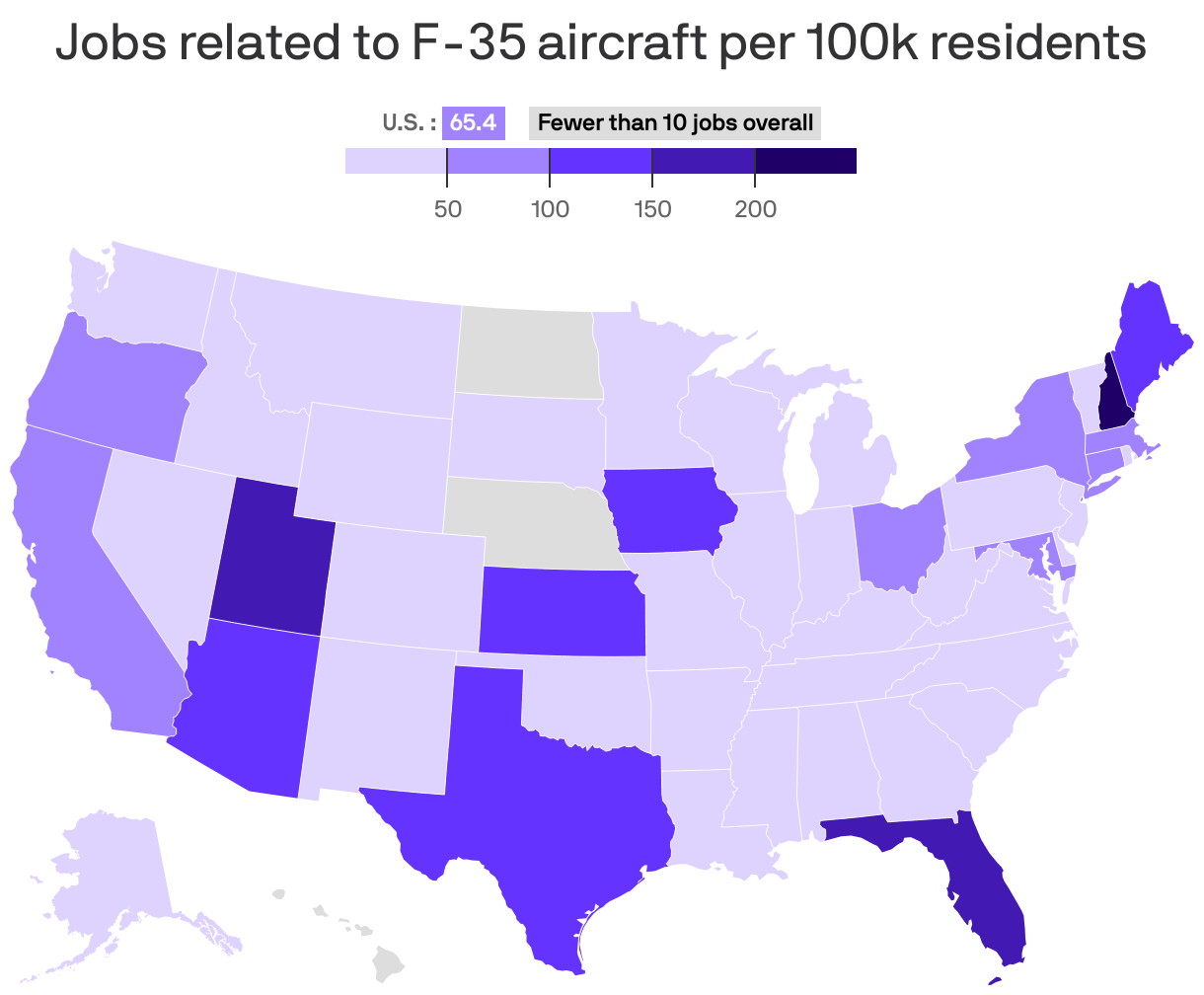
By the numbers: Utah has the nation's second-most jobs per capita related to F-35 production, based on data from contractors and partners Lockheed Martin, Northrop Grumman and BAE Systems.
- More than 6,200 jobs here are tied to the jets, or 181 per 100,000 residents.
- Only New Hampshire has more jobs at stake.
How it works: These numbers include both direct and indirect jobs related to the F-35.
- The latter category includes jobs created as a result of spending by the program or its employees.
Between the lines: Some countries are considering switching to European-made jets as relations break down between President Trump and historic U.S. allies, the Associated Press reports.
- The Pentagon recently went so far as to deny rumors that it has a "kill switch" enabling it to remotely disable F-35s — if, for example, a country flying them did something the White House didn't like.
- "The program operates under well-established agreements that ensure all F-35 operators have the necessary capabilities to sustain and operate their aircraft effectively," the Pentagon's F-35 Joint Program Office said in a March 18 statement.
Yes, but: Any F-35 customer nations would still be reliant on American companies for support, parts, and more.
- "You're not just buying an airplane, you're buying a relationship with the United States," national security expert Winslow T. Wheeler told the AP.
- Trump's suggested sale of F-35s to India, where development of a domestic fifth-generation aircraft is already underway, was seen as such.
What they're saying: "Lockheed Martin values our strong partnerships with our customers and looks forward to continuing these partnerships into the future," the company said in a statement sent to Axios.
The latest: Lockheed rival Boeing won a major contract for an advanced sixth-generation U.S. Air Force fighter called the F-47, Trump announced Friday.
- The contract is a blow to Lockheed Martin, which employs about 600 Utahns.
- As of 2023, the company identified the F-35 as one of the "key mission portfolios" Utah was home to.
The bottom line: The F-35 is a cornerstone of a yearslong plan to get NATO countries flying the same aircraft, enabling cross-compatibility and resource-sharing.
- Threatening to effectively abandon that plan is one thing. Actually doing so is quite another.