The Fort Utah Massacre, 175 years later: Murder, execution and decapitation

Add Axios as your preferred source to
see more of our stories on Google.
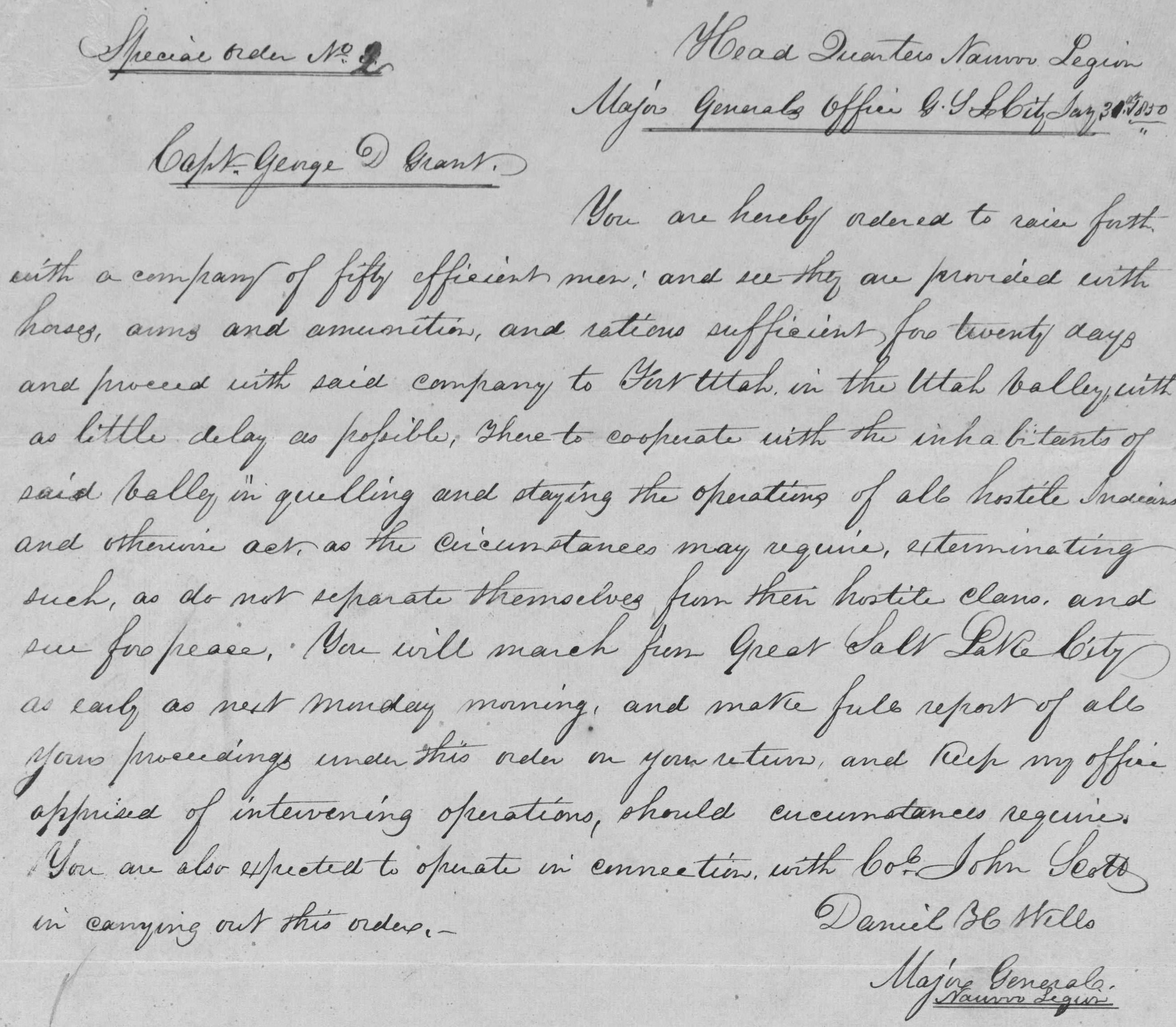
One of the deadliest slaughters of Utah's Indigenous people by white pioneers began 175 years ago this week: The Fort Utah Massacre.
- This is Old News, our Monday trek through Utah's past.
What happened: Up to 100 Timpanogos people were killed on Brigham Young's orders in an attack that reportedly started with a fight over a shirt.
Friction point: In 1849 or early 1850, a group of pioneers in the Utah Valley accused a Timpanogos neighbor of stealing a shirt and fatally shot him during the dispute. They "ripped his bowels open and filled them with rocks" to sink his body in the Provo River, Young later wrote.
- Meanwhile, settlers had been sending word to Young that the Timpanogos were taking their corn and cattle — possibly retribution for the killing.
Behind the scenes: When the settlers asked Young to support an attack on the Timpanogos, he initially demurred, saying it was excessive punishment for theft.
- But the settlers and other church leaders pressed him until Jan. 31, 1850, when Young ordered the militia "not to leave the [Utah Valley] until every Indian was out," his general wrote.
What they said: "Let the women and children live if they behave themselves. … We have no peace until the men [are] killed off — never treat the Indian as your equal," Young said, according to meeting notes quoted by historian Howard Christy.
The following weeks soaked the Utah Valley with blood.
- On Valentine's Day, the militia promised mercy to a group of Timpanogos men whose wives and children were already captured — but executed them after they surrendered, wrote J.W. Gunnison, a U.S. Army lieutenant who was in Utah to map the Salt Lake Valley.
- Widows and orphans were "placed in families as servants, to make white people of them," Gunnison added. A California-bound U.S. Indian agent who learned of their abduction wrote to Washington, D.C. to warn slavery was alive in Utah. Most of the enslaved Timpanogos died or escaped.
Zoom in: A government surgeon with Gunnison's expedition decapitated the fallen Timpanogos to send their skulls to Washington, D.C., for medical research, settler Abner Blackburn wrote.
- But first the heads were displayed at Fort Utah — the settlement that would become Provo. In her memoir, settler Anna Clark Hale — who was 8 years old at the time — recalls the "horrible and frightening scene." Epsy Jane Williams, then a teenager, estimated 40-50 heads were brought there.
Between the lines: Young later wrote that he was not initially told the conflict was triggered by the killing of a man accused of stealing a shirt.
- Young himself characterized the man's death as murder.
By the numbers: Contemporaneous accounts estimated around 40 Timpanogos were killed — a figure historian Jared Farmer describes as "deliberate undercounting."
- Williams, the teenager, cited a death toll of over 100, which Farmer says is more likely.
- One white militia member died.