Utah's 1902 Hell's Hollow murder sparked vigilantism debate

Add Axios as your preferred source to
see more of our stories on Google.
The shooting death of UnitedHealthcare's CEO has sparked a nationwide debate over vigilantism — a question that consumed Salt Lake City following a homicide more than 120 years ago.
- This is Old News, our weekly scan through the evidence locker of Utah's past.
Why it mattered: The 1902 murder of Samuel Collins forced public officials here to reckon with a killer who gained the nation's sympathy.
How it started: A group of boys set out for a day of hiking and picnicking near Ensign Peak on Easter Sunday that year.
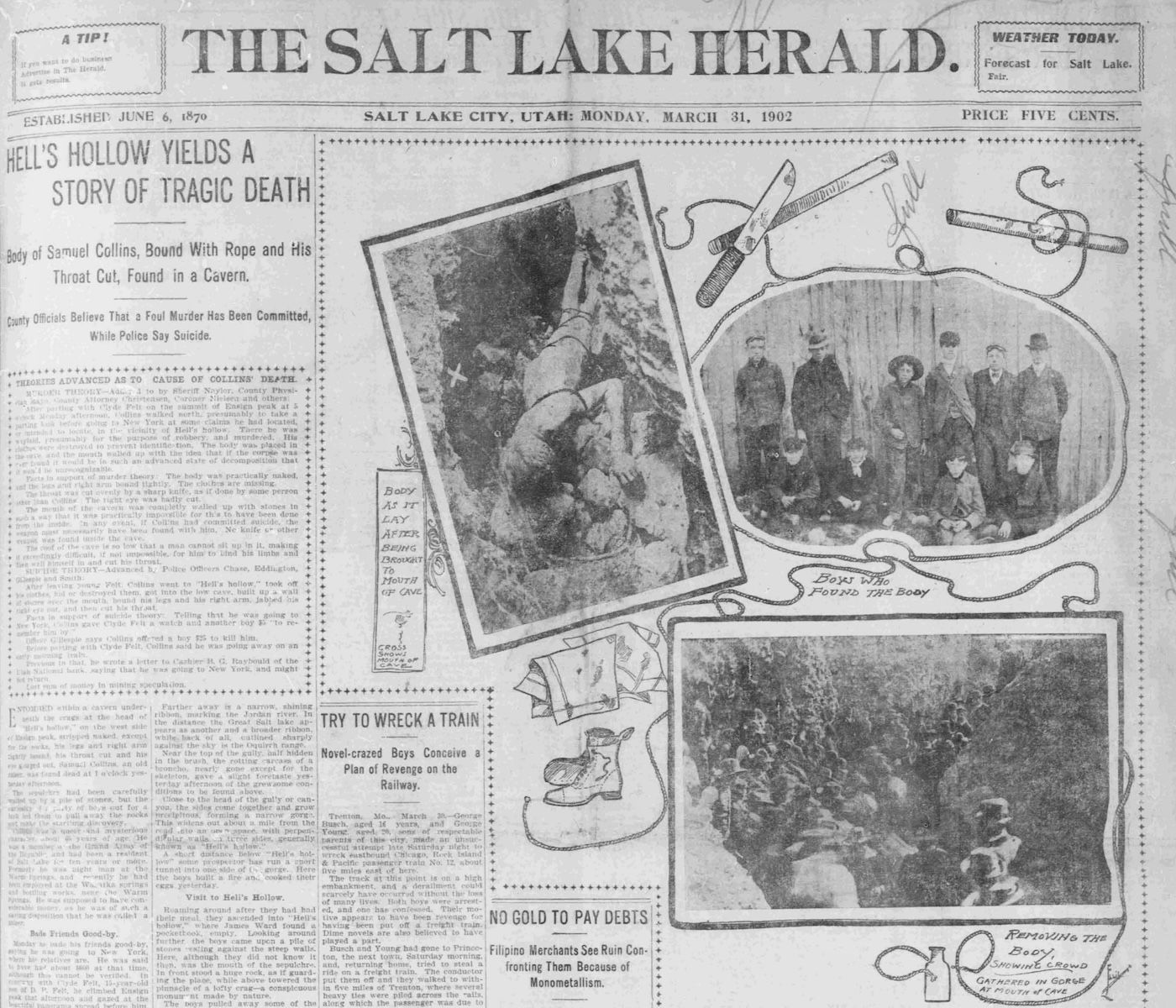
- In a gully called Hell's Hollow, they noticed a pile of rocks leaning oddly against the ravine wall.
What was inside: The boys uncovered a small cavern behind the rocks.
- On the floor was 65-year-old Collins. He was naked and tied with ropes, with one collapsed eyeball and a deep slice across his throat.
- What wasn't inside: Neither a weapon nor his clothes.
What they said: It was suicide, police reported. Plain and simple.
- "Old Man Collins," as he was called, must have taken off his own clothes, gouged out his own eye, slashed his own throat, hidden his knife elsewhere and then — while bleeding out — walled himself into a cave, where he tied himself up and died.
Zoom in: Investigators made a big deal of any report that suggested Collins was in crisis.
- Some witnesses said he'd lost a lot of money and planned to move back to his previous home in New York.
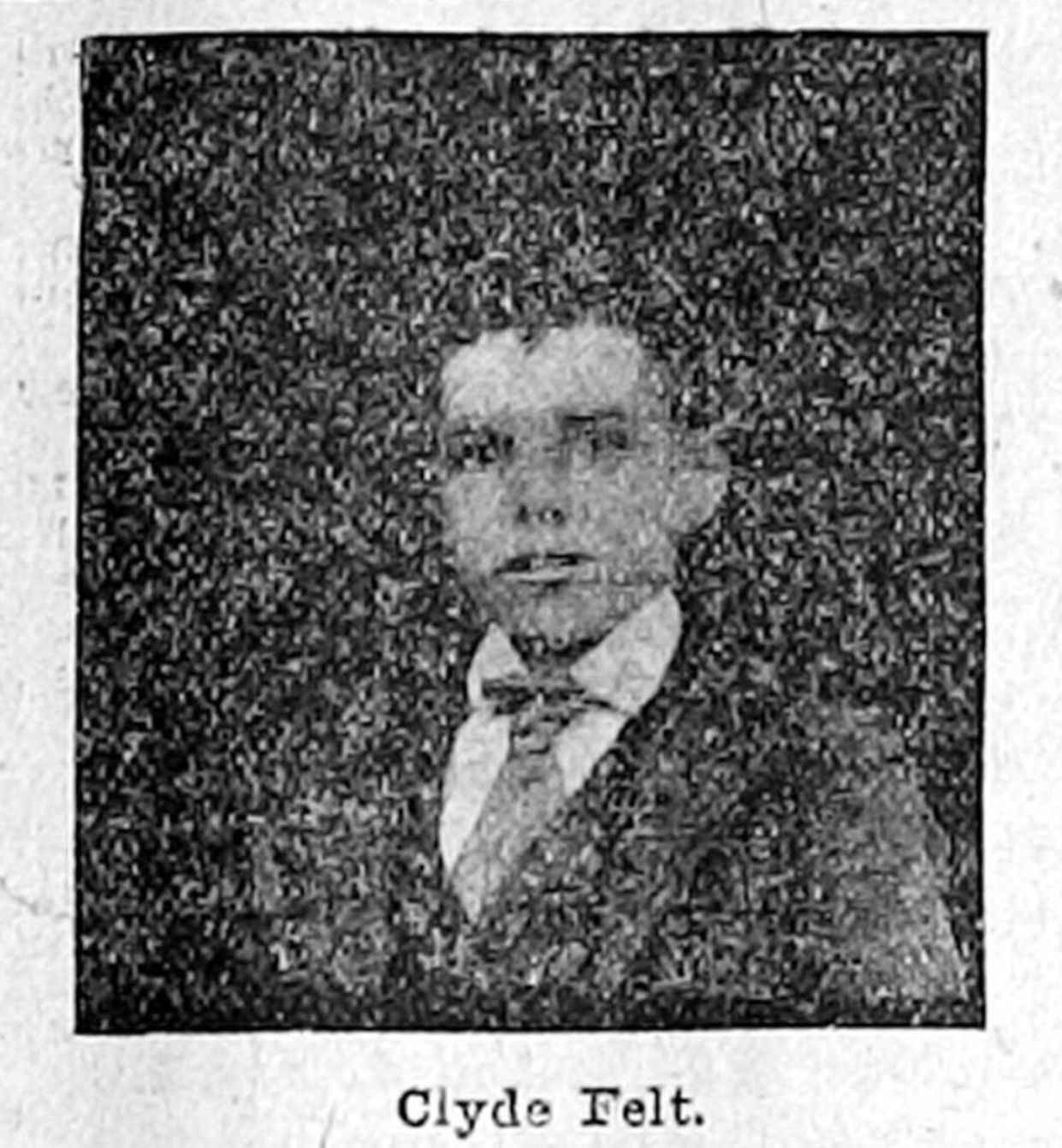
- A neighbor boy named Clyde Felt said he had joined Collins for one last hike to Ensign Peak to see the sights before Collins planned to leave town.
Friction point: Even by Wild West standards, this was horrific violence. The public demanded justice. The media called for the police chief's head.
- The suicide theory "seems too absurd for even a child's consideration," the Salt Lake Herald scoffed in an editorial, saying the case proved "the absolute worthlessness of the police force for the detection of crime."
The intrigue: The public didn't realize the explanation would turn the Hell's Hollow murder into a criminal case that no one wanted to touch with a 10-foot pole.
- Collins was an accused child abuser. And the killer was 14-year-old Felt — his victim.
Between the lines: The newspapers put it in dainty terms. Collins begged Felt "to perform an operation calculated to cure him of his abnormal desires," the Salt Lake Tribune reported.
- A coroner explained it was "a common thing for moral perverts" to seek surgical remedy.
Police and psychiatric experts suspected Felt saw a more conclusive option once he had his abuser tied up and a knife in his hand.
- But detectives refused to write the affidavit; the chief finally signed the murder charge himself and left justice to the courts.
The other side: Felt said Collins pleaded with him to cut his throat.
Zoom out: While in jail, Felt became a minor celebrity. Letters and gifts were sent to the Salt Lake County jail from all over the country — including from "some of the most prominent men of this and other states."
- "Numbers of sympathetic women" visited the jail daily to check on him, per one report.
"Visitors at the county jail have been patting Clyde on the back, lauding and excusing him for his deed. That is the last thing I want."— D.P. Felt, Clyde Felt's father, via the Salt Lake Telegram
The bottom line: Prosecutors later dropped the charge, saying no jury would convict him.
- Multiple legal experts agreed Felt was guilty but conceded the case would be a tough sell.
Caveat: For a lot of reasons, it would be folly to compare Collins' murder to that of CEO Brian Thompson. Or Clyde Felt to Luigi Mangione, who was charged in Thompson's murder.
The big picture: But any violence seen as vigilante justice is sure to meet mixed reactions.
- It's not how the system is designed to work, and allowing it could set a precedent for chaos.
- But history shows it's often palatable to folks who otherwise respect law and order.