Utah sees rise in congenital syphilis as overall STI rates fall

Add Axios as your preferred source to
see more of our stories on Google.
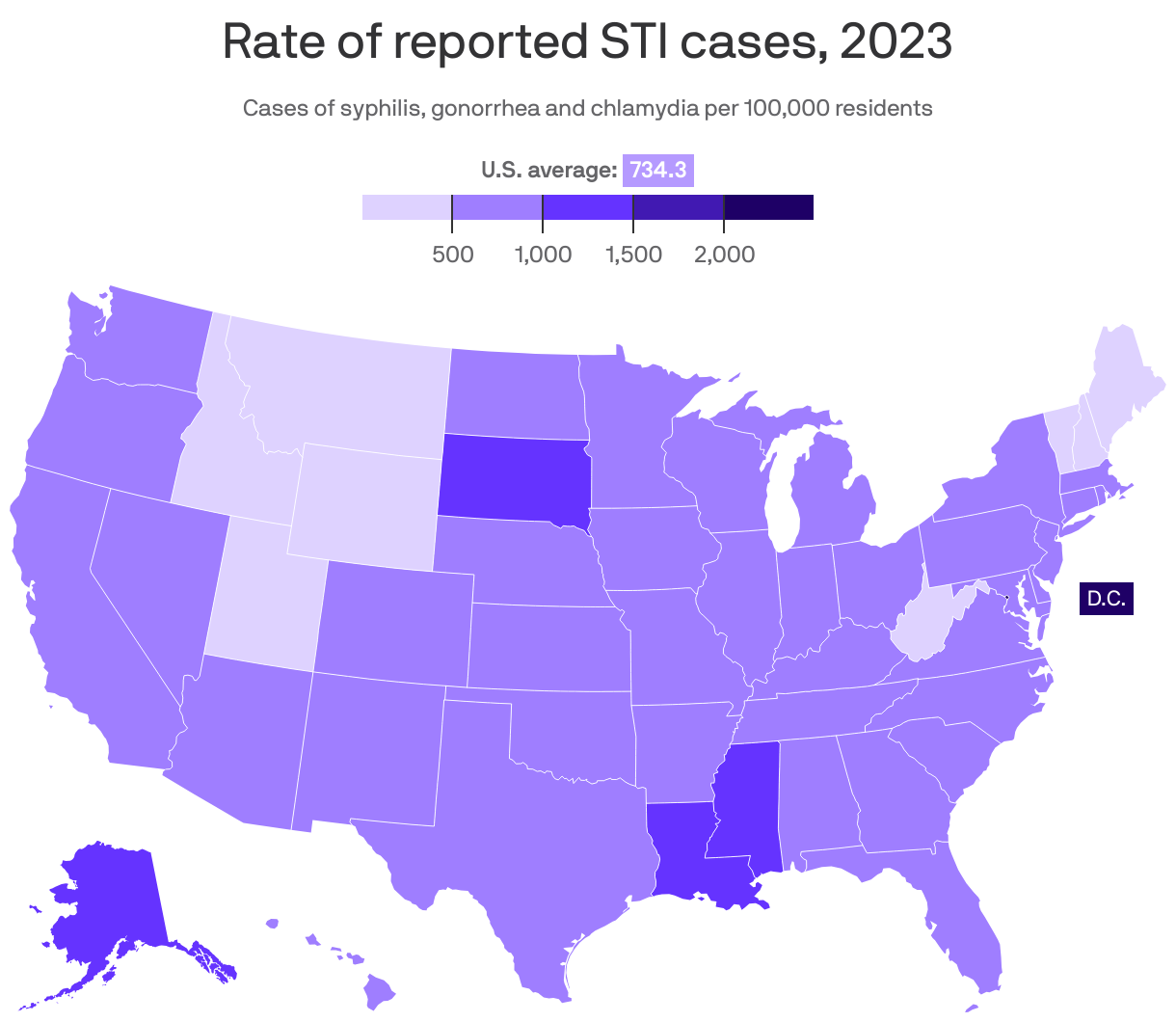
Utah's rate of sexually transmitted infections may lag behind the nation's, but the number of congenital syphilis cases hit an alarming high within the past year, per the state health department.
By the numbers: There were nearly 425 STI cases per 100,000 residents in Utah last year, compared with about 734 cases per 100,000 nationally, per the CDC.
The big picture: Overall, STI cases were down by 19% between Dec. 1, 2023, and Dec. 1, 2024, per preliminary data provided by the Utah Department of Health and Human Services.
Yes, but: "We saw a lot more congenital syphilis than we've ever seen before, and that really matched national trends," Megan Evans, STD program manager for the state's health department, told Axios. "We've done a lot of education with healthcare providers to familiarize them with the infection and what to look for and what to test for."
How it works: The infection occurs when a person passes on syphilis to their baby during pregnancy, according to the CDC.
- Evans said it's hard to say what exactly is driving the rise but pointed to a yearlong shortage of bicillin, which is primarily used to treat syphilis.
State of play: It's also difficult to pin why other STI cases are seeing initial declines.
- The department doesn't track testing rates, so if "screening rates have gone down, the positivity rates will go down and vice versa," she said.
Between the lines: Teens and young adults may be turning away from condoms, but they're also having less sex in general — and contracting fewer STIs — than previous generations, Axios' April Rubin writes.
- 52% of sexually active high school students surveyed nationwide by the CDC in 2023 said they used a condom the last time they had sex — a 7 percentage point drop over the past decade.
- Generally, people between ages 15 and 24 are at the highest risk, Evans noted.
Zoom in: In Utah, chlamydia was the most commonly reported STI in 2023, followed by gonorrhea and non-congenital syphilis, which saw a sharp rise in 2022, according to statewide data.
- In 2022, the majority of chlamydia cases at the time were reported in Salt Lake, Utah, Davis and Weber-Morgan counties.
- Women had a higher infection rate of chlamydia than men. Meanwhile, men had higher rates of gonorrhea and syphilis than women.
What we're watching: The CDC has recommended that health providers discuss the inexpensive "morning-after pill" doxycycline to prevent the spread of bacterial STIs in the hours after unprotected sex to certain groups, including transgender women and men who have sex with men.
The bottom line: Utah's prevalence of STIs is low compared with the rest of the nation's, despite the state's sexual education instruction being abstinence-based.