Utah has some of the nation's fastest-rising fall temperatures


Add Axios as your preferred source to
see more of our stories on Google.
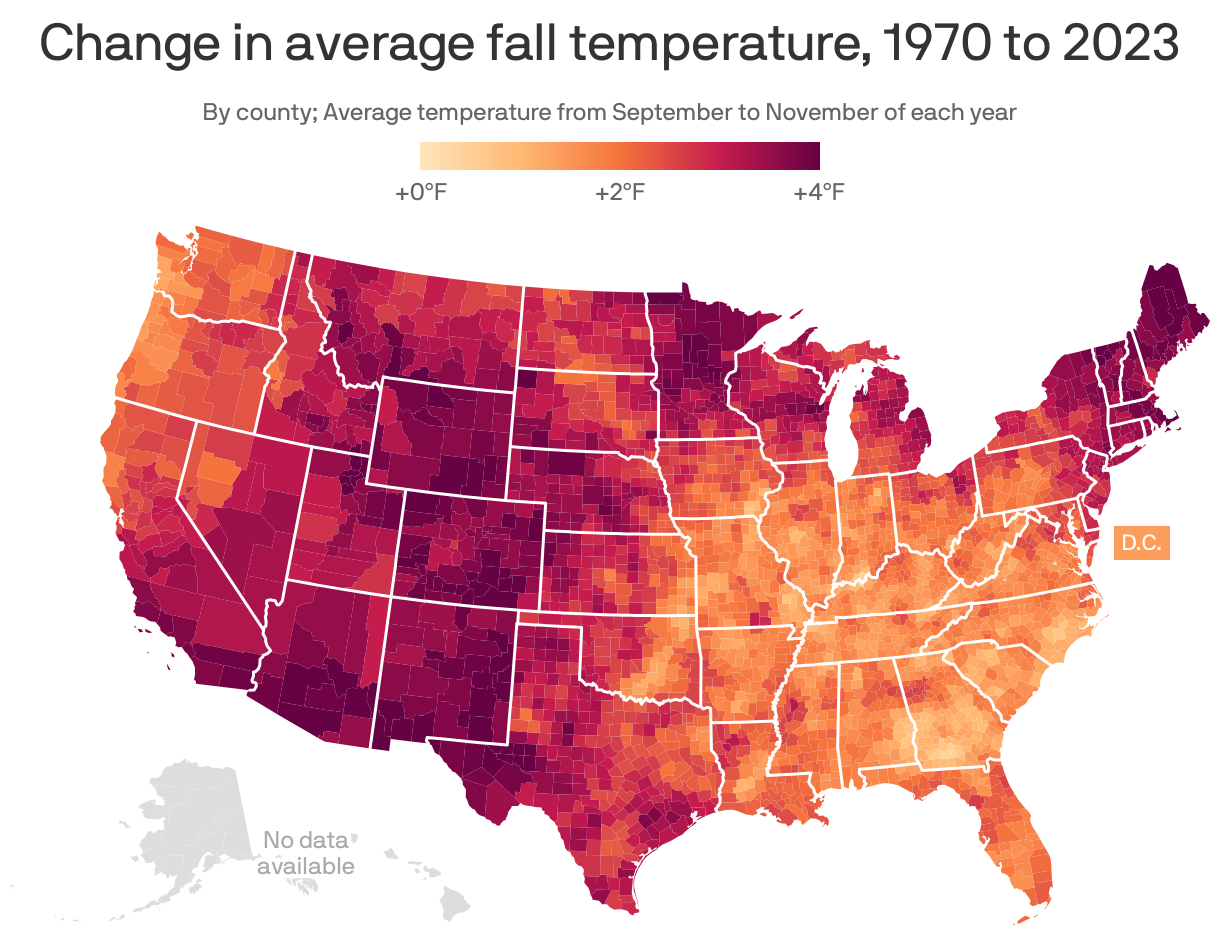
Utah has some of the nation's fastest-rising fall temperatures, according to a new analysis.
Why it matters: A warmer autumn means more demand for cooling, higher energy use and longer wildfire seasons.
State of play: Fall temperatures rose 4.5°F in Weber and Davis counties between 1970 and 2023, per a new Climate Central report.
- That's the second largest rise in the country, behind only El Paso County, Texas.
- The nonprofit research group's analysis is based on average temperatures from September to November of each year.
Zoom in: Salt Lake, Rich and Morgan counties also saw temps jump at least 4°, with all Utah counties except Millard and San Juan rising by at least 3°.
By the numbers: In Salt Lake City itself, the hottest fall was in 2016, with an average temperature of 57.5°.
My thought bubble: 2016 was the year I ordered a dump truck load of supposedly "well-rotted" horse manure for my garden, thinking I had escaped the brunt of summer.
- Instead, a massive pile of fresh poo was dumped into my driveway — right as temperatures climbed to the 90s.
Between the lines: The fall trends are consistent with climate science findings showing how the planet is responding to human-caused increases in greenhouse gases, such as carbon dioxide.
- Other seasons are also warming.
Read more: Mapped: Utah's fall colors forecast for 2024