93% of Utah 988 crisis hotline calls answered

Add Axios as your preferred source to
see more of our stories on Google.
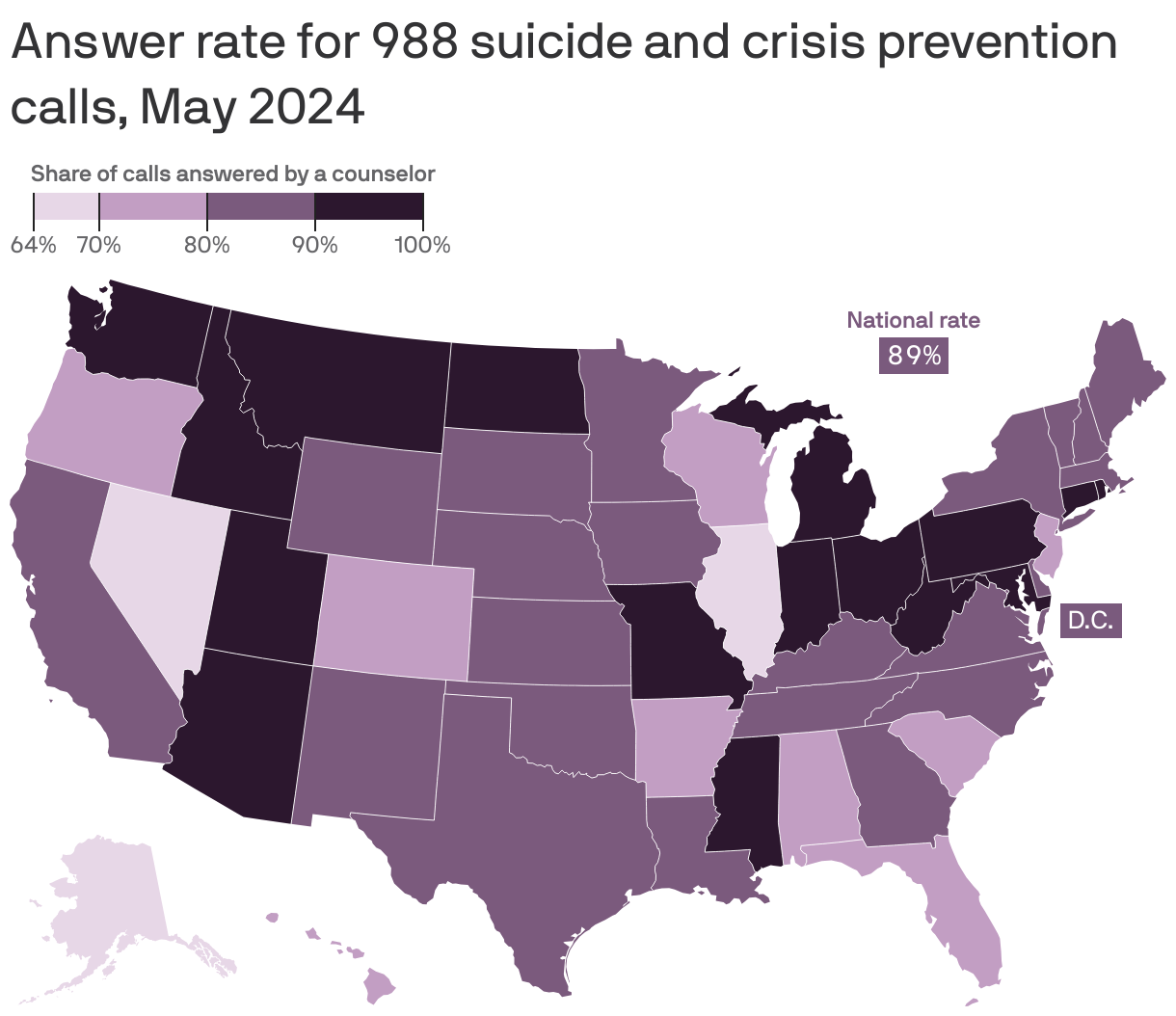
About 7% of Utah calls to the 988 crisis hotline have gone unanswered this year.
Why it matters: It's a lower rate than in most of the country, and lower than the 9% missed in April and May 2023 but that still amounts to more than 200 unanswered crisis calls each month.
By the numbers: 89% of 988 calls nationwide were answered in May, the most recent month for which data is available.
- Utah had a 93% rate — the sixth highest of any state.
Zoom out: Congress gave states $1 billion to build out the 988 hotline amid nationwide concern over worsening mental health, with the expectation that states would establish their own own long-term funding to operate call centers and crisis services.
- But those efforts have been uneven, contributing to significantly lower response times in certain states, Axios' Maya Goldman reports.
- As with much of the health care system, the level of crisis services available to people depends greatly on where they live.
What they're saying: "We want a system where everybody has a comparable experience. It seems to me we're still a few years from that," said Chuck Ingoglia, CEO of the National Council for Mental Wellbeing.
- He and other advocates Axios spoke with said 988 implementation has been improving.
Zoom in: That bears out in Utah, where answer rates have risen fairly steadily in the past two years up from 60-70% in the first few months of the service.


The big picture: Calls, texts and chats to the hotline are up since it was relaunched as an easy-to-remember three-digit service in July 2022.
- In Utah, monthly call volume has risen from about 2,000 at launch to more than 3,000 per month in 2024.
What's next: States and cities are also moving toward integrated 988 and 911 services, said KFF researcher Heather Saunders, who tracks policies around the hotline.
- Federal regulators are also looking to require that 988 calls are routed to a person's actual location, rather than their area code, to better connect them with nearby resources.