What to expect during Utah's wildfire season

Add Axios as your preferred source to
see more of our stories on Google.
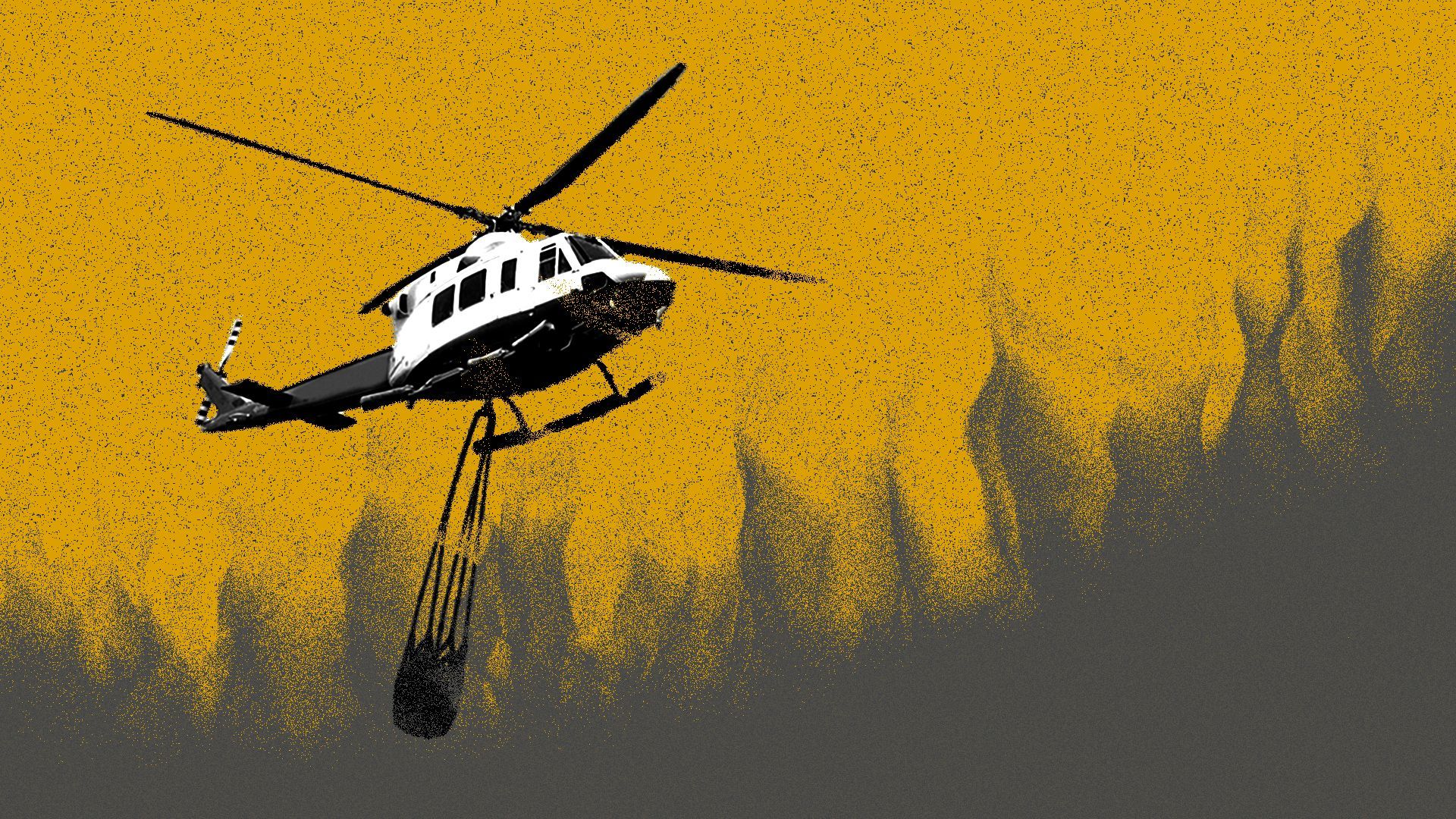
Photo illustration: Brendan Lynch/Axios. Photo: Bob Riha, Jr./Getty Images
Utah's hotter-than-normal recent temperatures and this winter's significant snowfall point to a higher risk for wildfires this season, fire officials warn.
Why it matters: The state's conditions this summer are comparable to the devastating 2020 wildfire season that saw a recording-breaking number of human-caused blazes, per the Utah News Dispatch.
- Wildfire season spans between June and September.
What they're saying: "We've had a couple of good winters, which means a good amount of new [vegetation] growth has emerged," Jon Meyer, a climatologist for Utah State University's climate center, told Axios.
- That growth means more fuel to burn.
- A delayed monsoon season in Utah is also likely to bring less precipitation during the summer months, resulting in dryer conditions, Meyer noted.
By the numbers: Generally, almost half of all wildfires in the state are caused by humans as a result of campfires, vehicles, fireworks and shooting firearms, Jamie Barnes, director and state forester for the Utah Division of Forestry, Fire and State Lands said in a news briefing earlier this month.
- So far this year, 242 wildfires in the state have burned over 3,603 acres, per Utah Fire Info. About 80% of the wildfires have been human-caused.
- In 2020, there were nearly 1,550 wildfires that ignited more than 300,000 acres, KSL.com reported.
The latest: The Little Twist wildfire in southwestern Utah is currently the largest one burning in the state and has scorched more than 2,000 acres.
Zoom out: In May, Utah received more than $5.5 million from the U.S. Department of Agriculture for protecting homes, businesses and infrastructure from wildfires as part of a federal grant program.
Worthy of your time: State and local fire officials are warning Utahns to only start campfires in designated areas and check their vehicle's coolant levels and brakes before heading to the outdoors.
- Vehicles, including ATVs, should be parked away from dry vegetation.