When WWII Rosies "invaded" Utah's mining industry

Add Axios as your preferred source to
see more of our stories on Google.
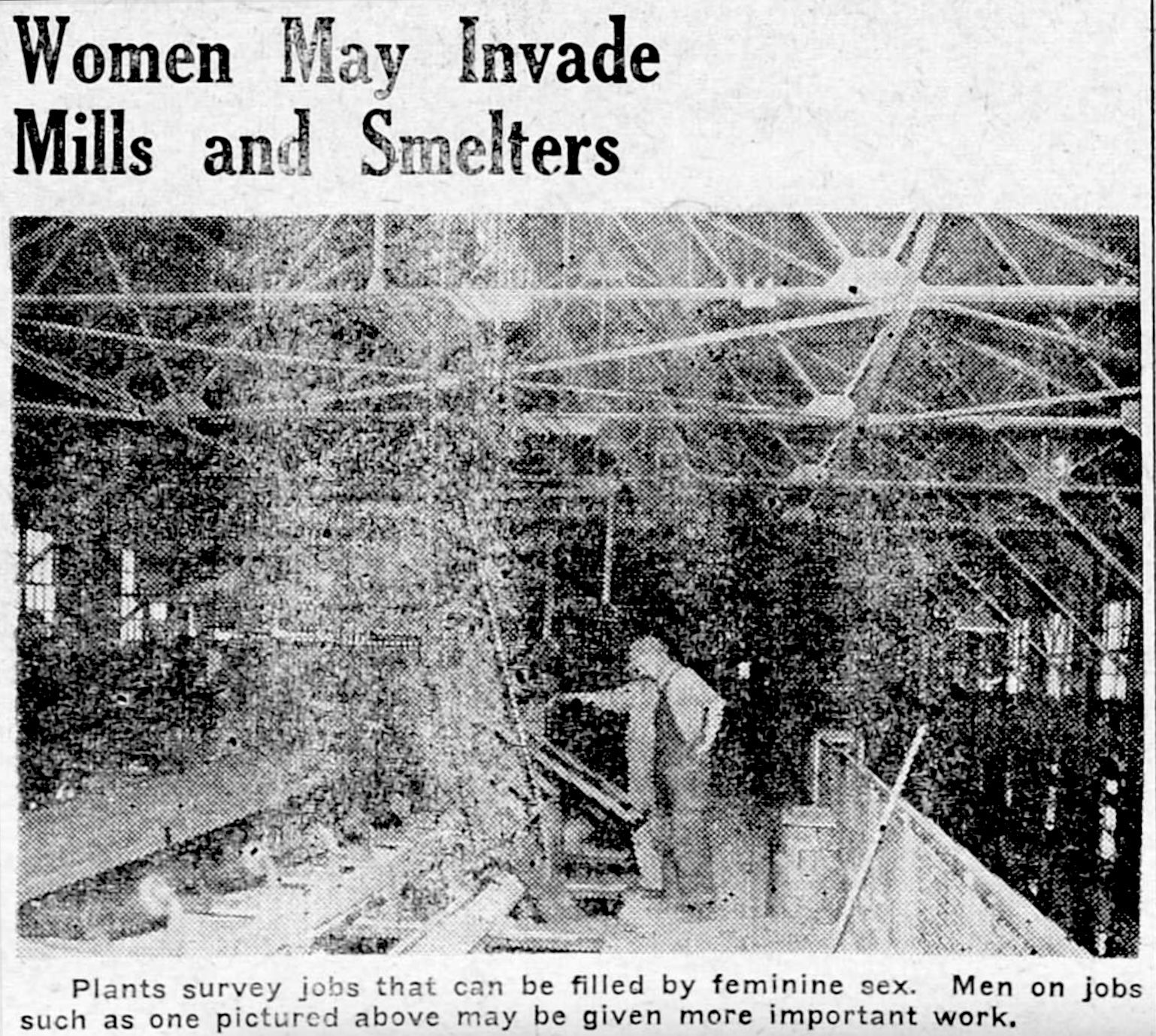
As women took over jobs traditionally held by men during World War II, the mining industry was one of the final boys' clubs around.
This is Old News, our weekly trip through the adits of time.
The intrigue: It was illegal for women to work in mines and smelters before 1943 — and it took lawmakers two full years of wartime to lift the ban, even though the mining industry was in serious peril.
Why it mattered: Without women to take over some of the jobs, Utah mines faced a "critical labor shortage," The Salt Lake Telegram wrote.
- Metal is a good thing to have if you want to win a war — especially copper and zinc, needed for munitions.
Zoom in: Mines were finally allowed to start hiring women for above-ground jobs in March 1943, when then-Gov. Herbert Maw signed a bill permitting women in smelters and mills — but only for the duration of the war.
- Utah mines expected women would fill about 500 jobs previously available to men only, freeing up the replaced workers to go underground.
Driving the news: Operators set the plan in motion in late May of that year, prompting news alerts that the industry would soon be "invaded by the feminine sex."
What they said: "The powder puff will soon replace the plug of tobacco on some jobs in the mills and smelters of Utah," read an article that was reprinted statewide.
Reality check: Despite the alarmist verbiage, news accounts proudly described women as "anxious to take a hand in this industry, which is so vital to the war effort."
- When mines in Montana floated the idea of employing women, a news editorial in one mining town warned, "Men some day may be the nursemaids, tending the babies while the women run the world."
The latest: Ukraine is now trying to get women into mining for the exact same reasons Utah did 81 years ago, the Wall Street Journal reported this week.