St. George among toughest metros to find job that pays a living wage


Add Axios as your preferred source to
see more of our stories on Google.
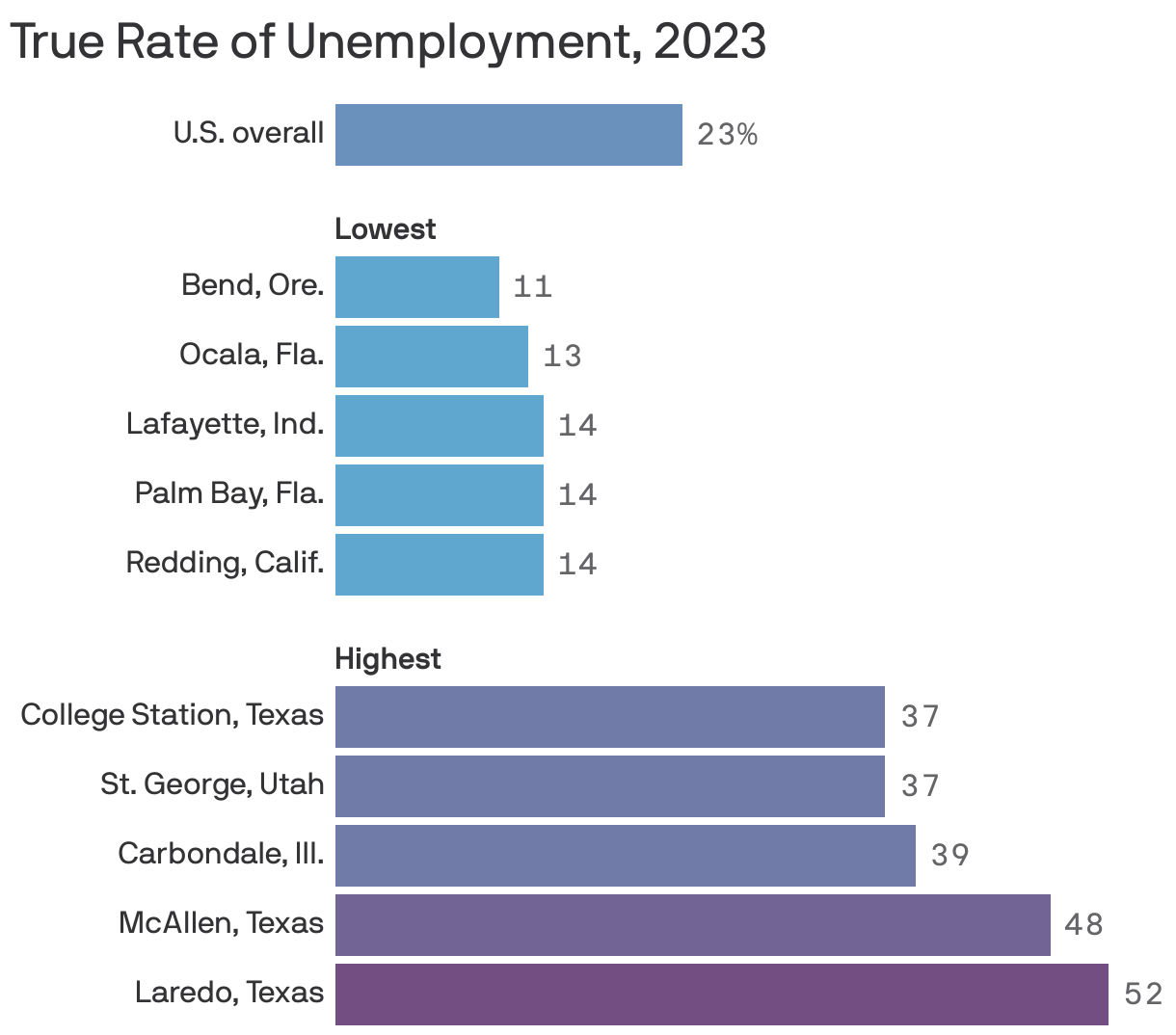
St. George, Utah, has one of highest true unemployment rates in the nation, according to data first shared with Axios.
Why it matters: A strong job market indicates a growing economy.
By the numbers: Last year, the St. George metro area's true unemployment rate was 37%, surpassing the national rate of 23%, per the Ludwig Institute for Shared Economic Prosperity propriety True Rate of Unemployment.
State of play: The share of workers in the St. George area unable to find a job that pays a living wage is not surprising considering the state boasts some of the lowest unemployment rates in the nation.
The big picture: Boom towns like Denver; Nashville, Tennessee, and Dallas are seeing very low levels of unemployment — in stark contrast to areas with large numbers of low-wage jobs, such as El Paso, Texas; Fresno, California, and New Orleans, per data released by LISEP.
How it works: LISEP's True Rate of Unemployment measures the proportion of workers looking for a full-time job that covers basic needs — and who are unable to find one.
- The living wage in Washington County is $25.86 per hour for two working adults with two children, the MIT living wage calculator shows. But the state's minimum wage is set at $7.25 per hour and proposals to increase it have failed.
- The median sales price of a home in the St. George metro was $507,450 in March, according to Redfin.
Between the lines: The True Unemployment rate tends to track — but also be much higher than — the headline Bureau of Labor Statistics unemployment rate.
- That's because the BLS rate excludes people who might be earning only a few dollars a week; LISEP, by contrast, counts as unemployed anybody earning less than $25,000 per year.
- The BLS, unlike LISEP, also excludes anybody who has stopped looking for work or is discouraged by a lack of jobs or the demands of child care.
What they're saying: "Local communities investing in infrastructure, housing, and future-oriented industries consistently outperform those more reliant on low-wage jobs," says LISEP founder Gene Ludwig.
The bottom line: There are plenty of good jobs in America — but they're not evenly distributed.