How gig workers contribute to Utah's workforce and economy


Add Axios as your preferred source to
see more of our stories on Google.
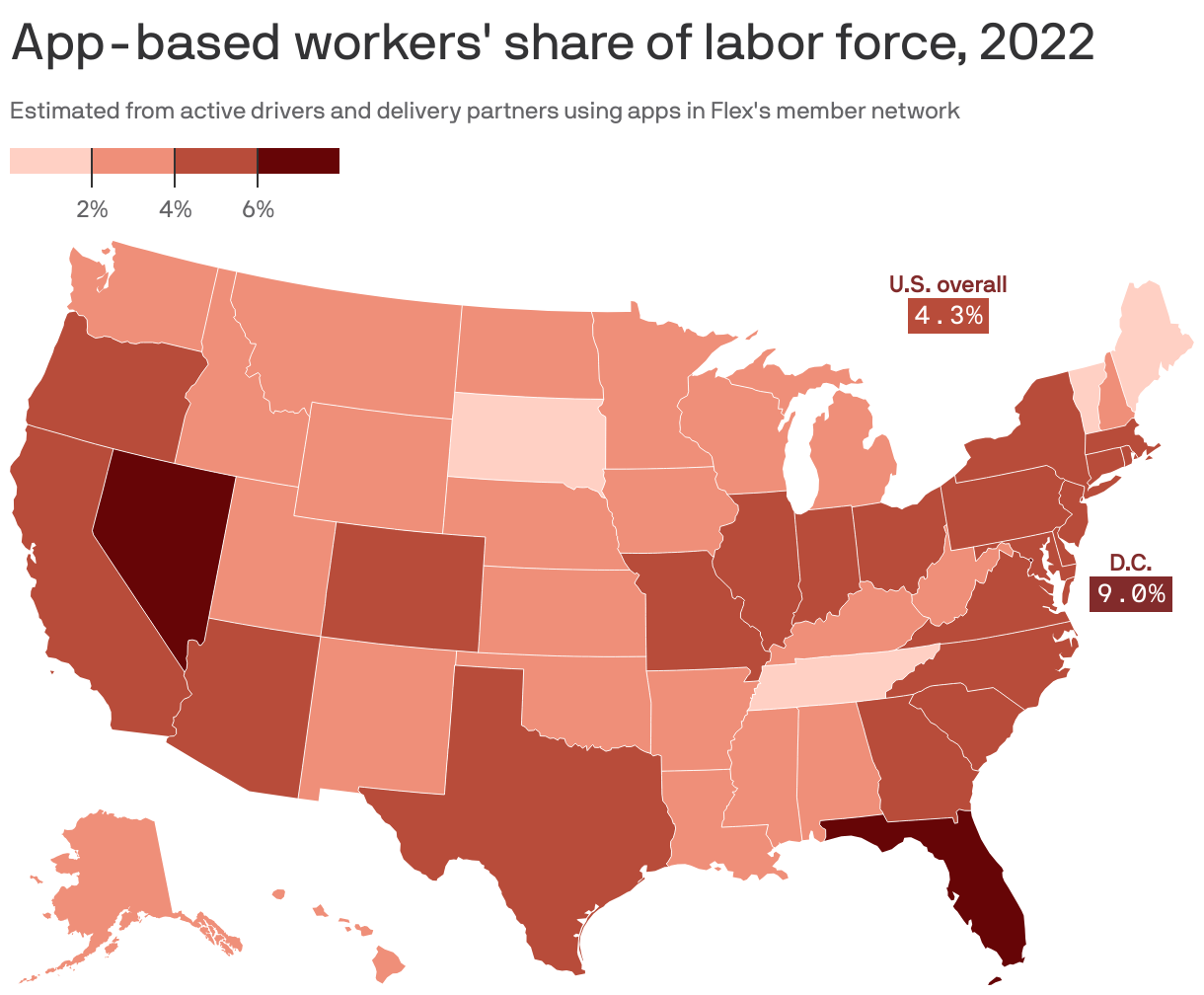
Nearly 4% of Utah's overall workforce participates in app-based work, according to a new study.
Why it matters: It offers a flexible way to earn a living or just make an extra buck — but many such workers are fighting for better pay, benefits, hours and more
By the numbers: App-based work generated $1.8 billion for Utah's economy in 2022, according to an Axios analysis of a study from consultancy Public First and commissioned by Flex, a trade group representing DoorDash, Uber, Lyft and more.
- Gig workers in Utah made over 35 million deliveries and trips that year, per the report.
The big picture: About 4.3% of the overall U.S. workforce takes part in app-based work, demonstrating the gig companies' influence.
- There are 7.3 million app-based workers nationwide, per the study. "The app-based rideshare and delivery industry contributes over $212 billion annually to the U.S. economy," Flex claims.
How it works: The Flex study is based on aggregated data from several such platforms, plus "new consumer and app-based worker survey data."
- Axios compared the study's estimated numbers of app-based workers by state with the size of each state's overall civilian labor force.
Zoom in: Washington, D.C., is America's app-based work hotspot, with drivers or couriers making up 9% of the labor force there.
- D.C. aside, Florida (6.4% of the labor force), Nevada (6%) and Georgia (5.9%) have the highest share of app-based workers in their respective labor forces.
- Tennessee (0.5%), Vermont (1.5%) and South Dakota (1.6%) have the lowest.
What's next: "We estimate that the industry could be worth approximately $500 billion in 10 years time," Public First director Vinous Ali said in a statement.