Utah's reduced summer 2023 wildfire risk

Add Axios as your preferred source to
see more of our stories on Google.
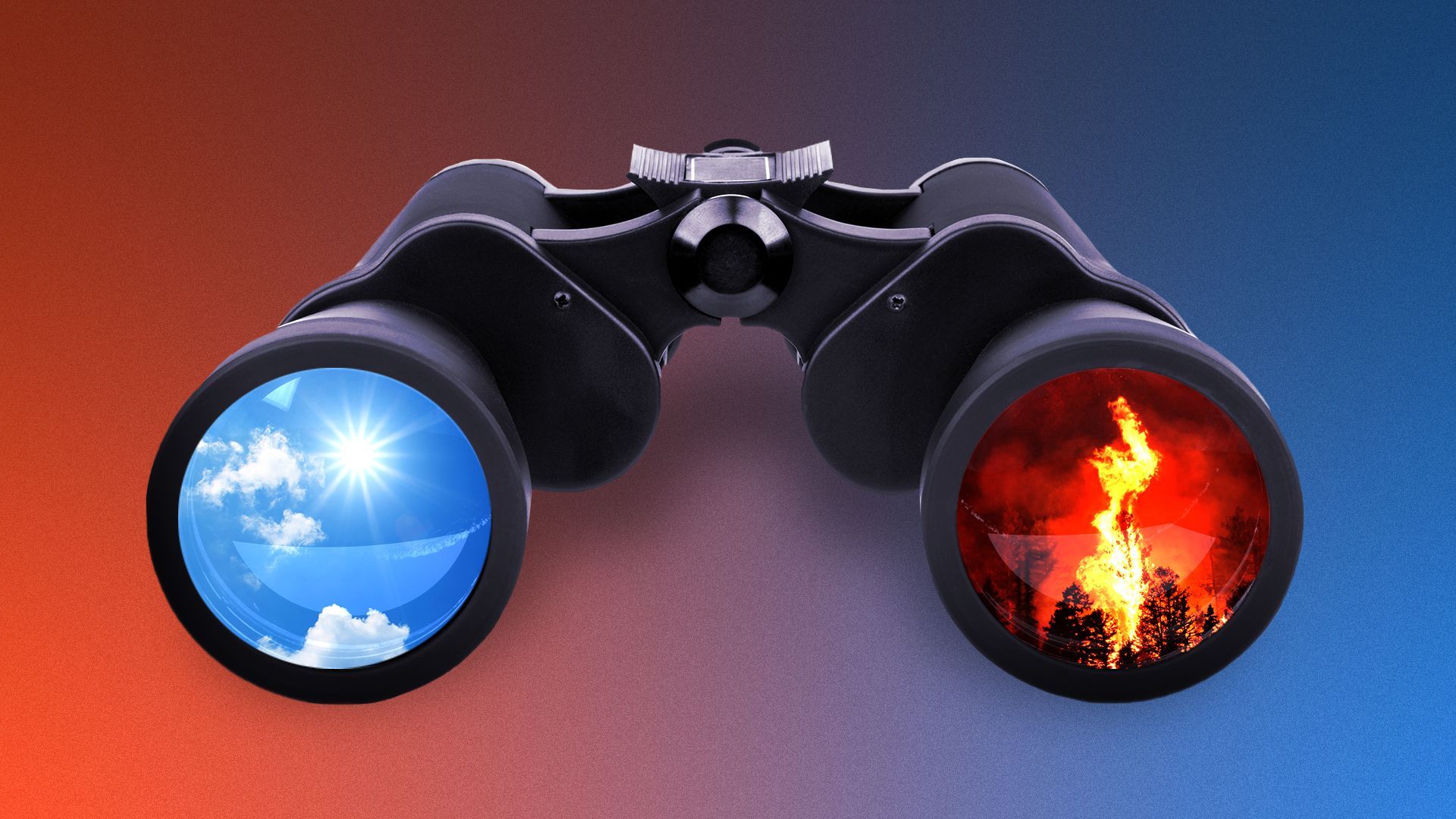
Illustration: Shoshana Gordon/Axios
Utah's record-setting snowpack and unusually wet conditions are helping reduce the state's wildfire risk this summer.
What they're saying: "We don't really have much of a fire concern as of right now. It's pretty muted thanks to the wet winter and extended spring conditions," Jon Meyer, state climatologist for the Utah Climate Center at USU, told Axios.
- Meyer said June has been particularly cool and wet, delaying the arrival of summer weather patterns.
- "We've got a lot of new [vegetation] growth across the landscape, but if we stay cool and wet then that new growth doesn't turn into dangerous fuels," he said.
Reality check: Meyer noted weather patterns could be unpredictable and could change quickly.
- "As of right now, we're all pretty optimistic," he said.
Details: Significant fire potential currently remains low to moderate across the Great Basin area, according to a Great Basin Predictive Services briefing Thursday, with the most risk on the southern end.
- Utah's wildfire season traditionally lasts from mid- to late-June through late September.
By the numbers: Since Jan. 1, there have been 139 total wildfires in the state that have burned a collective 1,500 acres, per Utah Fire Info data.
- Of those, 61 were caused by humans and 44 by lightning.
- At this point last year, a total of 245 wildfires had transpired. In 2021, there were 427.
What's next: Meyer noted Utahns should start seeing triple-digit temperatures in southern Utah starting next month.
The big picture: While Utah's fire danger may be reduced this summer, wildfire seasons are getting longer and more intense, especially in the West, according to an analysis from Climate Central, a nonprofit climate science research organization, Axios' Andrew Freedman and Kavya Beheraj report.
Be smart: The Utah Department of Natural Resources released a tool that shows the wildfire risk in your area.