Portland marks a decade of home deconstruction

Add Axios as your preferred source to
see more of our stories on Google.
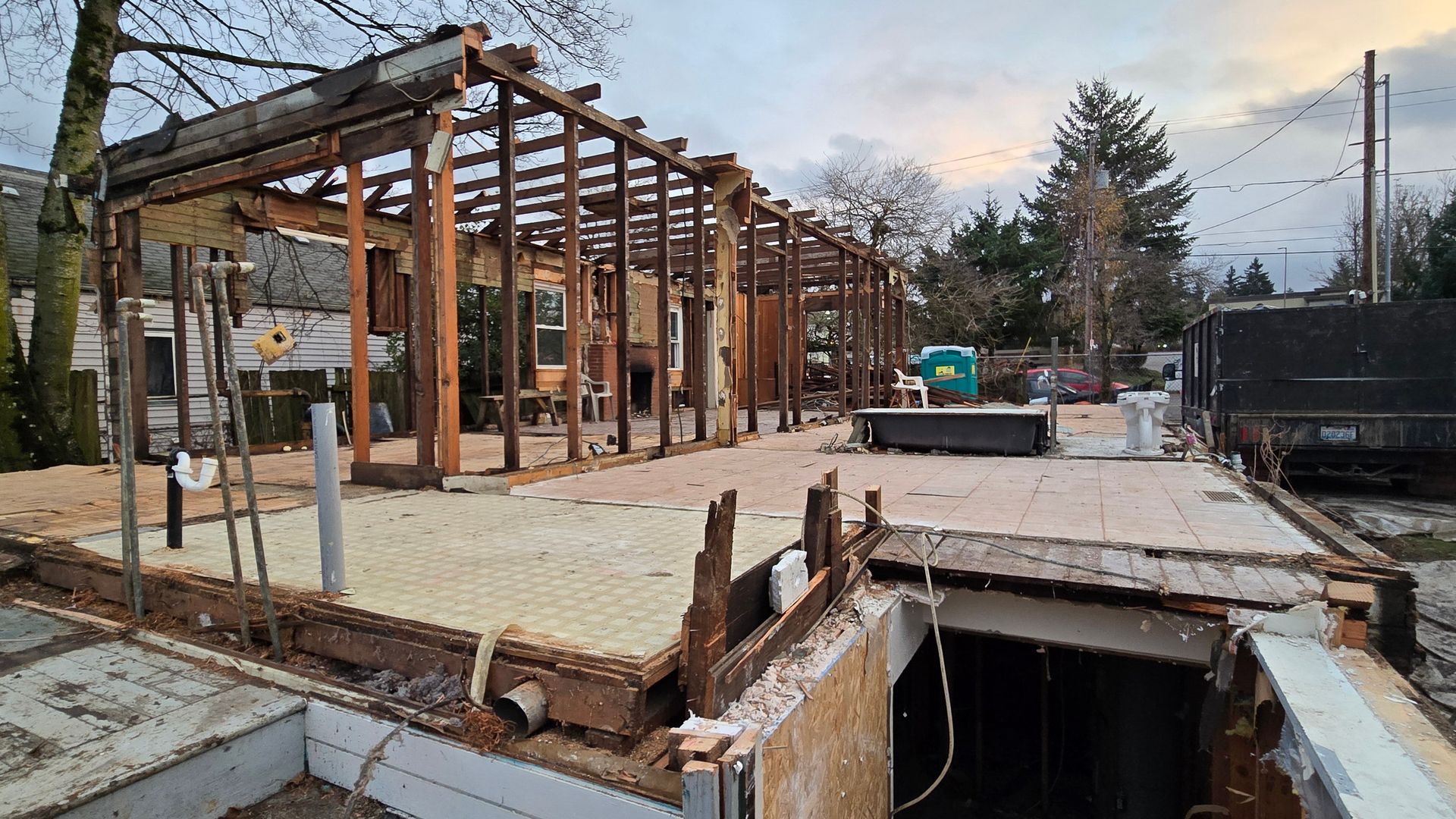
From refuse to reclaimed. Photo: Courtesy of City of Portland
Ten years ago, Portland asked itself a simple question: What if we could save millions of pounds of building materials by taking old homes apart instead of knocking them down?
Why it matters: A decade later, the city's pioneering deconstruction program has helped create a local industry around salvaging valuable materials, reducing waste and giving old buildings new life.
The big picture: In 2016, Portland became the first city in the country to require certain older homes to be carefully dismantled rather than face a wrecking ball.
- The requirement initially applied to houses and duplexes built in 1916 or earlier and expanded in 2018 to include those built before 1941.
- The goal was to keep reusable building materials out of the dump.
By the numbers: Construction and demolition debris is the country's largest waste stream, according to a Cornell study. About 90% is generated at the end of a structure's life.
- Since Portland's ordinance took effect, 765 buildings have been deconstructed, including 673 houses and duplexes and 92 other structures, according to the city.
- Those projects also recovered more than 4.8 million pounds of lumber for reuse.
A typical deconstructed Portland home yields about 4 tons of reusable materials, with another 20 tons sent to facilities for recycling, according to the city.
Zoom in: Portland's older homes are particularly valuable sources of Douglas fir, including old-growth wood prized for its strength and durability.
Between the lines: The program initially raised concerns about higher construction costs, but the city says deconstruction now typically accounts for less than 1% of a residential development project's budget.
- Portland has 14 certified deconstruction contractors and more than 10 salvage retailers serving the region.
Zoom out: Since its inception, similar deconstruction programs have been adopted in cities in Washington, Texas and California.
What's next: Portland is exploring whether the approach can work for larger commercial buildings.
- A two-year pilot has included four projects, among them the former Avenue Plaza Apartments in Northeast Portland, where workers salvaged more than 26,000 pounds of materials.
- The city is studying the costs, logistics and potential for expanding commercial deconstruction.