Oregon vows to fight Trump's mail-in voting order


Add Axios as your preferred source to
see more of our stories on Google.
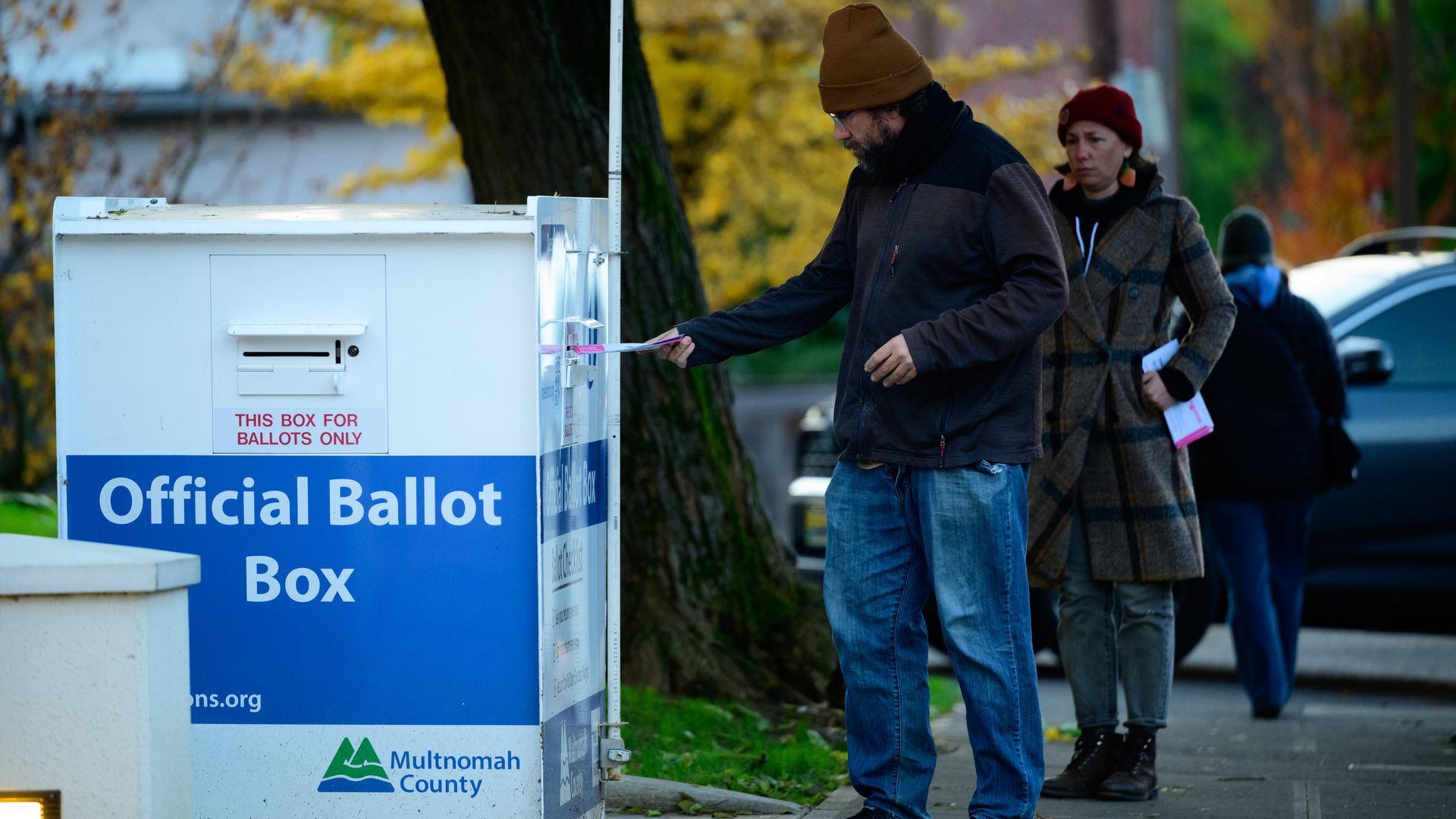
Oregonians have voted exclusively by mail for three decades. Photo: Mathieu Lewis-Rolland/Getty Images
President Trump can implement an executive order restricting mail-in ballots just months before the midterm elections, the Supreme Court said Monday.
Why it matters: The decision could upend the midterms, but the legal battle is far from over, and the exact impact on Oregon's upcoming elections remains unclear.
- Oregon was the first state in the country to vote exclusively by mail and has done so for nearly 30 years.
What they're saying: "Today's court decision is a temporary setback, nothing more," Oregon Attorney General Dan Rayfield said in a written statement.
- Gov. Tina Kotek said Trump's directive to the US Postal Service is "unconstitutional and an assault on our democracy and designed to silence voters."
- Meanwhile, Oregon officials, including Secretary of State Tobias Read, vowed to "immediately sue" if the USPS "unlawfully attempts to interfere with Oregon's vote-by-mail process."
Driving the news: The Supreme Court said in the unsigned order that states lack standing to challenge the executive order because it was an "internal directive" that didn't harm Oregon or the other states that sued over the executive order.
- The decision overturns a federal appeals court ruling that found the order could impose "unprecedented levels of involvement by federal officials in how states administer elections" and could confuse and disenfranchise voters.
The other side: The court's three liberal justices — Ketanji Brown Jackson, Sonya Sotomayor and Elena Kagan — dissented.
- The decision did not address whether the administration has the authority to implement Trump's order, Sotomayor noted in her dissent, which Kagan joined.
- Rather, they argued, "today's decision merely postpones adjudication of those challenges."
Catch up quick: Trump's executive order, issued in March, directed the Department of Homeland Security to compile a list of citizens eligible to vote and called for the Postal Service to accept ballots only from voters on those lists.
- Eligible voter rolls constantly change as people move, die, turn 18 or change their names. A national list would quickly become outdated, according to voting rights groups.
- A coalition of Democratic state attorneys general challenged the order.
Between the lines: Under the Constitution, states — not the president — administer elections.