Portland underuses Willamette River, report says

Add Axios as your preferred source to
see more of our stories on Google.
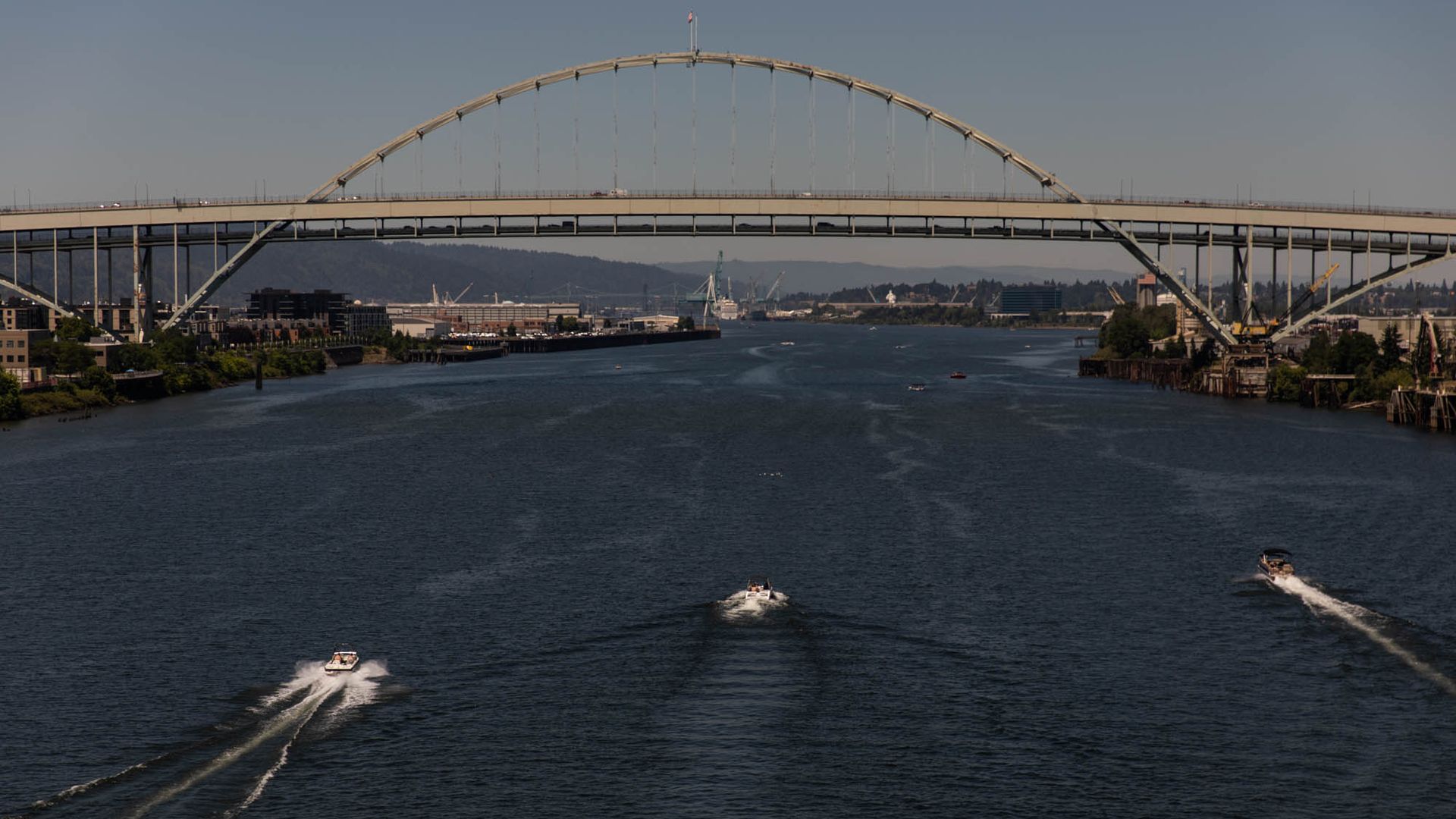
More seen than swum. Photo: Maranie Staab/Bloomberg via Getty Images
Portland isn't fully tapping into the Willamette River's full economic and recreational potential despite investing billions on making it cleaner and more accessible, according to a new report.
Why it matters: The city's central waterway attracts more than 2 million visitors a year, but the majority of those visits are to riverfront parks — including downtown's Tom McCall — and waterfront pedestrian trails, not the river itself.
- Plus: Just 6% of the roughly $121 million in annual recreation spending tied to the Willamette comes from activities that take place on the water, an analysis by ECOnorthwest found.
The imbalance is obvious: More than 1.2 million people visit riverfront parks each year, while boating and fishing account for roughly 82,000 trips combined.
Catch up quick: Portland spent more than $1.4 billion on the Big Pipe project in 2011 and more than $114 million on other river-related recreation infrastructure — the South Waterfront Greenway, Eastbank Esplanade and Cathedral Park Swimming Dock — over the past 25 years.
- These investments helped transform the Willamette from a polluted industrial waterway with a decades-long dirty reputation into a place where people now swim, paddle and gather.
Yes, but: Portland has focused more on cleaning up the river and building around it than making it easier and more routine for people to get in or on it.
Zoom out: Other cities paired costly river cleanup projects with attractions to get more people out on the water.
- For example, Boise built a whitewater park for kayaking and wave surfing. Pittsburgh invested in floating recreation — a barge venue with public programming like yoga and live music.
- Meanwhile, Milwaukee's Downtown RiverWalk is a 3-mile walking path allowing public river access alongside entertainment venues, shopping districts and restaurants (something Portland is seriously lacking).
The bottom line: To unlock more economic value from the Willamette, the report recommends the city support commercial recreation businesses and create more opportunities for people to engage directly with the river rather than just walk alongside it.