West enters wildfire season amid firefighting shakeup

Add Axios as your preferred source to
see more of our stories on Google.
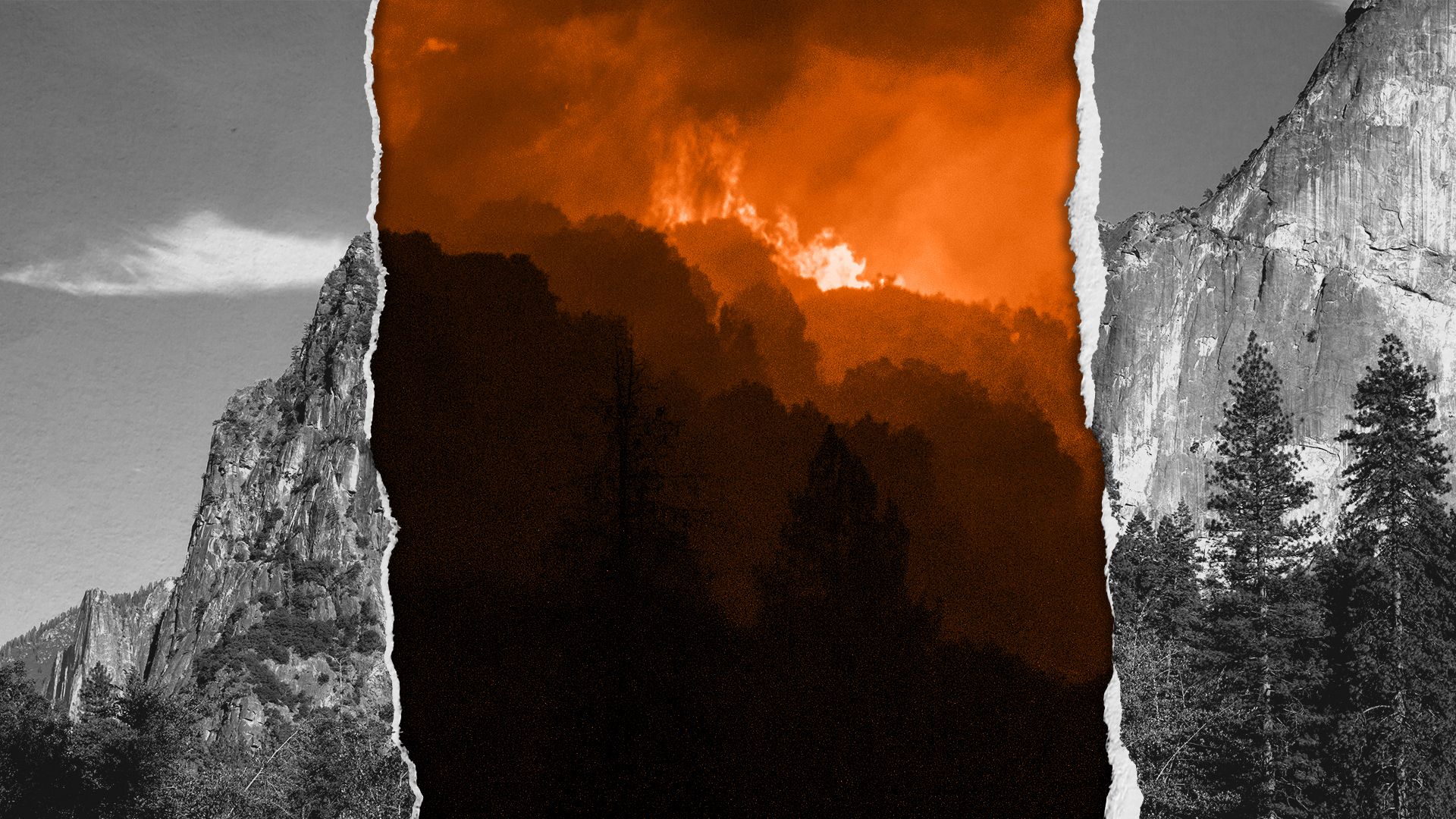
Photo illustration: Aïda Amer/Axios. Getty Images photos: David McNew and George Rose
The West is heading into wildfire season with record-dry conditions and a federal firefighting force that's undergoing an unprecedented reorganization.
Why it matters: A landscape ready to burn and the organizational shakeup have some elected officials questioning whether federal response systems are prepared for a severe wildfire season.
Catch up quick: Most federal wildfire resources are now overseen by the Department of the Interior after President Trump signed an executive order last year to consolidate operations.
- Previously, firefighters from several agencies — the U.S. Forest Service (part of the Agriculture Department), the Bureau of Land Management and the Bureau of Indian Affairs among them — all responded independently to wildfires.
What they're saying: "I'm extremely concerned that we're not ready," U.S. Sen. Jeff Merkley (D-Ore.) told Axios.
- He noted that many states in the West saw record-low snowpack this winter, leaving many landscapes primed to burn.
- Most concerning, though, was that the consolidation happened "with no consultation with Congress, no oversight hearings, no experts brought forward to say why this will work better, or how it will work better," Merkley said.
The other side: Firefighting operations would be "largely unchanged" from previous years, Interior spokesperson Elizabeth Peace told Axios in an email.
- "This integration eliminates redundancies, streamlines training, strengthens recruitment, and enhances career growth for Interior wildland fire personnel," Peace said.
- "Hiring remains on track," according to Peace, and the department expects to have roughly the same number of firefighters — around 5,700 — as it did last year.
Yes, but: The Forest Service treated 35% fewer acres for hazardous fuels nationwide last year than the year prior, per an analysis from the Center for Western Priorities.
- In Oregon, that meant 47% fewer acres received prescribed burns, brush clearing and forest thinning.
The bottom line: Merkley said the bone-dry landscape, coupled with the federal reorganization, has left him wary of the months ahead.
- "All of this is amounting to a hold-your-breath summer," he said, adding that he just hopes "all the forecasts are wrong."
Editor's note: This story has been corrected to reflect that most federal firefighting agencies (though not the U.S. Forest Service) have been shifted to the Department of the Interior.