Culture Brief
Mono Space wants to redefine how you hear music

Add Axios as your preferred source to
see more of our stories on Google.
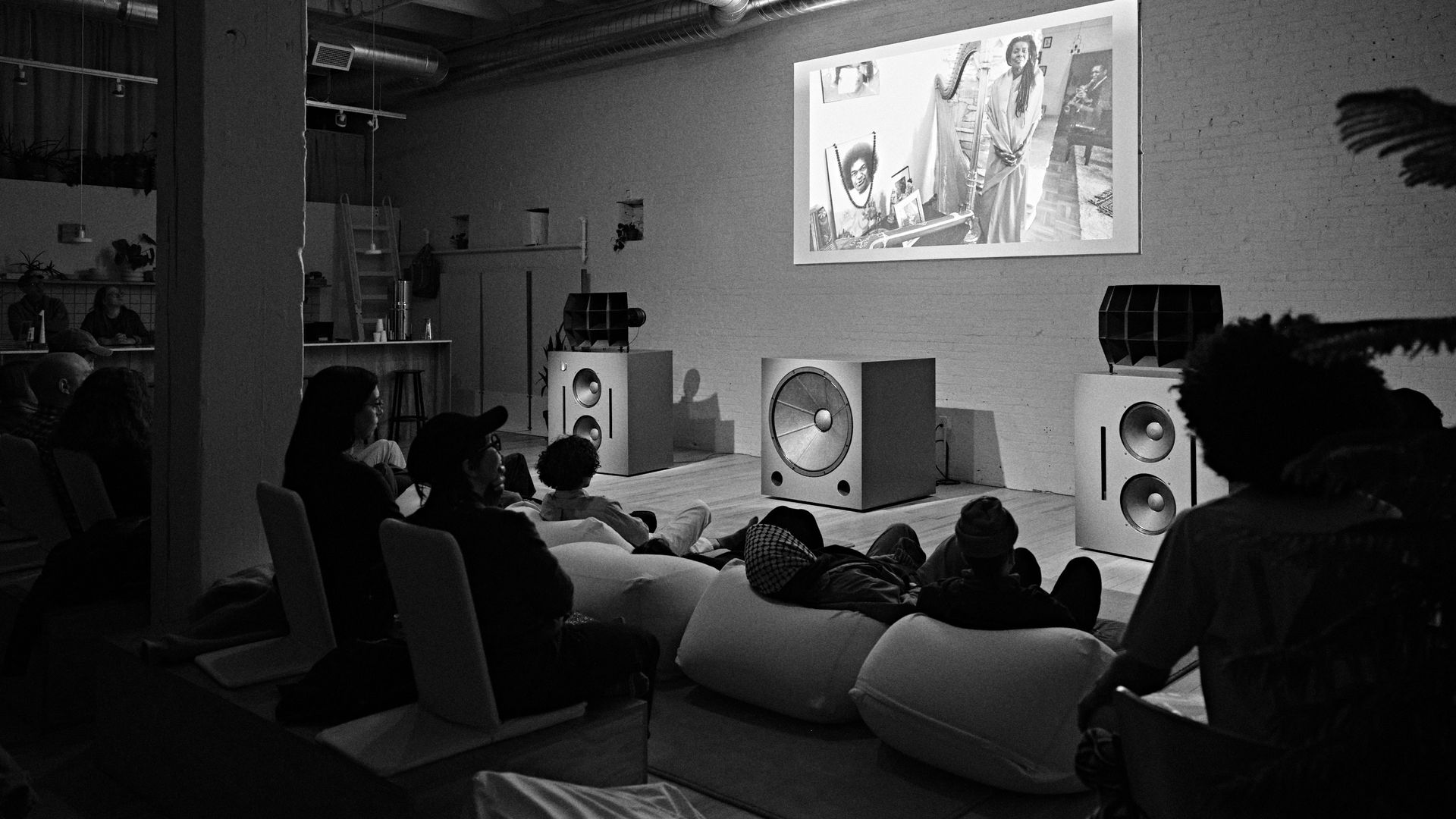
At Mono Space, listeners gather for phone-free sessions where albums are played start-to-finish on a custom high-fidelity sound system. Photo: Courtesy of Jason Hill
On a recent Friday night, roughly 50 strangers were sprawled out in front of three massive, 4-foot-tall Baltic birch wood speakers listening to Kate Bush's 1985 album "Hounds of Love."
- Some lay atop bean bag chairs, others crunched together on Togo sofas. Some cupping their hands behind their ears to intensify the sound, others with their eyes closed.
The place is Mono Space — a high-fidelity "listening gallery" in the heart of Portland's Pearl District that opened just last year, where phones are put away, shoes are kicked off and the sole focus is the music.
- "We're trying to encourage people to get in tune with the body and get away from all the noise," founder JD Hooge told Axios.
The big picture: Listening galleries like Mono Space are part of a small but growing movement across the globe, from New York to Tokyo. It's reimagining how people experience music, not as background noise or loud and live, but art you can sit with and dissect in real time.
- The idea has found fertile ground in Portland, where music culture runs deep and a post-pandemic appetite for in-person, intentional experiences is matched by a perpetual curiosity for the new.
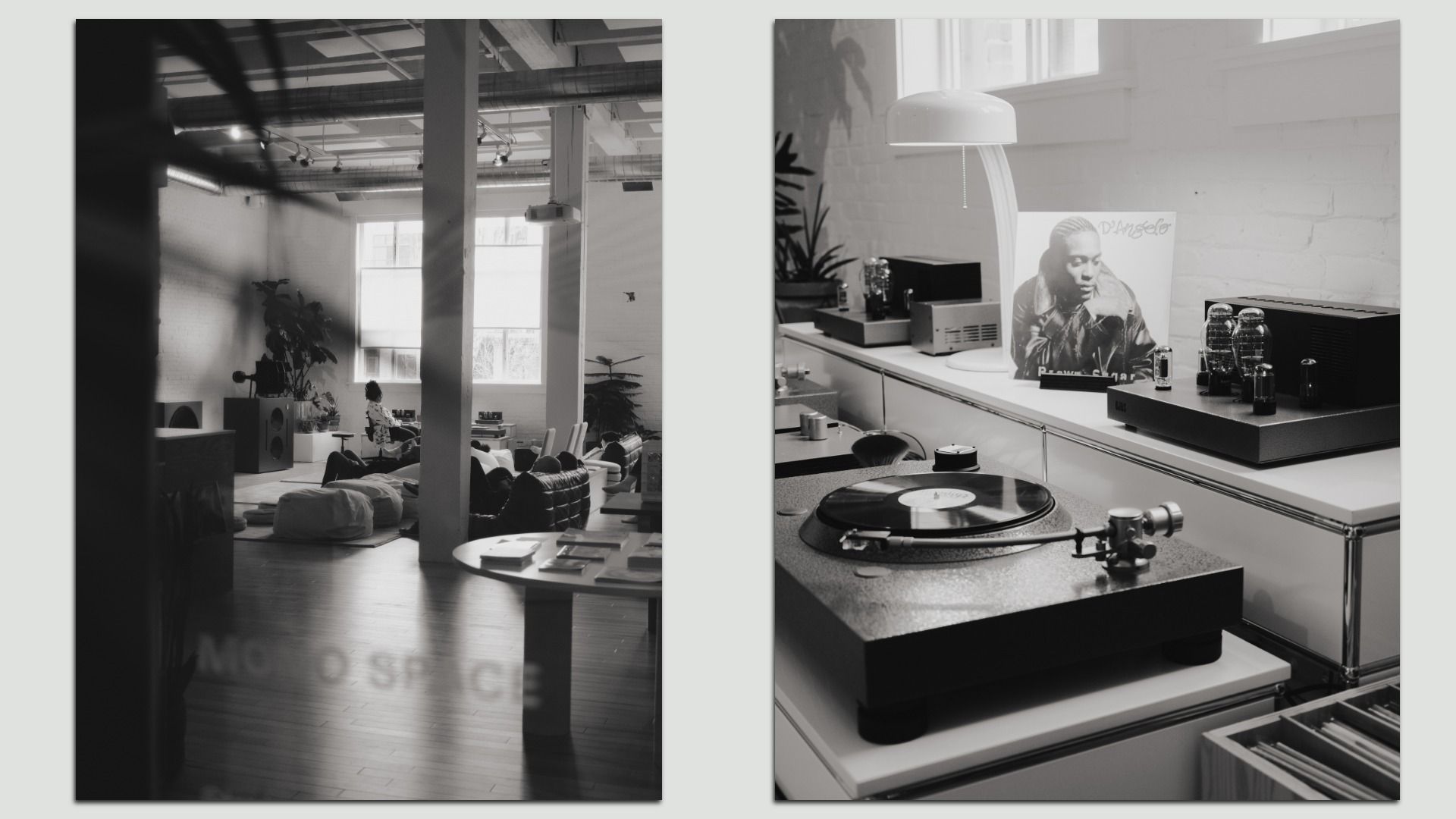
How it works: On any given day at Mono Space, a presenter — either a musician, DJ or fellow melomaniac — selects an album or theme and plays the tracks (with no skips) through the room's custom OJAS sound system, developed by renowned audiophile Devon Turnbull.
- The system is part of the draw. Built from hand-assembled components and powered by minimalist, decades-old tube technology, it's designed to strip away any distortion or compression and let recordings sound as close to their original form as possible.
- Hooge stumbled across the setup during COVID, when he went down a rabbit hole "trying to put together an optimal system to play records at home."
The resulting sound is a kind of hyper-clarity, sometimes revealing details listeners have never noticed before — like a low-thumping bass line or a high, distant harmony — even on albums they know by heart.
- It can also be surprisingly physical, even after the music stops.
- "I always see a transformative expression on people's faces when they're leaving," Matt Fleeger, program director and former KMHD host, said. "It looks like a weight has been lifted off them, or they've had a massage."
It appears to be resonating. Most ticketed listening sessions sell out, and the space's open gallery hours on Saturdays draw a stream of visitors — either those who just wander in, or return guests with friends in tow.
- "These are like small, New Age communities that are formed each time people get together here without knowing they're going in to form a little community," Fleeger said.
If you go: Mono Space (608 NW 13th Avenue) is open Saturdays from 12-5pm for gallery hours.